Against Rigidity: Some Inspirations for Improvisation

Lately, I’ve been dealing with some challenges. How to navigate being a mom — even though my expectations of myself are not high, somehow they’re still too high for the reality. How to embrace my dancing where it is, skill-wise, rather than mourning the skills I don’t have. And in my own, real-life, for-money work, how to focus on and enjoy the work I’m doing now, rather than regretting what I didn’t do before.

And so I was inspired by some recent reading. The first comes from Alia Thabit, whose 90 Day Dance Challenge I’ve been doing for the past week, and actually even managing to keep up on. (Five days out of six!) In one of her recent “love notes,” Alia writes:

Why are so many classes so deadly serious? Drilling (I hate drilling), combos, choreo, all work, work work. Why do we always have to do what we’re told? Why do we so rarely get to dance?

Students, play in class. Embellish, reinvent, enjoy yourself. Do the drills differently. Make the combos your own. Reinterpret the choreo. Stand in back, be respectful, and explain your mission to your teacher so they don’t feel the need to correct you :). But quietly get your groove on–don’t ignore the class, just give yourself permission to add your own sauce.

This is the kind of thing that makes me want to shout “YES” and pump my fist into the air. Because here’s my dirty little secret… I hate choreos. I mean, I’m not very good at picking them up anyway, though lately I have begun to see the point of learning how someone else interprets the music. But whenever I see an ad for a workshop being offered with a choreo, I think to myself, “Why would I want to dance like someone else? Would I ever really perform someone else’s choreography?”

But when I think these things, I always tend to suspect that I do so because choreos are a weak point for me. It’s also good to hear someone who is a teacher confirm that it is, in the end, about making the dance your own.

The next bit comes from an article called “Letting Go of Perfectionism and Embracing Motherhood,” by Hala Khouri. I ran across it because I’m preparing to review Hala’s DVD, Yoga for Stress Reduction. Hala describes how having children forced her to modify her perfect ecowholegrainyogaeverydaynosugarorpolyester lifestyle:

As I was faced with birthday parties with “regular” cake (i.e. the white flour and sugar kind), crying babies with high fevers, and my boys’ insatiable appetite for superheroes and dinosaurs, I had to surrender to the fact that being rigid wouldn’t serve anyone. I noticed that sometimes fighting for my ideals felt unhealthy. It came from my own fear and need to feel in control. The last thing I want to do is dump my fear and neurosis onto my children. I have had to start discerning when I’m clinging to my idea of what’s right simply because I want to feel right (and make others wrong so I feel better about myself). I’m finding a middle ground that feels balanced.

Although I have no pretensions to the kind of perfection Khouri had before, I recognize bits of this in myself. My obsessions have to do with the baby’s sleep and with nursing. I resisted supplementing with formula for months, even though I was exhausting myself with round-the-clock nursing, because I was secretly proud that the baby hadn’t touched those chemicals. And yet, once I started supplementing a bit and wasn’t so exhaused, I found I also wasn’t so resentful of the nursing, and able to do it longer. The perfect was the enemy of the good.

As different as these examples are, both are about improvisation. After all, isn’t that what we’re doing when we take on a new role? And it helps to remember — it helps me at least — that improvising is what’s most fun. Cooking teachers and food writers have started to talk about the value of improvising in the kitchen rather than following recipes slavishly, and that’s really what I love about cooking. Why would I expect myself to follow a preset model in other parts of my life?
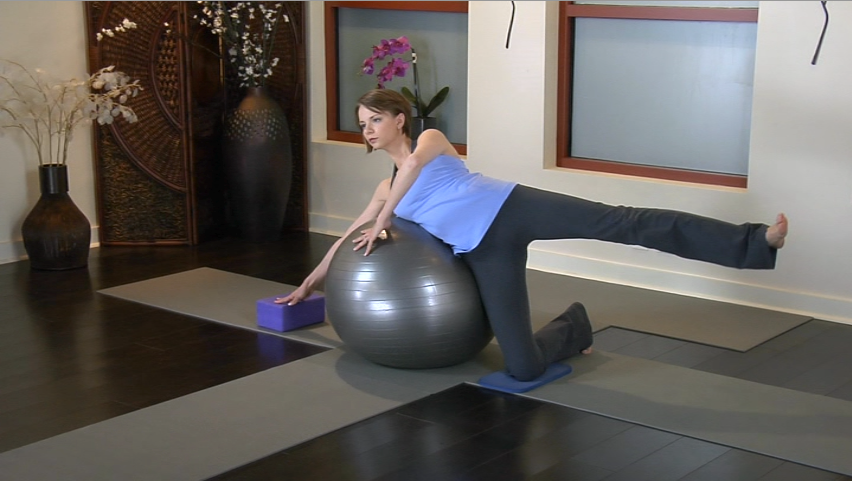
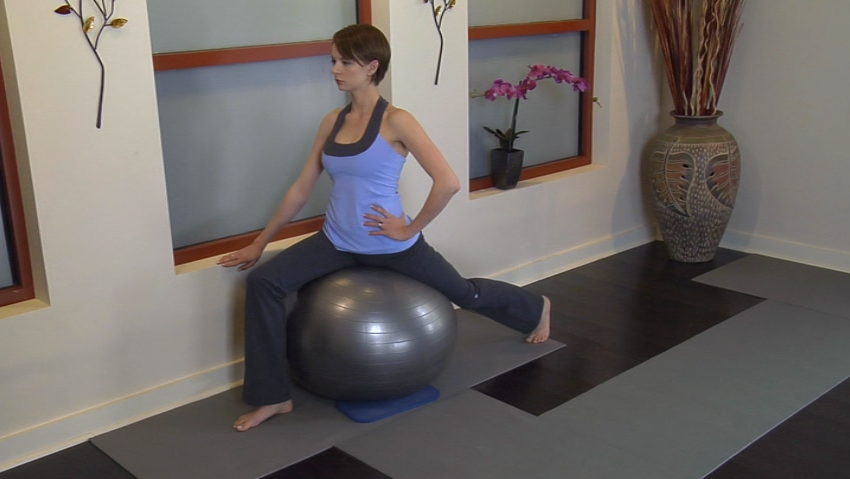
Review of Jennifer Gianni’s Fusion Pilates Birth Ball for Post Pregnancy

As I was working with Jennifer Gianni’s Fusion Pilates Birth Ball for Post Pregnancy, I had two thoughts:

1. While prenatal workouts are mostly light workouts that other, non-pregnant people could enjoy, especially if they have an injury or are suffering pain, postnatal workouts are pretty specific. Man, I thought kegel exercises were detailed — it turns out that the kind of exercises you do once the baby’s out are way more internal and precise.

2. This video has some really fun Swiss ball exercises, the kind that make having that silly rubber bubble worthwhile.

I previously reviewed Jennifer Gianni’s Fusion Pilates Birth Ball for Pregnancy, and while I thought it would be good for someone advanced in their pregnancy and needing very gentle exercises, I also found it quite a bit lighter than what I could do, and sometimes a bit fussy in the set-up required. Fusion Pilates Birth Ball for Post Pregnancy, on the other hand, is a much better fit for what I was looking for. (Both are review copies, by the way.) It’s still not about sweating, but getting the exercises set up is much easier, and the moves themselves are a bit more challenging.

Fusion Pilates Birth Ball for Post Pregnancy also includes the “Fusion Essentials” intro to proper form. And then it’s straight into the workout!

The workout itself begins with pelvic floor exercises. These are very well taught, even though it’s always kind of a challenge to translate these kinds of descriptions of very internal muscular contractions into real practice. The idea is to build up the pelvic floor to offer stability and resistance before doing abdominal work that presses down on it. The exercises are taught slowly, gradually, and with different kinds of breaths. There are enough reps to really get a feeling for things.

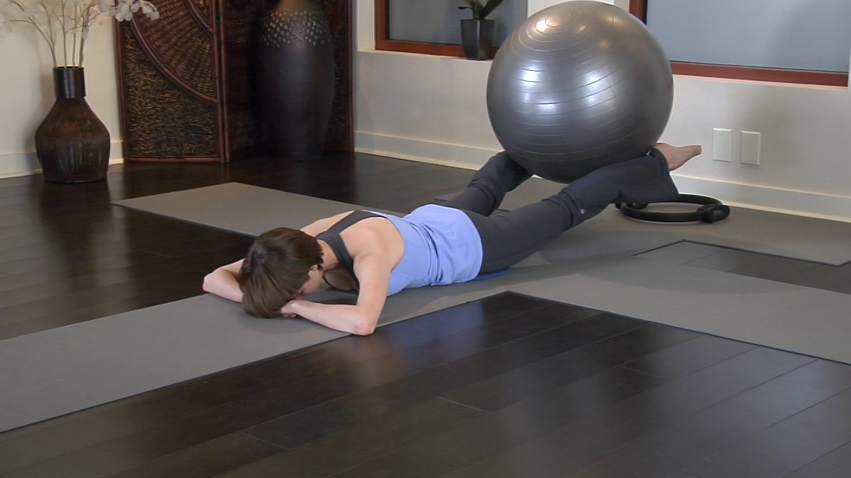
You may not be able to tell, but this woman is working her pelvic floor.

The rest of the workout consists of gentle but targeted and, for a new mother, intense pilates-style moves on the ball. For many of them, Gianni will start with a variation for very new postpartum moms, and then build on it for women in the advanced postpartum period. I thought this was a great way to both teach moves and make the video useful to women at different points beyond pregnancy.

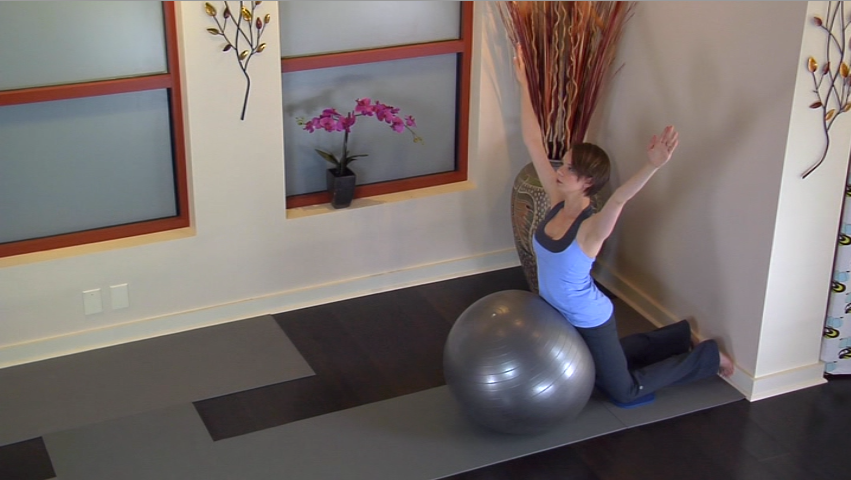
Just about every part of the body has an exercise — the upper back, the abs of course, the legs and glutes. There are even some exercises that build on the pelvic floor work done at the start of the workout. And there is one truly delicious upper back/shoulder stretch. When I started doing it, I thought “oh, this is so good for anyone breastfeeding,” and sure enough, Gianni’s voice piped in and said the exercise is ideal for nursing moms! And although a number of the moves require a wall, I was able to use a couch and a chair successfully, as I did not have a free wall available.

Best of all, a number of these were really fun. I’m not a master of Swiss ball workouts by any means, but I have done a few of them so far, and I find that the ball is often a bit unnecessary. It could be replaced by a chair or weights depending on the move. Gianni has you do some rolling and balancing exercises that really only do work with the ball. They were so much fun, that I think I will put the baby on his playmat tomorrow and bounce around next to it on the ball!

Fusion Pilates Birth Ball for Pregnancy is also available from http://www.fusionpilates.com/.

Review of Chantal Donnelly’s Pain Free at Work

Although I’ve dedicated this blog to activities that make me feel physically wonderful, like dance, and yoga, and pilates, the truth is that I spend enormous amounts of time in front of the computer like everyone else. It’s not just work, though it is also work. But many things I love to do, like writing creatively (and like, well, my work) require the computer.

This means that I can reliably count on one thing: pain.

I was recently sent a review copy of Chantal Donnelly’s Pain Free at Work. The funny thing is, I’ve often wanted something just like what this video includes, namely a short stretching program that can be done in my office chair. But first things first.

Let me just pull up a seat…

Pain Free at Work is a mixed-genre DVD, made up of both informative lecture segments and sets of practical exercises. It’s about forty minutes long, and divided into multiple sections:

Pain Free Sitting
Training for Marathon Sitting – Phase 1
Training for Marathon Sitting – Phase 2
Ergonomics in the Work Place
Exercising at Your Desk
After Work Workout
Handling Pain: Elbow, Wrist and Hand Pain
Express Stress Relief

The lectures:

In Pain Free Sitting, Chantal demonstrates how to sit correctly so as to minimize the curvature of the back, and reduce pain. She uses a live model and anatomical charts. As much as I am easily bored during this kind of lecture, the truth is that I realised how much I am doing wrong when I sit at a desk. (Just right now I was sitting back with my legs crossed on the chair!) I’ve always known I was sitting poorly, but having it spelled out somehow helps me to check my own posture. (Now I am sitting up straight, abdominals in. Aren’t you proud of me?)

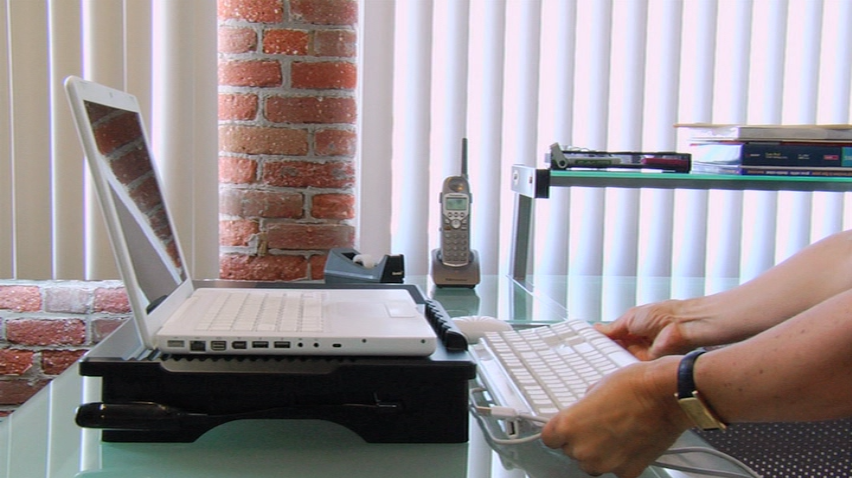
This is the secret to good laptop mojo!

 I found Ergonomics in the Work Place very useful. Again, this is the kind of thing I’ve read dozens of articles on, but I’ve rarely been able to control my work space to the extent needed to have an optimal setup. What I liked about this section is that Chantal and ergonomics expert Brad Hutchins deal with laptops, which I never have seen before. The assumption tends to be that you have a huge desk computer. The other thing I liked was Brad’s point that even making one improvement is better than nothing. I don’t have to have the perfect setup at work, but changing one thing is still good.

Express Stress Relief was really express. It is a short conversation between Chantal and Dr. Jeff Gero, and includes a few strategies on dealing with stress. Mainly deep breathing, meditation, and positive thinking. Honestly, I think each of these take enough training to do them right that having a short segment on them is not particularly helpful.

The lectures with some exercises:

Training for Marathon Sitting – Phase 1 is basically an introduction to connecting with your transverse abdominal muscle. Chantal provides some strategies for strengthening it while doing everyday tasks. Again, simple, but good to have the reminder. I do think that people who have not had training in accessing this muscle might benefit from even more detailed instruction. (I found Helen Byrne’s postnatal conditioning workout to be particularly focused in this respect.)

Handling Pain: Elbow, Wrist and Hand Pain is another brief segment, including two self-massage techniques for dealing with elbow and hand pain that were completely new to me. Short, but very worth while.

The exercise programs:

The real gem of Pain Free at Work for me is Exercising at Your Desk. This is a compact set of exercises you can do at your desk that will gently stretch everything from the feet to the head. The thing I particularly like about this is that the exercises do not look weird — that is, you don’t have to get into any funny or embarrassing positions to do them. You could do them around your coworkers and no one would bat an eye.

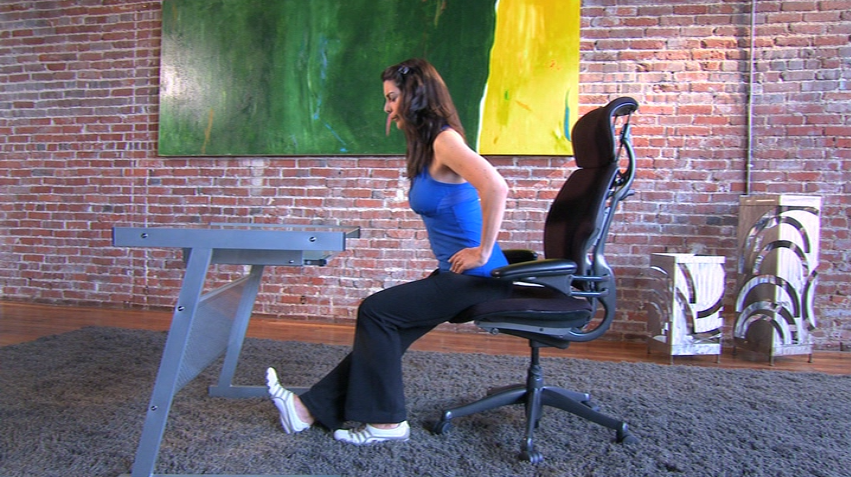
This is just a delicious inner-thigh stretch

 Training for Marathon Sitting – Phase 2 is a gentle yoga and pilates-type workout for stretching the back and building strength in both abdominal and back muscles. Chantal suggests you watch it through before doing it. This is a good idea, as the cuing is minimal. (I would have liked for everything to be cued.) That said, she does give good prompts on form and using the abdominal muscles for support. And she has one of the demonstrators show modifications, sometimes using a Swiss ball.

Finally, there is an After Work Workout that uses a thick foam roller for stretching and relaxation. I didn’t have the prop, so I didn’t do it! I can say that the other two workouts are simple but definitely relaxing.

In short, I think Pain Free at Work can be very useful to anyone spending a lot of time at a computer. Watching the lecture segments is not as much fun as doing the exercises, but I did get some good tips out of them. I think the best way to use it is to keep it in your office and do the stretches and self-massages on a regular basis, once or twice a day, as a preventative measure!

In which the writer performs at a wedding (sort of)

Another recent highlight was, as you might have guessed by the headline, performing at a friend’s wedding.

Now, this wasn’t a big formal thing, nor was it a real gig. The couple wanted their friends to put on little skits and the like, and I knew this was just my chance to pull out the ol’ hip scarf and foot undies and embarrass someone. Preferably not me.

Factors working in favour of this momentous event actually taking place included working with Nadira Jamal’s Rock the Routine and taking Cihangir’s workshops last weekend. What I wanted to do was to get my husband to play the doumbek and do a short improvised drum solo, and then go around and get everyone up to dance. I thought if we kept it short and sweet, there would be less time to screw up, and it would be obvious that we were amateurs doing something out of love for the couple.

It also helped that Cihangir mentioned during one of the workshops that the audience doesn’t notice much of the dancing anyway for the first bit of a dance, as they’re looking at you, checking out your costume, and so on. So I thought a stately, showy entrance would get me halfway there, and that already allayed some of the nerves.

The key was getting something sparkly to wear. I didn’t think the full bellydancer getup would be appropriate, especially given that I wasn’t doing a proper performance. But a friend and I went to the Saidi boutique here in Berlin, and after an hour or so of dedicated attention managed to find a gorgeous saidi dress, black with silver vertical stripes, and a light peach, translucent hip scarf to match. I may also have picked up a saidi cane on the way out. The golden goddess saidi dress I also fell in love with stayed in the store, hopefully for a future visit. As you can imagine, trying on the sparkly stuff was tough, grueling work. But I’m just that kind of person.

As the day approached, my love and I did some drum and dance improvising, and I reviewed Nadira Jamal’s notes for the drum solo.

Factors working against this performance? The fact that our son gave us about three hours of sleep the night before the celebration.

But the show must go on. As it happens, I wound up doing my best moves in the bathroom, as I grossly underestimated how slowly the evening’s festivities would progress. I wanted to be ready — with full makeup and warmed up — in time for our appearance. However, we were last on the program, and the precise nature of the performances was meant to be a surprise. Effectively, this meant that I spent about an hour hiding in the bathroom, stretching and practicing a variety of combos. Let me tell you, there’s nothing to combat stage fright quite like the prospect of escaping the smell of a public loo.

The dance itself was incredibly fun to do, if ultimately a bit messy. (There’s no video, and my memory is a bit blank of what I actually did, so the details cannot be reconstructed…) I had the DJ follow it up with Alabina’s Lolole which, since it has the same melody as “Please Don’t Let Me Be Misunderstood,” seemed like it would be an approachable, arabic-sounding but still hummable tune to start dancing too. Then I went around and started pulling people from their chairs and onto the dance floor.

The results? It was fun, I have a saidi dress and cane that are patiently waiting to be brought out again, I overcame a fear of mine, and all sorts of people asked me where I took classes. Somewhere, out there, there are photos. My husband and I proved to ourselves that we could still do zany things despite being kept up by a baby most of the night.

And from now on, no celebration is safe. I have a hip scarf and I’m not afraid to use it.

Çiftetellisi and Expression Workshops with Cihangir Gümüstürkmen

Dear readers, I have been away for a bit. Unlike most radio silences, this is not because I’m not dancing. In fact, as far as my busier-than-ever life allows, I’m dancing even more. Over the next few posts, I’ll share some memories and reflections.

Last weekend I took two workshops with the Berlin-based artist and dancer, Cihangir Gümüstürkmen. The first one was on Istanbul Çiftetellisi. One highlight was Cihangir’s discussion of the varied ways the word “ciftetelli” and its many, many spelling alternatives is used around the Mediterranean. It strikes me that North American dancers often like to find precise definitions for particular words — “it’s the dance done to this rhythm” or “it’s the dance performed in that place” — but dance history being what it is, a vague and flowing thing, hard and fast categories are pretty difficult to find.

Another highlight was doing a bit of floor work! I have some videos that touch on floor work, but I’ve never tried it myself, figuring I needed a lot more abdominal strength. If I’d known this workshop included it I probably wouldn’t even have signed up, but it was a tremendous amount of fun. I realised you don’t have to throw every move in the book into a floorwork routine, especially if it’s part of a longer song. And Cihangir gave us some very precise, very useful tips.

After a quick nursing/eating break, I returned to the dance studio for Cihangir’s “Express Yourself!” workshop. Now, I was in a position to compare this workshop with Rivkah’s mini-workshop on expression in dance that I recently did in Texas. Cihangir’s strategy was quite different. Rather than having us improvise dance to suit particular emotions, he began by teaching us a simple choreography, and drilling it a few times so we wouldn’t have to think about moves at all. Then he told us little stories, stories intended to inspire feelings, but without naming the emotion itself. We then danced the same choreography repeatedly, each time seeking to convey the feeling inspired by the story, not through the movements themselves, but by the way we performed the movements.

I loved this. It was basically a bit of method acting for bellydancers. What really worked for me was that some of Cihangir’s stories hit a chord in me. One instruction was to imagine dancing for the first time after being sick, and given my recent surgery, that is a feeling I can connect to. Another was to imagine dancing for someone who had never seen dance before, and again, given that I often dance for my baby boy, I could connect to that particular kind of joy too. I don’t know how the dancing looked, but I do know it felt wonderful.

Another thing Cihangir had us play with was clowning around. This was without a doubt the hardest assignment of all, but I think it’s important. I suspect it’s very hard for women to allow themselves to be a bit silly, silly enough to be funny. Part of the pleasure of bellydance is being beautiful in a really old fashioned way — long hair, lots of makeup, hyper-feminine clothing. How are we supposed to then consciously look ridiculous, albeit in a controlled way? Later, at home, I looked up some of Cihangir’s videos on YouTube and found that he’s a master of the form. So I leave you, for now, with this little jewel:

Back to basics with Neon’s Instant Bellydancer

Every now and then you just have to go back to the basics.

What’s the context? Well, there’s a bunch of context.

I recently signed up for the launch of Nadira Jamal’s online program, Rock the Routine. It’s what she calls a “home study” course, and I’m doing it at my own sweet pace — which is to say, at the pace permitted by an international move and a baby. Although I’m unlikely to perform a full cabaret bellydance routine anytime soon, I’m finding it great. Part of what’s so valuable about it is that following along with the program makes me see what I need to work on. While Nadira teaches improvisational strategies, as I try to work with them I start to notice which moves come really easily, and which bellydance moves have become, well, flaccid due to lack of practice.

I’ve become frustrated enough with this that I decided I needed to go back to the basics. Not just basic choreo or easy drills, but the fundamentals. I didn’t want something with long explanations, but I wanted the chance to focus on the movements, to work on everything from the ground up. So I thought of Neon’s Instant Bellydancer.

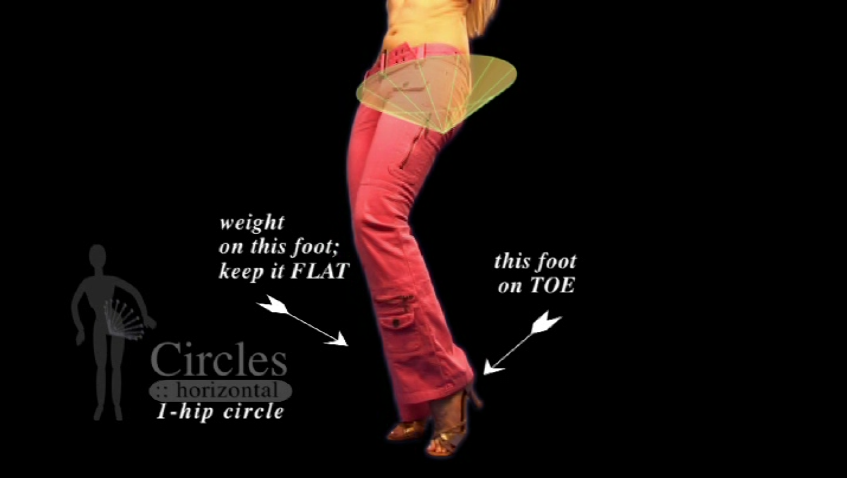
Now, the two Instant Bellydancer DVDs were among the first items in my bellydance video collection. (I bought the individual videos, Instant Bellydancer 1 and Instant Bellydancer 2 back then, and years later was sent a copy of the two-DVD set for review). Although it’s really more of a movement catalogue, not a thorough program of dance instruction, I loved it. And I loved the little geometric shapes used on the screen to indicate how movements should be performed.

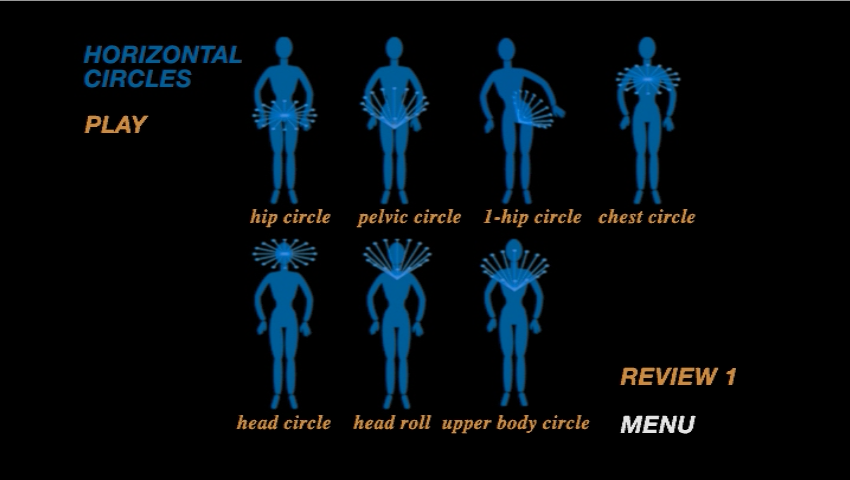
The videos are not set up the way a basic bellydance course often is — the easiest movements first, and then harder ones — but by geometric shapes. And so the first video, for example, features:

Horizontal circles
Vertical circles
Horizontal semicircles
Vertical semicircles
Horizontal infinity loops (aka figure 8’s)
Vertical infinity loops
And two practice sessions.

Each shape is performed with various parts of the body: the hips, the chest, the head, and then the movements are put together into basic drills.

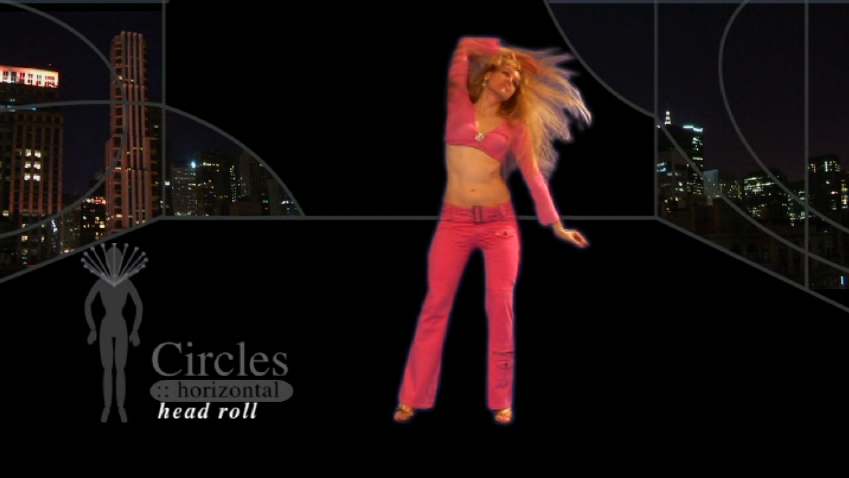
What is it like to work with Instant Bellydancer years later? On the minus side, the lack of a warmup really stood out for me. Given that it’s for beginners, it should have a warmup, especially since the moves start to really push your muscles if done correctly. There is also a section with head and upper body circles that is potentially dangerous. Neon gives multiple, and I mean multiple, warnings to avoid these sections unless you are warmed up and have strong neck muscles, but I suspect that some people might go ahead and do them anyway.

On the plus side, Instant Bellydancer is a fantastic way to review the basics if you already really know them but are out of practice. Some videos aimed at beginners introduce movements really slowly, which can be frustrating for review. Moreover, doing these now-familiar moves again, I was able to focus on subtle instructions I had missed the first time, like Neon’s hints for hand, arm, and head movements. And finally, I noticed how lopsided I am. Clockwise, I can do everything with ease, but counterclockwise, I really have to struggle! (You can bet that when I was doing the dishes today, I had Nancy Ajram on and was doing counterclockwise circles like crazy!)

I only made it through the horizontal circle section last night, but it was quite a bit to work with. More interestingly, I thought it would go wonderfully with Nadira’s tips on making friends with your safety moves, that is, with the moves you tend to resort to when out of ideas anyway. Some of Nadira’s instruction, on her blog and on Improvisation Toolkit Volume 1: Movement Recall, involves taking a basic move and doing variations of it. And in a way, this is precisely how the mini practice sessions on Instant Bellydancer work! One program is very basic, while the other is quite advanced and sophisticated, but their methodical approaches to dance make them work well together.

Review of Myra Krien’s Anatomy of a Hip Circle

One of the great things about working with DVDs is that you can always get exactly what you need. Want a quick yoga workout? You’ve got it. Want a long bellydance choreography? It’s there. My only problem is — and I blush to admit it — that I’m such a video addict that I often don’t know what I have. There are so many videos I haven’t really worked with yet that it’s hard to know which to pick. So I look over them and choose one, and sometimes, karma smiles on me and gives me exactly. what. I. wanted. that day.

Myra offers safety tips for the Jewel

This was the case for me yesterday. One of the things I noticed when attending Sunday’s workshops was how completely and utterly out of touch with my core I am now, post baby, post c-section. This is, of course, tragic for a bellydancer. So I knew that I wanted something basic today, but something that would get me in touch with my long-lost abdominals, teach me how to feel them again. Enter a karmic smile, in the form of Myra Krien‘s Anatomy of a Hip Circle.

Despite being a regular on various online forums dedicated to discussing bellydance and bellydance videos, I hadn’t heard of Krien’s videos until I found them by accident, while poking around on the internet. And in fact, she has a whole series of them. When I started my review copy of Anatomy of a Hip Circle, I didn’t quite know what to expect. Was this a beginner DVD? It is the first in a series of three videos ostensibly dedicated to hip circles, but what exactly would be included?

The video begins with a brief introduction to Krien’s Pomegranate Studio. Krien then goes over proper bellydance posture, reminding us to check in on our posture as we practice. And, in fact, like a good teacher she really does remind you to protect your lower back and keep your upper body lifted throughout the following exercises.

The posture check

In the section on Anatomy, Krien goes over the muscles used to create hip circles, focusing on the psoas, the glutes, and the obliques. She also includes a few brief exercises to get in touch with these muscles.

The 17-minute section with Support Exercises starts to get really meaty. Here are a series of wonderful exercises and drills meant to help you become aware of the different muscles key in bellydancing and practice using them in releve and with different foot positions. This is great stuff, exactly the kind of drills you need to take the abstract discussion of muscles into dance practice. The exercises targeting the psoas were particularly difficult and, for that reason, most valuable. As a beginning bellydancer, it’s not hard to learn to use your obliques; it’s more challenging to get to your glutes (especially individually); but it’s hardest of all to target the psoas. This video is the best resource I have found so far for targeting the psoas that is aimed at bellydancers.

Drilling the psoas every which way

What follows is a four-minute section on the Jewel, one of those moves dancers are always trying to define and find instruction for (or so it seems). Krien acknowledges that there are different ways of teaching and even doing the Jewel, and that hers is just one — again, her version is very psoas-centered.

Next is a twenty-minute Technique Practicum that contains a short warmup, and uses a variety of horizontal and vertical hip circles, building up into more complex and interesting patterns. Circles build into figure eights, and these are varied upon in turn. Sections of circles become horseshoe-shaped movements. Movements are done up and down, backwards and forwards, each time giving a different feel.

The video closes out with a seven-minute Stretching section that serves as a delicious cool down.

So what is Anatomy of a Hip Circle, after all? I think the best way to think of it is as an information-dense one-hour workshop on using anatomical awareness to improve bellydance from the ground up. The information is way too detailed for a true beginner. Most beginners, unless they have a background in dance or movement, just want to learn the shapes and some hand and arm work. It’s really when you advance a bit in the dance that you start caring about using specific muscles to drive movements. An advanced dancer might find this a good review of material, and will probably pick up a few tips, but is unlikely to be challenged. So I think the best audience for this video would be advanced beginners and intermediates.

The entire program is about an hour, and on the surface, the material looks simple enough. Just a bunch of hip circles and figure eights, right? But I think it will bear repetition. A lot of the drills I could fake my way through, but I knew I wasn’t really “grabbing” the movement with the right muscle the way I should. After all, that’s what the drills are for. This is a video to return to when I want efficient, targeted technique practice. It’s like going to a great drills workshop, but being able to take it home with you as well for further work.

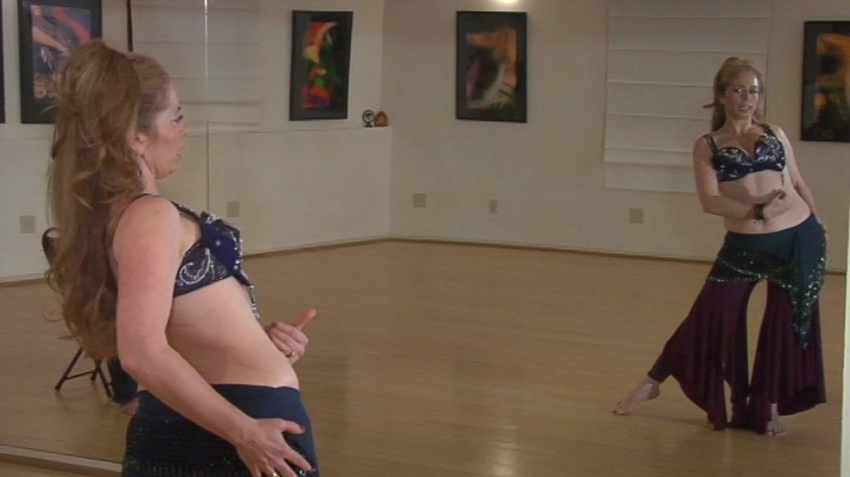
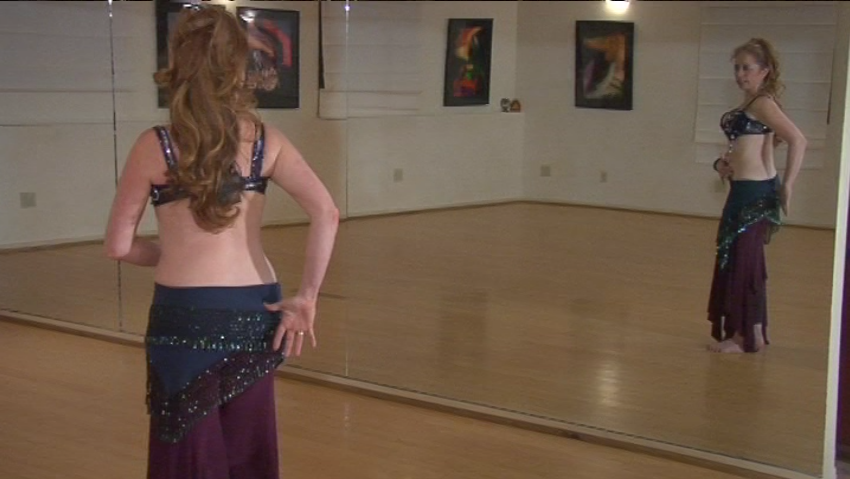
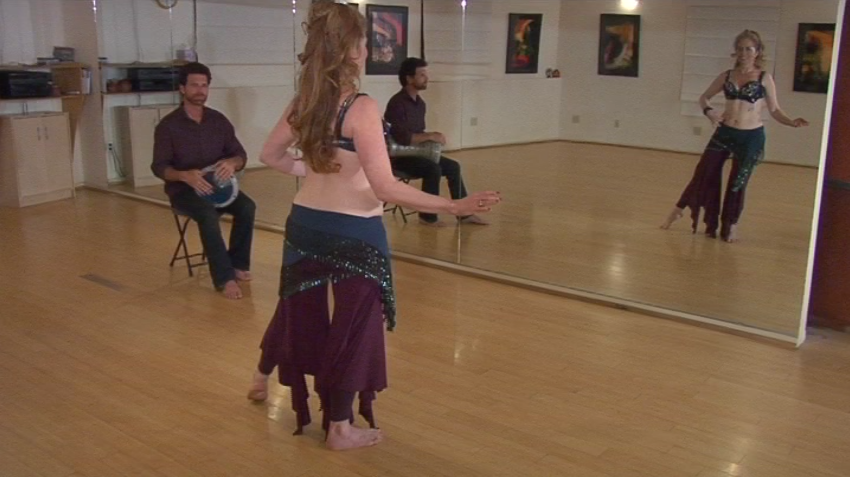
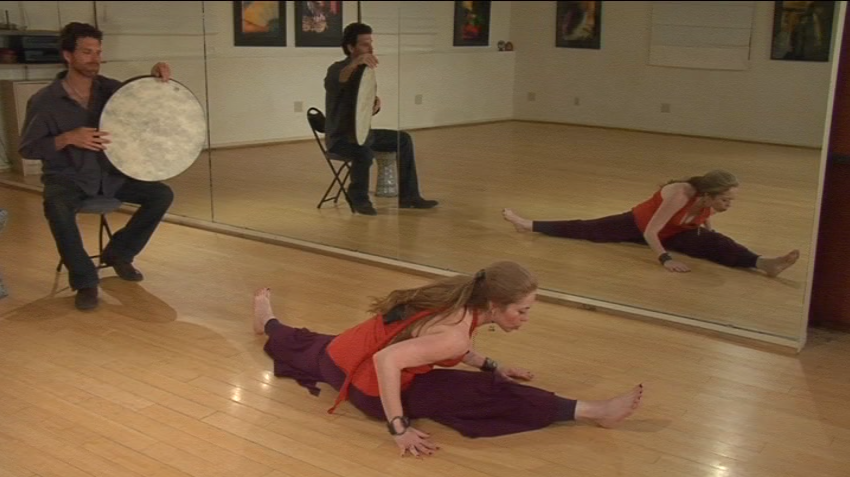
The video is shot in a bright studio with a live drummer. Myra Krien is filmed facing a mirror, and the image and sound are clear at all times. I like her affect — she speaks with the authority of an experienced teacher, is friendly, but not perky in an annoying way. Everything is drilled on both sides. But my favorite aspect of the program is Krien’s attention to safe movement. She is careful to point out movements that might tempt dancers to move in an unsafe way, and gives tips for avoiding muscle strain or injury. I wish more videos gave this kind of attention to safety, especially as dancers at home, without a teacher to watch them, are at even greater risk of injury.

The major con is that the structure is confusing. There is no warmup at the beginning, though a screen tells you to do so on your own. But the Technique Practicum begins with a slight warmup, as if you had not been doing the Support Exercises. And I would have liked a few words at the beginning explaining why the video was set up as it was, and how best to use it. The stretching segment at the end is really effective and relaxing, and Krien also offers a stretch to do when you don’t want to get down on the floor at a workshop. A warmup would have made the program perfect.

All that said, I’m still delighted with the video. A day later, and I already feel more control over my abdominals (and is it my imagination, or are they a little more pulled in?). It’s clear that these drills will be key to getting wonderful, gooey, Egyptian-style movement. In other words, I have my work cut out for me!

Anatomy of a Hip Circle is available at Persephone Store.

Back in the Groove

Sunday was a red-letter day for me — I went to my first dance classes in almost a year. The North Texas Middle Eastern Dance Association held a nifty fundraiser: seven local teachers volunteered their time to teach a series of “Cheap Thrills” workshops, at ten bucks a pop for non-members. I thought that this would be a perfect way to get back in the groove of dancing, so I hauled myself to Grapevine despite a sleepless night and rather a good deal of laziness.

My abs are still feeling a bit sore from the surgery, so I decided to pick two workshops that seemed like they wouldn’t be core intensive: “Dancing With Emotion” with Rivkah, and “Arms, Frames & Transitions” with Heather Wayman. The workshops may have been inexpensive and brief, but each was packed with material.

Rivkah had us do exercises to express sadness, anger, and joy. I found the first two, but especially sadness, incredibly difficult. I’ve never taken an acting class, and all the stagework I’ve done was in rather silly college theatricals in pretty absurd roles. At the same time, despite how vulnerable this kind of work left me feeling, I also think it is one of the most important things to work on in dance. I really can’t stand busy, overly-athletic dancing with no emotion behind it. It’s boring, it gives me no pleasure to watch. But when a performer can really embody an emotion — Zari’s dance in Secrets of the Stage Volume One comes to mind — the result is entrancing.

When we practiced dancing to a fun song and conveying the sense of delight in the music, I couldn’t help but remember a scene in Wim Wenders’ documentary Pina in which one of the dancers has the same task. I found myself emulating his moves, albeit with a bellydance vocabulary. Focusing on emotion made me dance in a completely different way, looser, less worried about variation, less hung up altogether. I’m not sure it looked good, but it certainly felt good.

Heather gave us a full program of arm poses, ways to move from one frame to another, and exercises for structuring and experimenting with dance. She introduced us to some of the tricks she’d picked up while doing Nadira Jamal‘s Mastery Mentoring Program. My favourite exercise of the class was picking three poses and then improvising the movements between them. This seemed like an excellent way to introduce more dramatic punctuation into a dance that would otherwise have rather boring arm work.

Doing these workshops, I remembered one of the things I love so much about dance class, proper dance class instead of videos. The whole world outside the studio disappears. There’s nothing like focusing on the tiniest detail — the pointing of a foot, the precise way of lifting a hand — for wiping all the tedious everyday worries from my mind.

Bellydance and Pregnancy – An Interview with Sera Solstice

I’m very excited to introduce a new feature on this blog: interviews with video artists and producers. Kicking us off is Sera Solstice, a pioneer of the East Coast Tribal style of bellydance. Besides founding Solstice Studio in New York City, she has produced five DVDs with World Dance New York, among them Foundations of Bellydance: East Coast Tribal, Lunar Bellydance, and Solar Bellydance. I previously reviewed Bellydance: East Coast Tribal, but for our first interview I wanted to ask Sera about a subject near and dear to my heart, the relationship between bellydance and pregnancy. Before continuing, you can read my review of her video Goddess Dance – Prenatal Bellydance & Meditation.

Why did you decide to put together a prenatal bellydance video?

I wanted to document/record my pregnancy and be able to share it with others. It was my second pregnancy, and I felt that it was a very special and sacred time. My first pregnancy was filled with fear and anxiety of all the unknowns. During the second go-around, I had more confidence. The meditations and presentation are what I wish I could have had during my first pregnancy. Perhaps there are a few Moms-to-be out there that could benefit from it.

How did bellydance help you during your own pregnancy?

There were many days when I didn’t feel like doing ANYTHING. But I still had to show up to teach class because I had committed to doing it. As soon as I would drag myself out of the house and to the studio, I realized how good it was for me. Suddenly I was surrounded by loving community who could share in my experiences, and I got great exercise. Getting your blood moving is so very important. Bellydance expands your body awareness, especially in the hips and abdomen. So it really helps a woman to connect to her body when she is pregnant, and be able to connect to the changes, and celebrate that through movement. It helps to connect to the baby too, as you feel your whole womb moving, its as if you are dancing with the baby. I think it makes women feel like a Goddess.

What are some of the greatest myths or misconceptions about prenatal exercise, or about dance more specifically? 

I think there is definitely an overload of precautions, and this is so no one is held responsible in case someone gets hurt. But the problem with all the warnings, is that it opens up the psyche and the consciousness to imagine these possible injuries, and then, I believe, it can make a person afraid, and therefore less trusting of their body, and therefore, more prone to the exact thing they are afraid of. What is most important is for a dancer to listen to her body.

Is bellydancing during pregnancy helpful to women even if they wind up having – or plan to have – a caesarean?

Of course! Bellydance is not just meant for preparation for birth. It is an active meditation of connecting with your body. I would assume it would help a woman heal faster from Caesarean, as she would have a stronger body, and a stronger desire to get back to that physical place of enjoyment of her body. As well as having stronger muscles in the abdomen. Plus a stronger back to help her to NOT use her abdominals as she is healing.

Is there a difference between the benefits an amateur can gain from prenatal bellydance and an advanced student or pro? 

Yes. A dancer who is already familiar with Bellydance will be able to achieve more benefits since she has already built the strength and flexibility BEFORE her body begins to change during the pregnancy. I would recommend that someone who has not studied any bellydance, try to get in as many classes as possible before your body starts the massive physical changes during pregnancy. I don’t think it is good for a 3rd trimester pregnant dancer to pick up Bellydance for the first time. I think it is best to go easy as possible and do movements that your body is already familiar with. Bellydance is a very internal dance. Many dancers seek it for its external image and style, but ultimately, the dance initiates from within and is most powerful in this way. So if a new dancer can approach it this way and not worry so much about looking like her teacher, than she could begin dancing during her 9th month of pregnancy. But again, it is about perspective. I see many people overdue it in order to get the results to LOOK right. A new dancer who is more concerned about FEELING right is on the right path.

How did you learn to meditate, and what role do you think it can play in a new mom’s life?

I started meditating as a teenager and have read countless self-help books and participated in countless spiritual, new age, shaman workshops and rituals. I had to make this meditation, really for my own birth, as I recorded it 3 days before I gave birth. I knew it was pretty far out, and may be a bit too inaccessible for a first-time meditator, but it was what I was called to do. For me, this was what the DVD was all about. The meditations were the most important element. I think WDNY played it down a bit in the title, probably because it was so far out there, but I had to commit to what I felt moved to do. It helped me a lot during my birth. I hope so much that Moms-to-be can use the visualizations. It is meant to be listened to multiple times over to prepare for birth.

In your experience, how soon after birth can women start to dance again? 

A woman should wait 6 weeks minimum. Unless the baby slides out without pushing, chances are the pelvic floor muscles have undergone some damage. The womb needs time for healing and for contracting back into place. It is most important that a woman does not rush out and start trying to work off the pregnancy weight. She is doing a disservice to the beautiful home (womb) of her baby, and her own body that worked so hard to find balance during this time. It makes me sad to see so many women who spend so much of their thought-energy on how much they weigh after the baby is born. It is a beautiful gift that you have received, that you were able to birth this little being. Celebrate your body, that did this work, treat yourself like a goddess, and enjoy your baby. Listen to the subtle voices of your body. IF it hurts, AT ALL, don’t do it! I waited at least 6 weeks, because I could feel there was damage to my pelvic floor, and I wanted to recover and heal, physically and emotionally. Birth is a traumatic miracle. It takes a lot of processing and adjusting. It is a whole initiation into a new stage that you will never return from.

Did having a child change the way you approach your dance? 

Yes. Life experience is what makes good art. I have such depth of life-experience, I have endless emotions and anxieties and frustrations, and incredible joys and loves to dance about. Dance about dance itself is quite boring to me.

I’d like to thank Sera for generously answering my questions about bellydance and pregnancy! I think “birth is a traumatic miracle” is a quote to hold on to — I can’t think of a single sentence that has better summed up my experience of it. And now I’m inspired to go back to my daily meditation…

You can visit Sera’s website at www.boldbellydance.com and find out more about her videos at World Dance New York.

Review of Annette Fletcher’s Perfect in Ten: Stretch

[Note: Don’t forget to enter the giveaway for Annette Fletcher’s Prenatal Stretch & Strengthening before June 1, 2012!]

Being a new mother means suffering through all sorts of aches and pains: lower back, shoulders, neck (from looking down adoringly at my son, of course), you name it. The natural answer to this should be, of course, yoga. And I have several postnatal yoga videos to work with, but so far, I’m still not really ready to take on a proper yoga workout. So I decided to give Annette Fletcher’s Perfect in Ten: Stretch a go.

I was particularly motivated by the fact that the video is split up into ten-minute segments. I don’t have enormous chunks of time to myself these days, so I wanted to start something I could do in bits if I happened to be interrupted. (And of course, I was.) The video is broken up into the following chunks:

1. Upper Body, Back and Hips
2. Hips and Legs
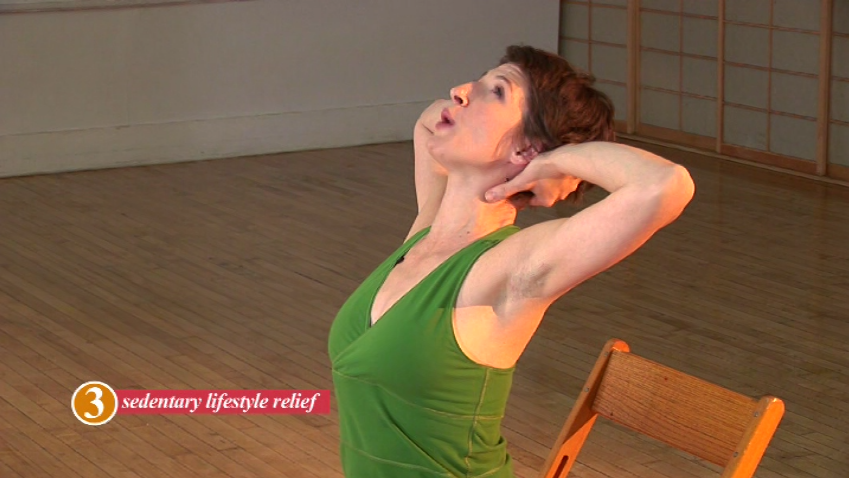
3. Sedentary Lifestyle Relief
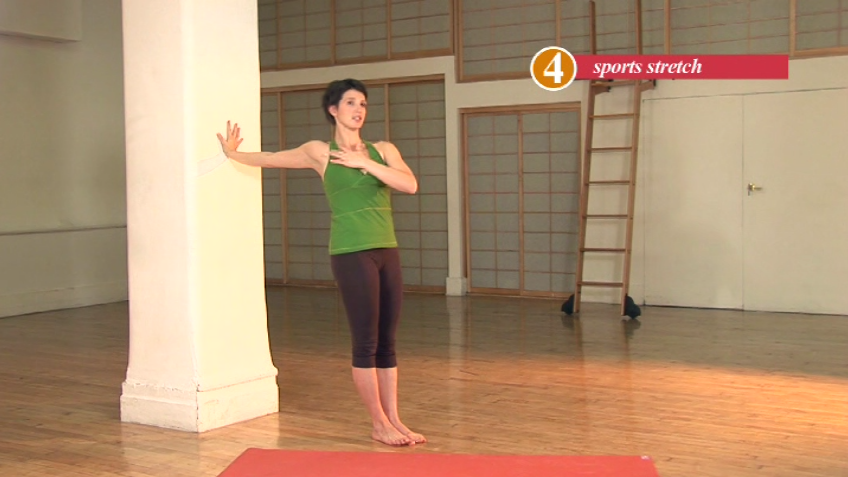
4. Sports Stretch
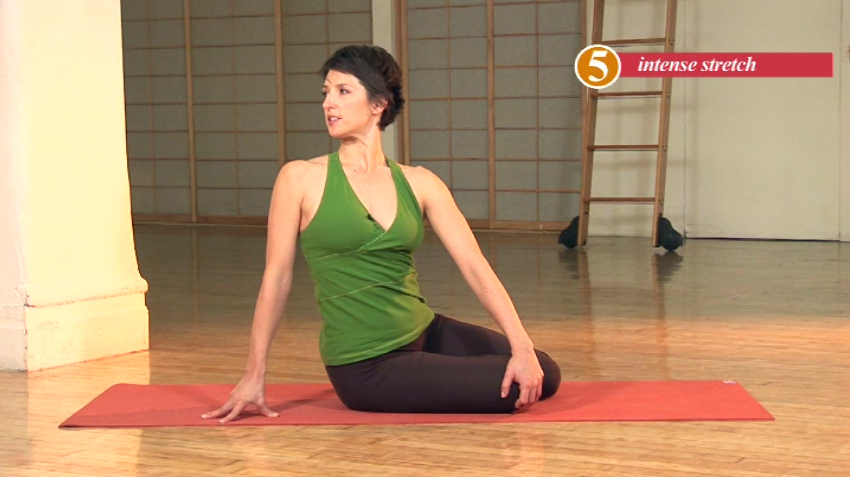
5. Intense Stretch

Chapters 1 and 2 really flow into each other — do them back to back and you’ll have some decent stretching for your entire body. Chapter 3 stands well on its own, as it has you do stretches while sitting in a chair. This would be perfect as a quick ten-minute stretch to do at work.

Chapter 4 contains stretches targeted for particular sports, such as tennis, golf, and running. However, it’s not a full stretching program on its own, so you’re best off learning the stretches useful to you and then doing them on the field. Finally, Chapter 5 has some deeper, mostly yoga-based stretches.

When I do a program like Perfect in Ten: Stretch, I typically ask myself several questions: How effective is the program, especially in ten-minute segments? How new to me are the moves? And, if the moves are not particularly innovative, is the way they are sequenced particularly interesting or good?

Effectiveness: When I’m really tense, ten minutes of stretching doesn’t do very much. It’s better than nothing, but won’t get me really relaxed. I think Chapter 3 is good on its own, as it is easy to do in one location and is perfectly designed as a little break. The other chapters have you move between standing, mat work, and wall-based work. (There is plenty of time for these changes, but I don’t have a lot of spare wall space, so I tend to be frustrated by extensive use of wall space in exercise videos.) Doing 1 and 2 together is good for basic, head-to-toe stretching. I did the entire video, with an interruption, and I found that doing all 50 minutes or so really was effective, deeply relaxing, and relieved all sorts of pain.

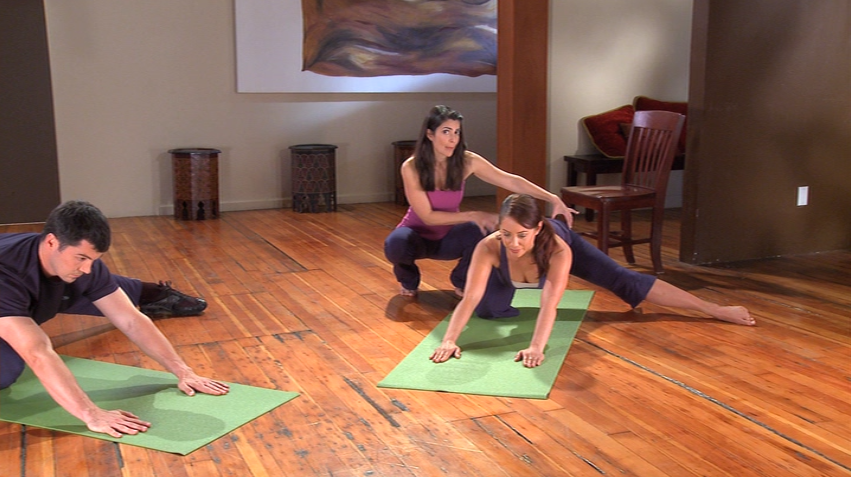
Novelty: Most of the stretches, especially in the first three segments, are ones I recognized, though there were some surprises. Annette uses a lot of gentle twisting moves, which I also liked. I thought the sports stretch and intense stretch chapters were the most interesting. Sports stretch has a shoulder stretch (pictured) that a former yoga teacher of mine had us do, and which is truly wonderful if done right — I’m glad to have it on video.

Sequencing: Despite the fact that the chapters are themed, Perfect in Ten: Stretch works as a whole. It starts with super gentle stretches, continues to slightly more intense one, and builds up to deep stretches. If you have a regular yoga practice, you will probably not find Perfect in Ten: Stretch challenging enough. But if you don’t, or you’re trying to build up to yoga but are inflexible or suffering from pain, you might find the video just the thing for slowly easing into yoga-type stretches.

I’ve previously reviewed some of Annette Fletcher’s DVDs for World Dance New York here and here. The more I work with her stuff, the more I like her. She has a calm, matter-of-fact demeanor I find soothing. Her cueing is detailed, precise, and allows you enough time to move from one position to another. (I noticed one missed cue in the whole video.) And I feel better and stronger once I’m done working with her videos. They’re just plain solid.