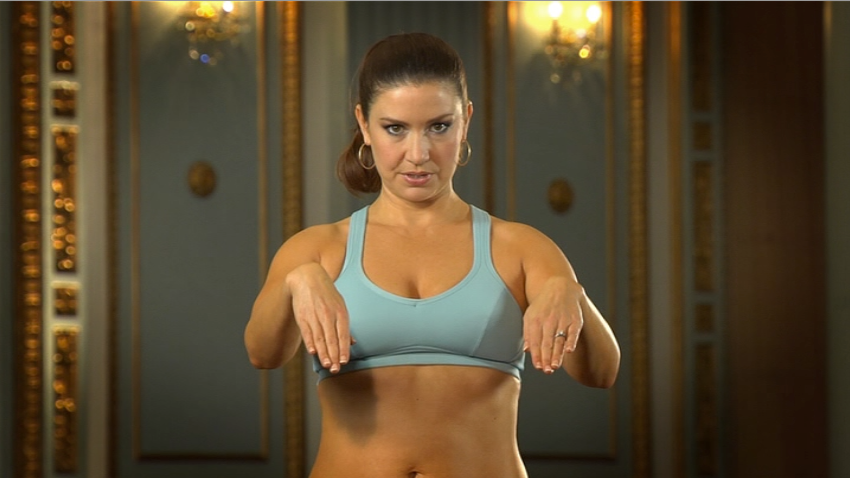
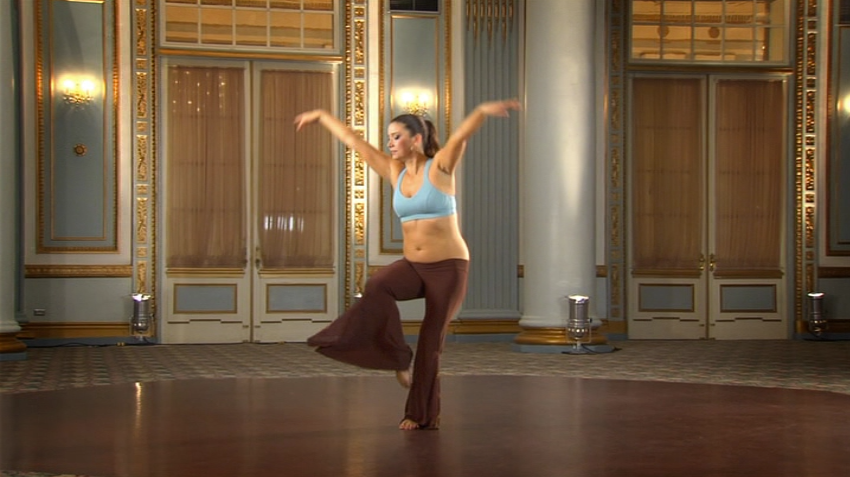
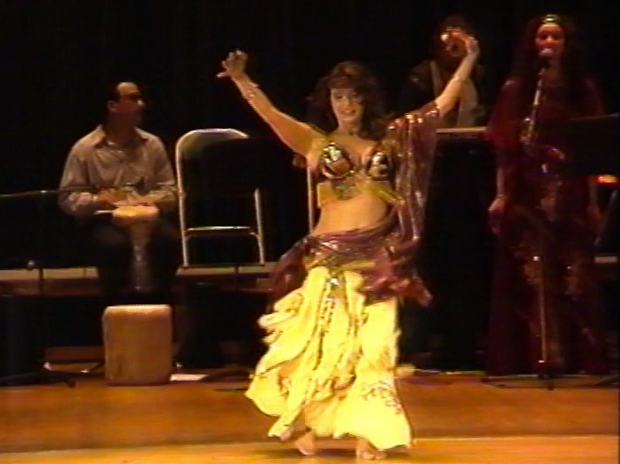
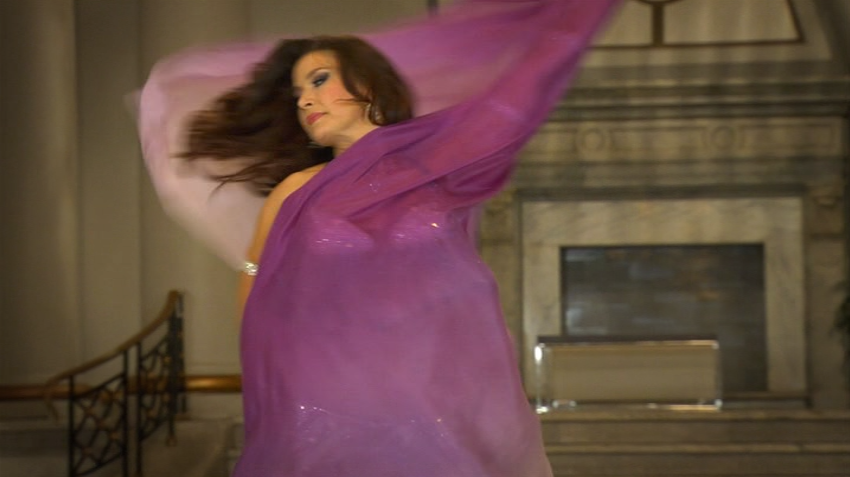
In which Nadira Jamal hits a home run

Nadira Jamal sent an email out to her list this week, and it was one of those things — well, quite frankly, it was one of those moments when it seems someone you’ve never met read your mind and decided to give you a good talking to. It’s called “Everything Else is Gravy: Why we need mere competence, not excellence,” and before you read further, you should just watch it here:

My confession: only a few days before this video came out, I had posted something a bit negative on facebook about my dance talent, or rather, my lack of dance talent. The truth is, I don’t even think I’m the worst. But I don’t have those years of ballet training, and there are certain things in dance — like staying on beat or learning choreos — that take so much work. Listen, I’m human. Sometimes when I look at the stretchy thin people who can already layer a shimmy onto a basic step in releve, I start to wonder what it is I’m doing.

The thing that was really new to me in Nadira’s talking to was this: she points out that sometimes, being too much of a perfectionist can keep you from learning and becoming better. The example she gives is thinking you need to be a top-notch performer before you perform, when really there are many performance skills you have to learn on the stage, by doing. I had to wonder how Nadira got in my head. I’ve taken classes for years, but only had my first real, proper, not just futzing around performance a few weeks ago. And you know what? As Nadira pointed out, it went okay for what it was. It was a student performance, I magically remembered the choreo, I had a big dumb grin on my face for most of it — I need to learn to appreciate that and feed off of it for the next time.

Years ago, I had a Tim Gunn bobblehead doll that stood on my desk and said “Make it Work” when I needed a little more motivation in my work. I think now I need a Nadira Jamal doll that says “It’s Gravy!” when I bring it along to dance class!

Review of Ruby Beh’s Pilates for Bellydancers

I’ve been traveling lately, and it hasn’t left much time for dance, or for any kind of working out. It’s pretty terrible, going from pretty regular movement to nothing. So tonight, after I put the kiddo to bed, I decided to try out Ruby Beh‘s newish instructional on RAQStv, Pilates for Belly Dancers. I wanted to dance, but even more, I wanted to give my abs a little attention.

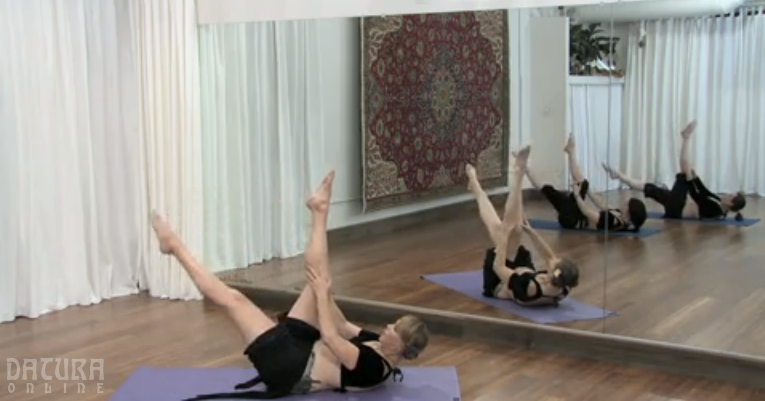
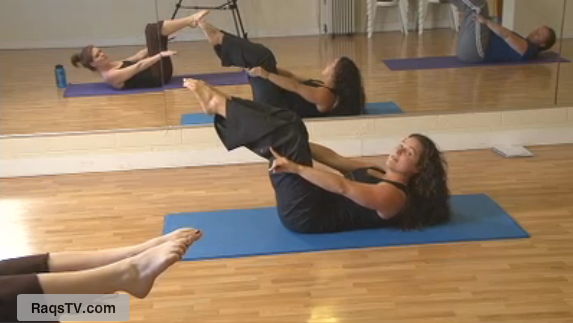
Ruby Beh showing pilates hundred

What I found is an answer to a lot of my dance problems of the past year. One of my challenges lately has been moving from the idea that bellydance is totally “loose” (I’m not really sure where I got this, except by some dumb opposition to ballet), and building up abdominal strength, learning how to keep my core engaged, and hardest of all, learning how to breathe with all of this. I don’t think there’s a single dance class I attend where the teacher is not constantly on me to keep my core “zipped up.”

Well, that’s what Pilates for Belly Dancers is all about. Ruby starts out slowly, really slowly, with posture and practice breathing both standing up and lying down. I loved the meticulous tiny movements that at least started giving me a sense of how the breathing and muscular contractions should feel. She then guides you through some classic pilates movements (the hundred, roll-ups, etc.) but interweaves exercises that help you gain control of the specific muscles useful for bellydance.

After a workout that is challenging if done attentively, Ruby has you practice some basic bellydance moves with special attention to the core. Finally, she teaches a short combination. In both of these segments, she explains what effects can be achieved with a strong, controlled pilates foundation — the fast spin that can stop on a dime, the quick-changing footwork that doesn’t make you bob up and down.

The video is 1 hour and ten minutes long. There was a brief but satisfying stretch to cool down with in the bonus content material, which also included the pilates section from Ruby’s Flawless Floorwork: The Lost Art of Belly Dance Floorwork DVD. The filming is clear throughout, though there is one blooper that was not edited out and a few camera cuts are confusing. Think filmed class, not pro DVD. Still, I had no problems following along.

In short, I was thrilled with the program. Ruby’s generous with pointers on form, and she will sometimes give modifications. She has the experienced instructor’s ability to know, magically, through the screen, just what I’m doing wrong and to correct it. She also has a knack for coming up with lots of illustrative similes to help conceptualize a movement.

All in all, it was so good for me to spend an hour really paying attention to what my core was doing at all times, how all other movements, whether exercise or dance, related to it and drew on its strength. Like Ranya Renee, Ruby talks about engaging the kegels too, though I haven’t heard this talked about in my classes. I haven’t been as delightfully concentrated during a pilates program in a long time. I wish I could buy this on DVD, but at least it’s being offered as a two-month rental on RAQStv.

Veil and Drum Solo Workshops with Aisa Lafour, and other dance notes

My dear readers, I’ve been a busy dancer. I had an incredibly intense week about a month ago — lots of work, lots of kid, lots of dancing in the evenings, either in class or with a video or doing improv, and then on top of that, a super Saturday of workshops with Cihangir Gümüstürkmen. (I will write about this soon.)

Then I was tired. Just exhausted. I didn’t want to dance anymore, I took about a week and a half off. You know the feeling — not inspired, not motivated? I really just wanted to go home in the evenings and spend time with my family, and not be in the studio. I also felt a little sick. I thought, what’s wrong with going to bed ridiculously early for a while? (Answer: nothing. Nothing at all.)

I read my emails from Alia Thabit and Rosa Noreen, and felt guilty for not doing my improv or my Delicious Pauses homework.

I watched a bit of a few videos. Ranya Renee’s Baladi DVDs, and Autumn Ward’s Beautiful Technique. Listened to baladi songs while going about my business, and practiced taking apart the music. Realised that I have a ton of music, but not enough baladi. One night after work I wrote a little piece for the RAQStv essay contest. The prompt was to write about our practice, about how we fit dance into our lives. I wrote about how I try, but so, so often fail.

But you know what? Sometimes taking a break is good. I actually felt re-energized when I went back to classes. A few things clicked that I had been struggling with before. I won the RAQStv contest. And this past Saturday, I took part in two workshops with Aisa Lafour sponsored by Hayal Oriental Moves.
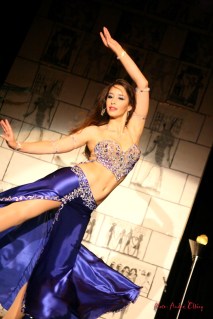
The first workshop was veil technique for beginners, along with a choreo to the gorgeous song “Yearning” by Raul Ferrando. I have very little experience of veil in class (or, well, anywhere else), so I was glad for the opportunity to do a workshop on veil that assumed nothing. Aisa had us start at the very beginning, walking back and forth with the veil, watching how it moves, and learning how to arc it up above us to get it behind or in front. Then we moved on to technique for a few traveling moves, and the rest of the technique was done in the course of the choreo. What I particularly appreciated — and want to remember — are the little performance details Aisa put in. Things like moving softly down as the veil falls, so as to mimic the veil’s movement with one’s own body. I adore these kinds of details, the refinements that make dance really beautiful and more than just a bunch of movements.

While this was all going on, I had Realization of the Day #1: bellydance, oriental dance, however you want to call it, is so ridiculously complex, involves so much training, attention to the tiniest muscle movements, practice with props, learning music, and yet most of the general public thinks it’s nothing more than hoochy mama butt grinding.

And then my veil got caught on one of the ceiling lamps.

The second workshop was a drum solo to “Drum On” by Ali Darwish. This was a really peppy, fun routine, with a number of different shimmies, some fast spins and travel accents, and a few cute Latin elements. I particularly enjoyed a funny butt shimmy Aisa described as coming from Brazilian dance, and which she called the “rabbit.”

It was above my level, but I love having a sense of what I might learn, review, try again work on. Here in Berlin, a lot of workshops are pretty explicitly geared to levels, which I’m not as used to from the US. There, people just went to workshops. On the one hand, it makes sense, since instructors can teach advanced material to advanced dancers. But I also think there’s a lot to be gained from doing workshops a bit above one’s level, since they give you an understanding of where you have to push yourself to get to.

Then I had Realization of the Day #2. Readers of this blog know I’m not a huge fan of learning choreos. I’m a slow learner, and I often get frustrated trying to remember and keep up with everyone else. But I realised on Saturday that learning choreos is not just about a certain approach to dance, or even about learning transitions. It’s also that certain moves are just not so likely to pop up in drilling or technique lessons, but somehow do make their way into choreo instruction. These might be transitions, or traveling steps, or stylizations, or they just might be somewhat lesser-used moves that the “home” instructor hasn’t covered yet.

Anyway, the point was, for once I found myself really enjoying the process of learning a choreo. Some parts of the song really clicked for me, others I had a lot of trouble with (and believe me, I know those are precisely the ones I need to practice!). But all in all, there were just a lot of really delicious movement combinations that were fun to do. And the more we rehearsed them, the sweatier we got, and the looser the muscles did too, so some of the passages also became easier to perform.

When we were working on a particularly tricky bit, Aisa mentioned that she’d had a hard time at first with the combo, and had to practice to get it. This kind of thing is so good to hear when you’re struggling to pick up a phrase. She then talked about how she often choreographs above her dance level, so as to challenge herself. I thought this was also a wonderful reason and way to do choreography. If improv is about finding your safety moves and working with them, why not choreograph to bring more moves into that repertoire?

So now, some classes, workshops, DVDs, and writing later, I am once again a happy dancer. And I know precisely what I need to work on.
Review of Aziza’s Hands, Arms & Poses

Aziza’s oft-repeated wisdom is: “Be amazed.”

At one point while I was doing this video, I thought: “Dude, if I found my body doing what hers is doing, in the way that hers is doing it, I sure would be amazed!”

When you see the title of the DVD, namely Hands, Arms & Poses, you can be forgiven for thinking this video will give you ideas for things to do with your hands and arms while you dance. And it does. Aziza covers useful stretches for the hands, does drills to isolate your wrists, teaches lotus hands as well as beautiful positioning of the fingers. And while the arm work centers on the port de bras, there are good tips for moving with intention, and other arm pathways as well.

That said, I kept thinking the video (which I received as a review copy) should have been called something else. Because the real strength of this program is not in giving you a thousand hand or arm positions — it doesn’t — but in teaching coordination and control. And for that, you have some really fine drills.

After a quite dancey warmup of eight minutes, focusing on the arms especially, you have a variety of exercises. The section called “Drills & Exercises” with “Drills.” This 17-minute segment is a great standalone mini practice companion, the bulk of it being slow and steady arm flows layered on top of  rhythmic hip movements. This is the kind of thing that some instructors do have you practice early on (one of mine does), but not reliably, and it is challenging. When I did this section, I had to think that I should probably do it at least once a week. Seventeen minutes can’t be that hard, can it?

Aziza is looking to see if you’ve been doing your wrist isolations.

Next come two sections on foot patterns. In each, Aziza teaches a long combination, has you repeat it a few times in both directions, and then adds changing arm work to it. I’ve grown to love the teaching technique of drilling a combo with stylistic variations, and I think it’s a wonderful way to show what varying arms can do. The first combination is somewhat easier to get a handle on, while the second shows Aziza’s ballet training, and has rather more difficult leg work. Aziza doesn’t then explain every single arm moves, but you’re supposed to follow along and, probably, improvise a bit on your own.
The one thing that drove me absolutely nuts during this section is that once Aziza gets going with the arm stylizations, the camera focuses way too much on her lower body and feet. I found myself wanting to stick my hand through the screen and yank the view up to Aziza’s arms!

After some wrist isolations, we move on to the “Poses & Combinations” section. In a way, this is the hardest of all, though it looks the easiest if you’re just watching the video. There are three combinations of, well, poses, but the trick is that you’re supposed to move with incredible control from one to the next. Imagine a crazy hard tai chi. When I posted about doing Hands, Arms & Poses on Facebook, Lauren Zehara confirmed my suspicion that this is truly hard, but worthwhile, dance practice:

It’s very different from what most dancers study in their regular weekly classes. Aziza is assuming that we can do all the basics (hipwork, etc) and challenging us to do that while holding exquisite lines in the body and moving with grace and intention. THAT is challenging at any level, and great stuff to work on!

Why do this kind of work? I think if I’d run across this material a few years ago, I would have thought it pointless and boring. But in the meantime, I’ve worked with Rosa Noreen’s Delicious Pauses, and I took a workshop with Heather Wayman in which she shared some of Nadira Jamal’s tricks for using poses to structure improv. Both Rosa and Nadira are well aware of Aziza’s work, I know, but through them I was prepped to see the value of this. It is very hard to slow down the way Aziza practices here, and to keep looking good. I found myself naturally checking in on my abs, to see if they were pulled in, because I needed that muscular support to control my movements. And, while I wouldn’t do all of the poses, a lot of them were quite beautiful and pleasurable. It became, dare I say it, almost meditative to repeat them with intention.

After a brief, also dance-based cool down, you’re done. But you’re actually not done. Hands, Arms & Poses includes three performances. One incorporates the movements into an actual dance, another offers a dance with veil, and a third is “vintage Aziza” in a powerhouse performance from 1994. Other extras include photos of Aziza as a young ballet student and beginning bellydancer, and an interview.

Production values are very high. The quality of the film is extremely good, and the video itself is shot in Le Windsor, a nineteenth-century Montréal hotel. Aziza uses real music, from Hollywood Music Center, track information is given, and the music is in time to the exercises, not just a vague backdrop. The one thing I wasn’t fond of was the fascination with the feet in the foot patterns (!), but in other sections of the video the camera knew where to look. This is a gorgeous video, and one I will return to again.

You can get Hands, Arms & Poses at Amazon or via Aziza’s website.


Refining the Dance with Maria Sokolova

This is the one hundredth post on Atisheh Dance! Here’s to a “century” of me futzing around my living room in yoga pants and a hip scarf and then writing about it for the internets!

Yesterday I wrote about putting together my own customized dance practice using Datura Online. However, since I’m not a fan of boundaries, I used Datura for the warmup, drills, and cool down, but got my dance in from RAQStv. And namely, from a video I was reeeeeally excited about, Maria Sokolova’s 15-minute lesson from Project Belly Dance.

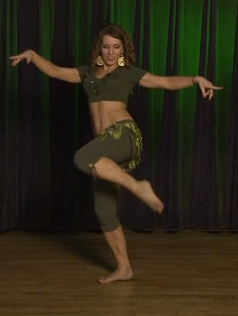
Kick it!

I actually already worked with this video once while I was on holiday, albeit with minimal warmup, so this was my second time doing it. There is quite a bit of material crammed into this little instructional, so it’s the kind of thing that’s worth repeating — and thankfully, RAQStv has it for a month-long rental.

Maria starts by teaching a basic combination facing the camera, then with her back to the viewer. After repeating it for a bit, she starts to go through each section, showing how to add nuance, contrast, and expression to each movement. It might be a particular twist of the torso, a way of moving the arm through space, a lovely variation on a spin, or the quality of expression during a movement.

I adore Maria’s performance style, this is the video I hoped she would make, and I’m so glad she made it. (And I’m just hoping even more that this is exactly what she does for her eventual Cheeky Girls instructional video, but slower, and more.) I think that for anyone who wonders how to get from the basic moves you do in class to a gorgeous performance — sometimes soft and feminine, sometimes assertive and dramatic — this video shows some of the ways to modify movement.

The material is tricky to get on the first time through, which is why it really does bear repeating. The second time I worked with the video, I had already internalized more of the combo, so focusing on the “extras” became easier. And because it is a quick video — it was, after all, the challenge to make a 15-minute instructional — Maria presents some material faster than she probably would in a regular class, especially right at the end. I will definitely do this at least once or twice more so as to learn as much as possible before the rental expires!

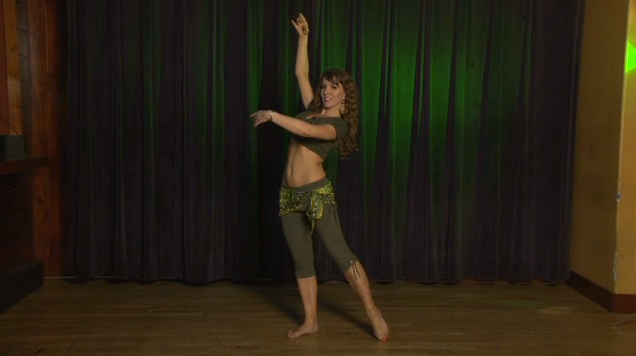
My one beef with this video had to do with production: Maria is wearing a green costume, and her background is green curtains! When I projected this, the lack of contrast made it a bit difficult to see her. (It was easier the first time around, when I was working from a large computer screen.) I suspect this is just because Project Belly Dance was being filmed on a time crunch and in the available space, but I still would have preferred a white background.

Stream(lin)ing my practice with Datura Online

Today I hooked up my computer to my projector and tried something new: doing an entire practice using streaming online programs. I’m used to live class, I’m used to just popping a video in and working with it, but I didn’t quite know what to expect. I’m working on a comprehensive review of Datura Online (and have review access for a month for that), but I wanted to work with the offerings out there to customize my very own practice session, just the way I want it. So here’s what I did:

I scrolled to the “topics” section of Datura Online, selected the “Warmup” option and picked a basic little warmup with some ab exercises for toning; in a second tab, went to “Movement” and then “Shimmies” because I’d seen a basic tutorial on layering 3/4 shimmies onto traveling steps; opened up another tab, pulled up RAQStv and loaded Maria Sokolova’s mini-class from Project Belly Dance so I could get a bit of dancing in; and in a final window, got a quick cool-down with yoga focused on the lower back from Datura. I had everything opened in its own tab, and I organized the tabs in order, so that I wouldn’t have to pause too long between segments.

I’m going to talk about Maria’s lesson in a different post, so I can focus on the Datura offerings here.

Warmup: Ab Warm Up + Conditioning: #1 with Colette Todorov (12:22 min)

To warm you up, Colette has you do slow, deliberate high steps, adding a few arm moves and twists to add a bit of challenge. It’s the kind of thing that looks very easy, but if you’re holding your stomach in as she instructs, becomes more challenging — especially at the end of a long day.

The real goodness is in the ab exercises. I loooved this bit. It’s short and sweet, but involves doing four different kinds of pilates ab exercises. However, instead of repeating each one for a long time and then switching, Colette has you do combination sets — first four slow, controlled reps of each move, then two. There was burn. It targeted the obliques and the lower abs too. Not the kind of thing that will give you washboard abs, but fun to do, and easy to work into a bellydance practice.

Drills: Basic Traveling with 3/4 Shimmies with Ashley Lopez (20:16 min)

This is a standalone section of a longer workshop on the 3/4 shimmy. I was drawn to it because the preview showed Ashley doing a simple, unaccented 3/4 shimmy. This is what I’m learning in one of my live classes, but is pretty different than what I have on most of my videos, and, indeed, from what I’ve learned in other classes.

Surprisingly, Ashley begins by getting you to do a regular shimmy, then try walking with it, then try smoothing it out. At my level, this is a bit easier said than done, and I had trouble figuring out how I was supposed to do that. Then she goes back to basics — phew! — talks about driving the shimmy from the obliques, and does it very slowly. Once the slow shimmy is going, you start walking forwards and backwards with it. And eventually, Ashley has you walk in a large square doing the shimmy at full speed, then try the shimmy on releve. Finally, she does the 3/4 shimmy on the down, and goes through the drills again.

What I liked: Ashley explains and demonstrates why this shimmy is useful. I find it a less exciting shimmy to watch and do than the “hip up hip out” kind of 3/4 shimmy, but her point is that once you get it down, you can accent whatever you like. She has helpful tricks, like clapping on the “1” before you even start lifting your foot. And, she gives pointers on form, as well as occasional tips on what to focus on if you’re just starting.

What I still wanted: I think it would be helpful to have an exercise to isolate the obliques in the movement, and the rev up to full speed was too fast for me. (Mind you, since I didn’t watch the entire workshop, I don’t know if she does a slower breakdown elsewhere — but I’m reviewing the videos as I find them.) I think this video would be a great drill for someone who already has a 3/4 shimmy going, but wants to polish her form and work on layering it onto traveling moves.

After I was done with the video, I wound up going to a full-length mirror and just working with the shimmy. I found that moving away from the screen was actually useful, maybe even necessary. Once I took Ashley’s tips but just watched myself, trying to get the form right, I started to see and feel improvement. Eventually, I got faster, and I was even able to walk a few steps with it. So I will most likely return to the video, but after I’ve drilled the shimmy for a bit on my own.

Cool Down: Basic Short Yoga Sequence with Rachel Brice (9:07 min)

This is a quick way to stretch out and relax your back after a practice. The exercises Rachel chose here are for both the upper and lower back. They resemble some of the moves in my Viniyoga back videos, but with an extra twist or two. Basically, the cool down is composed of slow motion stretches and movements, timed with inhalation and exhalation, and the result is a delicious feeling of relaxation. Simple, sweet, a winner.

So, it was a good time this evening. It was amazing what could fit into each short segment. The beginning and closing videos were very handy as-is, while the 3/4 shimmy drills needs some, well, preliminary drilling on my part to be do-able. (I will most likely work with the entire workshop for that, so I can get a sense of how Ashley builds up to full speed.)

Review of Sarah Skinner’s Bellydance Shimmy Workout for Beginners

Sarah Skinner’s The Bellydance Shimmy Workout is a really smart, useful program, and one that could be adapted to a number of different dance practices. At its core are five shimmy drills of five minutes each. The idea is that you could do one a day if you were pressed for time and wanted to get a bit of regular practice in. In fact, the very last drill incorporates all kinds of shimmies, so you can work on a bit of everything in just five minutes. The drills include upper and lower body shimmies, basic bellydance moves and traveling steps, layering, and traveling with shimmies. While this isn’t a video a beginner is likely to be able to do, I do think The Bellydance Shimmy Workout is a great tool to go from beginner-level shimmies to advanced beginner and further.


I am personally unlikely to get my workout clothes on and the computer set up just to do five minutes of dancing. But I’m thinking maybe I should change that. And I could imagine incorporating one or two of the five-minute drills into a longer practice, perhaps with another technique or choreo video.
What I like even more is that if you play The Bellydance Shimmy Workout all the way through, it’s more than just a collection of workout segments. You have a warmup and cool down, a great strength-building drill for dance, and oh-so-necessary stretches between each of the shimmy drills. Do the full hour, and you have a real workout, but done in beautiful, dancey, WDNY-style: cardio, stretching, strength, coordination, balance, dance technique, all in one package.
In fact, I think you could even take the warmup, strength drill, and one shimmy drill and use them as a solid prep for some improvising… now that would be a fun dance practice.

The quality is, as is to be expected with WDNY, high. Sarah Skinner and her two backup dancers are beautifully dressed and well filmed. Sarah’s voice cues are right on and encouraging, with good reminders to breathe. The music is upbeat and gets your energy going for some serious shimmying – some new agey stuff, some Balkan, some clearly Middle Eastern. You also have the option of doing the workout with music and no voice cues. The variety of shimmies covered is really good – it’s not just about a knee-driven shimmy and a choo-choo, but you get to practice ¾ shimmies and the Arabic hip walk.

I do have one beef with this otherwise excellent video, though, and that’s right in the title: “for Beginners.” The Bellydance Shimmy Workout for Beginners is not for beginners. I’m not saying a beginner couldn’t work with this video and have fun, but if she expects to be able to follow along with much of it, she will be disappointed. Shimmies are hard to get. While some dancers pick them up fast, many take years to really learn the more challenging ones. They really are not a matter of watching them a couple of times and following along.
The “cutesy butt” shimmy!

The video includes a brief (circa 15 min) tutorial on the basic moves and all the shimmies used during the workout. This is great as a review of shimmies, but it’s not lengthy and detailed enough instruction for someone who doesn’t know a shimmy at all. Sarah’s teaching is clear and beautifully filmed, but you’re really not going to learn to layer a ¾ shimmy on a traveling step in a minute’s instruction. It’s just a matter of packaging. I know in the world of live bellydance courses beginner classes can go on forever and cover truly difficult material, but I think expectations are different with a video.

If you’re not an absolute beginner though, and you want a shimmy drill, this video’s the thing. I’m thinking of putting The Bellydance Shimmy Workout on high rotation. It’s exactly what I need to progress in my dance, it’s short enough to do on a regular basis but long enough to get good and warmed up, and, well, it makes me happy!

I received a review copy of The Bellydance Shimmy Workout

Back in the Groove

Sunday was a red-letter day for me — I went to my first dance classes in almost a year. The North Texas Middle Eastern Dance Association held a nifty fundraiser: seven local teachers volunteered their time to teach a series of “Cheap Thrills” workshops, at ten bucks a pop for non-members. I thought that this would be a perfect way to get back in the groove of dancing, so I hauled myself to Grapevine despite a sleepless night and rather a good deal of laziness.

My abs are still feeling a bit sore from the surgery, so I decided to pick two workshops that seemed like they wouldn’t be core intensive: “Dancing With Emotion” with Rivkah, and “Arms, Frames & Transitions” with Heather Wayman. The workshops may have been inexpensive and brief, but each was packed with material.

Rivkah had us do exercises to express sadness, anger, and joy. I found the first two, but especially sadness, incredibly difficult. I’ve never taken an acting class, and all the stagework I’ve done was in rather silly college theatricals in pretty absurd roles. At the same time, despite how vulnerable this kind of work left me feeling, I also think it is one of the most important things to work on in dance. I really can’t stand busy, overly-athletic dancing with no emotion behind it. It’s boring, it gives me no pleasure to watch. But when a performer can really embody an emotion — Zari’s dance in Secrets of the Stage Volume One comes to mind — the result is entrancing.

When we practiced dancing to a fun song and conveying the sense of delight in the music, I couldn’t help but remember a scene in Wim Wenders’ documentary Pina in which one of the dancers has the same task. I found myself emulating his moves, albeit with a bellydance vocabulary. Focusing on emotion made me dance in a completely different way, looser, less worried about variation, less hung up altogether. I’m not sure it looked good, but it certainly felt good.

Heather gave us a full program of arm poses, ways to move from one frame to another, and exercises for structuring and experimenting with dance. She introduced us to some of the tricks she’d picked up while doing Nadira Jamal‘s Mastery Mentoring Program. My favourite exercise of the class was picking three poses and then improvising the movements between them. This seemed like an excellent way to introduce more dramatic punctuation into a dance that would otherwise have rather boring arm work.

Doing these workshops, I remembered one of the things I love so much about dance class, proper dance class instead of videos. The whole world outside the studio disappears. There’s nothing like focusing on the tiniest detail — the pointing of a foot, the precise way of lifting a hand — for wiping all the tedious everyday worries from my mind.