Review of Myra Krien’s Anatomy of a Hip Circle

One of the great things about working with DVDs is that you can always get exactly what you need. Want a quick yoga workout? You’ve got it. Want a long bellydance choreography? It’s there. My only problem is — and I blush to admit it — that I’m such a video addict that I often don’t know what I have. There are so many videos I haven’t really worked with yet that it’s hard to know which to pick. So I look over them and choose one, and sometimes, karma smiles on me and gives me exactly. what. I. wanted. that day.
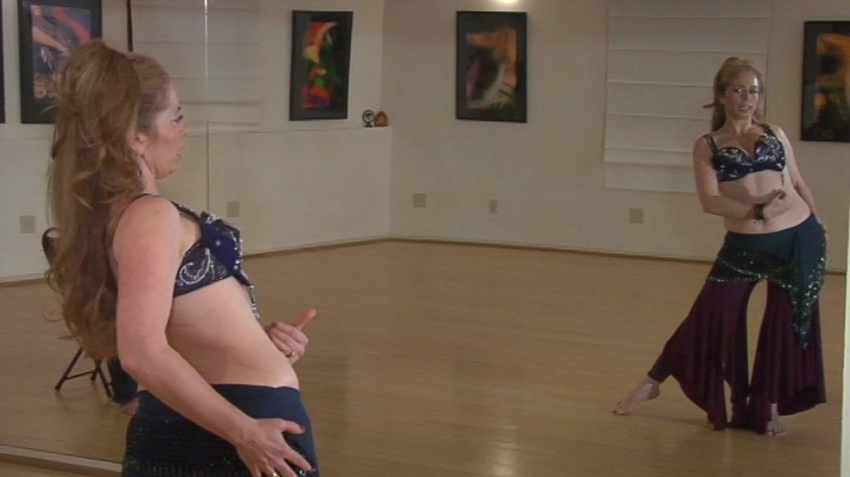
Myra offers safety tips for the Jewel

This was the case for me yesterday. One of the things I noticed when attending Sunday’s workshops was how completely and utterly out of touch with my core I am now, post baby, post c-section. This is, of course, tragic for a bellydancer. So I knew that I wanted something basic today, but something that would get me in touch with my long-lost abdominals, teach me how to feel them again. Enter a karmic smile, in the form of Myra Krien‘s Anatomy of a Hip Circle.

Despite being a regular on various online forums dedicated to discussing bellydance and bellydance videos, I hadn’t heard of Krien’s videos until I found them by accident, while poking around on the internet. And in fact, she has a whole series of them. When I started my review copy of Anatomy of a Hip Circle, I didn’t quite know what to expect. Was this a beginner DVD? It is the first in a series of three videos ostensibly dedicated to hip circles, but what exactly would be included?

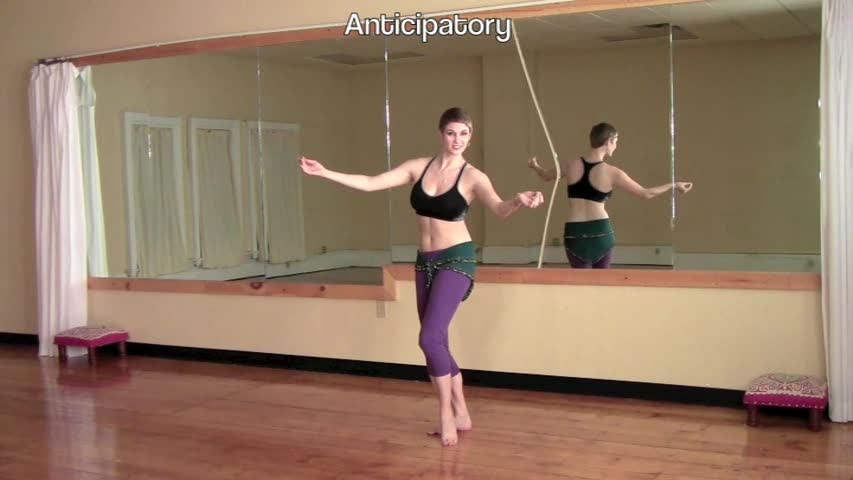
The video begins with a brief introduction to Krien’s Pomegranate Studio. Krien then goes over proper bellydance posture, reminding us to check in on our posture as we practice. And, in fact, like a good teacher she really does remind you to protect your lower back and keep your upper body lifted throughout the following exercises.
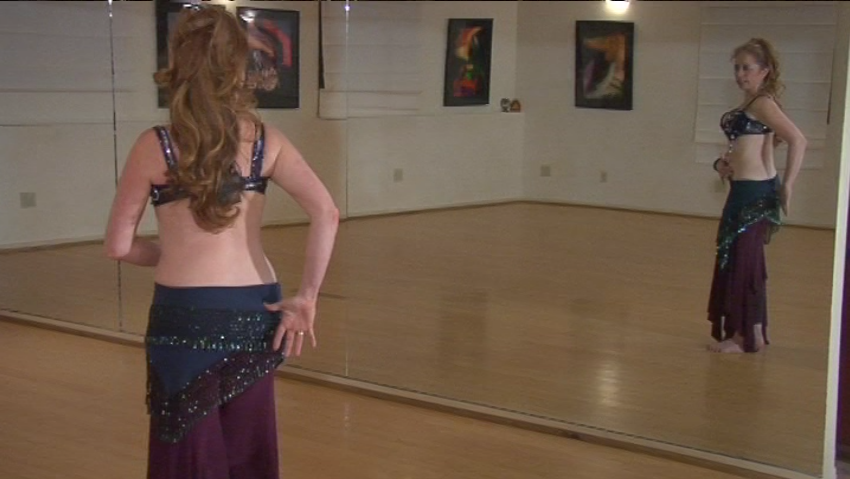
The posture check

In the section on Anatomy, Krien goes over the muscles used to create hip circles, focusing on the psoas, the glutes, and the obliques. She also includes a few brief exercises to get in touch with these muscles.

The 17-minute section with Support Exercises starts to get really meaty. Here are a series of wonderful exercises and drills meant to help you become aware of the different muscles key in bellydancing and practice using them in releve and with different foot positions. This is great stuff, exactly the kind of drills you need to take the abstract discussion of muscles into dance practice. The exercises targeting the psoas were particularly difficult and, for that reason, most valuable. As a beginning bellydancer, it’s not hard to learn to use your obliques; it’s more challenging to get to your glutes (especially individually); but it’s hardest of all to target the psoas. This video is the best resource I have found so far for targeting the psoas that is aimed at bellydancers.
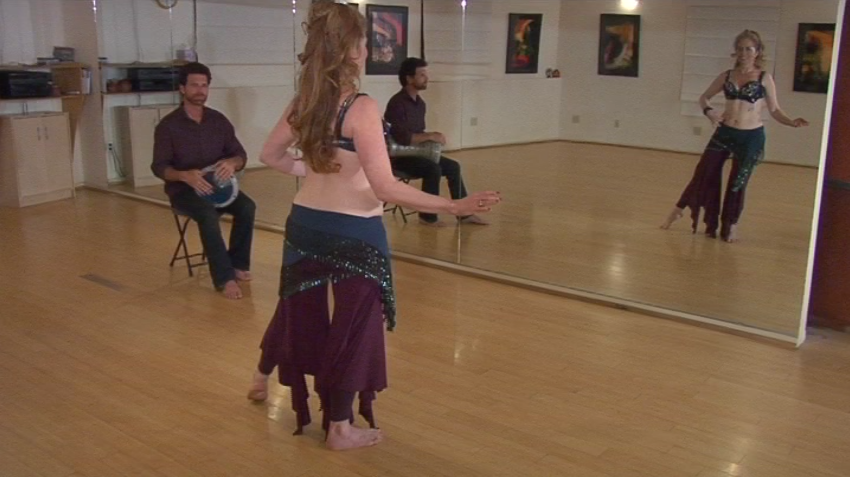
Drilling the psoas every which way

What follows is a four-minute section on the Jewel, one of those moves dancers are always trying to define and find instruction for (or so it seems). Krien acknowledges that there are different ways of teaching and even doing the Jewel, and that hers is just one — again, her version is very psoas-centered.

Next is a twenty-minute Technique Practicum that contains a short warmup, and uses a variety of horizontal and vertical hip circles, building up into more complex and interesting patterns. Circles build into figure eights, and these are varied upon in turn. Sections of circles become horseshoe-shaped movements. Movements are done up and down, backwards and forwards, each time giving a different feel.

The video closes out with a seven-minute Stretching section that serves as a delicious cool down.

So what is Anatomy of a Hip Circle, after all? I think the best way to think of it is as an information-dense one-hour workshop on using anatomical awareness to improve bellydance from the ground up. The information is way too detailed for a true beginner. Most beginners, unless they have a background in dance or movement, just want to learn the shapes and some hand and arm work. It’s really when you advance a bit in the dance that you start caring about using specific muscles to drive movements. An advanced dancer might find this a good review of material, and will probably pick up a few tips, but is unlikely to be challenged. So I think the best audience for this video would be advanced beginners and intermediates.

The entire program is about an hour, and on the surface, the material looks simple enough. Just a bunch of hip circles and figure eights, right? But I think it will bear repetition. A lot of the drills I could fake my way through, but I knew I wasn’t really “grabbing” the movement with the right muscle the way I should. After all, that’s what the drills are for. This is a video to return to when I want efficient, targeted technique practice. It’s like going to a great drills workshop, but being able to take it home with you as well for further work.

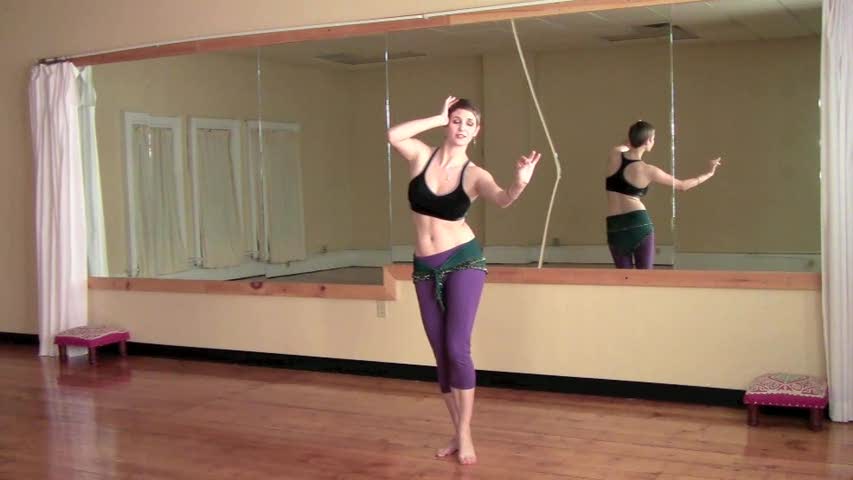
The video is shot in a bright studio with a live drummer. Myra Krien is filmed facing a mirror, and the image and sound are clear at all times. I like her affect — she speaks with the authority of an experienced teacher, is friendly, but not perky in an annoying way. Everything is drilled on both sides. But my favorite aspect of the program is Krien’s attention to safe movement. She is careful to point out movements that might tempt dancers to move in an unsafe way, and gives tips for avoiding muscle strain or injury. I wish more videos gave this kind of attention to safety, especially as dancers at home, without a teacher to watch them, are at even greater risk of injury.
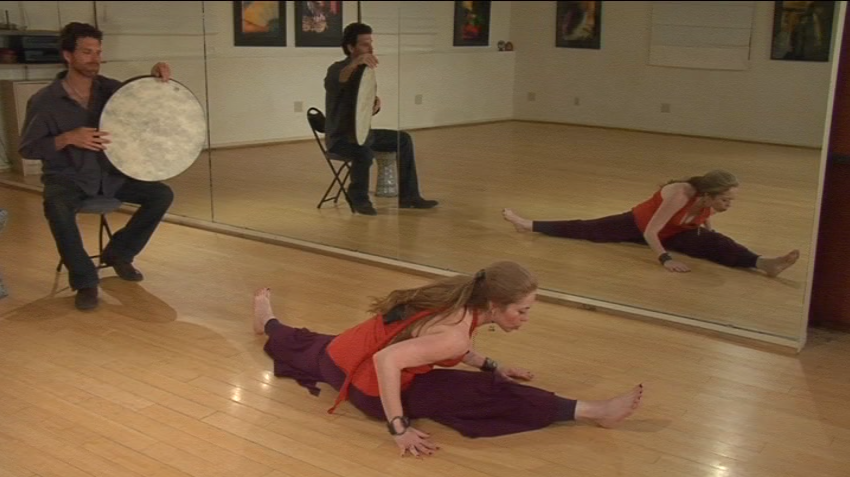
The major con is that the structure is confusing. There is no warmup at the beginning, though a screen tells you to do so on your own. But the Technique Practicum begins with a slight warmup, as if you had not been doing the Support Exercises. And I would have liked a few words at the beginning explaining why the video was set up as it was, and how best to use it. The stretching segment at the end is really effective and relaxing, and Krien also offers a stretch to do when you don’t want to get down on the floor at a workshop. A warmup would have made the program perfect.

All that said, I’m still delighted with the video. A day later, and I already feel more control over my abdominals (and is it my imagination, or are they a little more pulled in?). It’s clear that these drills will be key to getting wonderful, gooey, Egyptian-style movement. In other words, I have my work cut out for me!

Anatomy of a Hip Circle is available at Persephone Store.
Back in the Groove

Sunday was a red-letter day for me — I went to my first dance classes in almost a year. The North Texas Middle Eastern Dance Association held a nifty fundraiser: seven local teachers volunteered their time to teach a series of “Cheap Thrills” workshops, at ten bucks a pop for non-members. I thought that this would be a perfect way to get back in the groove of dancing, so I hauled myself to Grapevine despite a sleepless night and rather a good deal of laziness.

My abs are still feeling a bit sore from the surgery, so I decided to pick two workshops that seemed like they wouldn’t be core intensive: “Dancing With Emotion” with Rivkah, and “Arms, Frames & Transitions” with Heather Wayman. The workshops may have been inexpensive and brief, but each was packed with material.

Rivkah had us do exercises to express sadness, anger, and joy. I found the first two, but especially sadness, incredibly difficult. I’ve never taken an acting class, and all the stagework I’ve done was in rather silly college theatricals in pretty absurd roles. At the same time, despite how vulnerable this kind of work left me feeling, I also think it is one of the most important things to work on in dance. I really can’t stand busy, overly-athletic dancing with no emotion behind it. It’s boring, it gives me no pleasure to watch. But when a performer can really embody an emotion — Zari’s dance in Secrets of the Stage Volume One comes to mind — the result is entrancing.

When we practiced dancing to a fun song and conveying the sense of delight in the music, I couldn’t help but remember a scene in Wim Wenders’ documentary Pina in which one of the dancers has the same task. I found myself emulating his moves, albeit with a bellydance vocabulary. Focusing on emotion made me dance in a completely different way, looser, less worried about variation, less hung up altogether. I’m not sure it looked good, but it certainly felt good.

Heather gave us a full program of arm poses, ways to move from one frame to another, and exercises for structuring and experimenting with dance. She introduced us to some of the tricks she’d picked up while doing Nadira Jamal‘s Mastery Mentoring Program. My favourite exercise of the class was picking three poses and then improvising the movements between them. This seemed like an excellent way to introduce more dramatic punctuation into a dance that would otherwise have rather boring arm work.

Doing these workshops, I remembered one of the things I love so much about dance class, proper dance class instead of videos. The whole world outside the studio disappears. There’s nothing like focusing on the tiniest detail — the pointing of a foot, the precise way of lifting a hand — for wiping all the tedious everyday worries from my mind.

Bellydance and Pregnancy – An Interview with Sera Solstice

I’m very excited to introduce a new feature on this blog: interviews with video artists and producers. Kicking us off is Sera Solstice, a pioneer of the East Coast Tribal style of bellydance. Besides founding Solstice Studio in New York City, she has produced five DVDs with World Dance New York, among them Foundations of Bellydance: East Coast Tribal, Lunar Bellydance, and Solar Bellydance. I previously reviewed Bellydance: East Coast Tribal, but for our first interview I wanted to ask Sera about a subject near and dear to my heart, the relationship between bellydance and pregnancy. Before continuing, you can read my review of her video Goddess Dance – Prenatal Bellydance & Meditation.

Why did you decide to put together a prenatal bellydance video?

I wanted to document/record my pregnancy and be able to share it with others. It was my second pregnancy, and I felt that it was a very special and sacred time. My first pregnancy was filled with fear and anxiety of all the unknowns. During the second go-around, I had more confidence. The meditations and presentation are what I wish I could have had during my first pregnancy. Perhaps there are a few Moms-to-be out there that could benefit from it.

How did bellydance help you during your own pregnancy?

There were many days when I didn’t feel like doing ANYTHING. But I still had to show up to teach class because I had committed to doing it. As soon as I would drag myself out of the house and to the studio, I realized how good it was for me. Suddenly I was surrounded by loving community who could share in my experiences, and I got great exercise. Getting your blood moving is so very important. Bellydance expands your body awareness, especially in the hips and abdomen. So it really helps a woman to connect to her body when she is pregnant, and be able to connect to the changes, and celebrate that through movement. It helps to connect to the baby too, as you feel your whole womb moving, its as if you are dancing with the baby. I think it makes women feel like a Goddess.

What are some of the greatest myths or misconceptions about prenatal exercise, or about dance more specifically? 

I think there is definitely an overload of precautions, and this is so no one is held responsible in case someone gets hurt. But the problem with all the warnings, is that it opens up the psyche and the consciousness to imagine these possible injuries, and then, I believe, it can make a person afraid, and therefore less trusting of their body, and therefore, more prone to the exact thing they are afraid of. What is most important is for a dancer to listen to her body.

Is bellydancing during pregnancy helpful to women even if they wind up having – or plan to have – a caesarean?

Of course! Bellydance is not just meant for preparation for birth. It is an active meditation of connecting with your body. I would assume it would help a woman heal faster from Caesarean, as she would have a stronger body, and a stronger desire to get back to that physical place of enjoyment of her body. As well as having stronger muscles in the abdomen. Plus a stronger back to help her to NOT use her abdominals as she is healing.

Is there a difference between the benefits an amateur can gain from prenatal bellydance and an advanced student or pro? 

Yes. A dancer who is already familiar with Bellydance will be able to achieve more benefits since she has already built the strength and flexibility BEFORE her body begins to change during the pregnancy. I would recommend that someone who has not studied any bellydance, try to get in as many classes as possible before your body starts the massive physical changes during pregnancy. I don’t think it is good for a 3rd trimester pregnant dancer to pick up Bellydance for the first time. I think it is best to go easy as possible and do movements that your body is already familiar with. Bellydance is a very internal dance. Many dancers seek it for its external image and style, but ultimately, the dance initiates from within and is most powerful in this way. So if a new dancer can approach it this way and not worry so much about looking like her teacher, than she could begin dancing during her 9th month of pregnancy. But again, it is about perspective. I see many people overdue it in order to get the results to LOOK right. A new dancer who is more concerned about FEELING right is on the right path.

How did you learn to meditate, and what role do you think it can play in a new mom’s life?

I started meditating as a teenager and have read countless self-help books and participated in countless spiritual, new age, shaman workshops and rituals. I had to make this meditation, really for my own birth, as I recorded it 3 days before I gave birth. I knew it was pretty far out, and may be a bit too inaccessible for a first-time meditator, but it was what I was called to do. For me, this was what the DVD was all about. The meditations were the most important element. I think WDNY played it down a bit in the title, probably because it was so far out there, but I had to commit to what I felt moved to do. It helped me a lot during my birth. I hope so much that Moms-to-be can use the visualizations. It is meant to be listened to multiple times over to prepare for birth.

In your experience, how soon after birth can women start to dance again? 

A woman should wait 6 weeks minimum. Unless the baby slides out without pushing, chances are the pelvic floor muscles have undergone some damage. The womb needs time for healing and for contracting back into place. It is most important that a woman does not rush out and start trying to work off the pregnancy weight. She is doing a disservice to the beautiful home (womb) of her baby, and her own body that worked so hard to find balance during this time. It makes me sad to see so many women who spend so much of their thought-energy on how much they weigh after the baby is born. It is a beautiful gift that you have received, that you were able to birth this little being. Celebrate your body, that did this work, treat yourself like a goddess, and enjoy your baby. Listen to the subtle voices of your body. IF it hurts, AT ALL, don’t do it! I waited at least 6 weeks, because I could feel there was damage to my pelvic floor, and I wanted to recover and heal, physically and emotionally. Birth is a traumatic miracle. It takes a lot of processing and adjusting. It is a whole initiation into a new stage that you will never return from.

Did having a child change the way you approach your dance? 

Yes. Life experience is what makes good art. I have such depth of life-experience, I have endless emotions and anxieties and frustrations, and incredible joys and loves to dance about. Dance about dance itself is quite boring to me.

I’d like to thank Sera for generously answering my questions about bellydance and pregnancy! I think “birth is a traumatic miracle” is a quote to hold on to — I can’t think of a single sentence that has better summed up my experience of it. And now I’m inspired to go back to my daily meditation…

You can visit Sera’s website at www.boldbellydance.com and find out more about her videos at World Dance New York.

My son, future dancer

One of my goals as a parent is not to impose my own desires on my child. I’ve seen it happen too often that parents try to live out their unfulfilled dreams through their children, usually to the frustration of those children. The trick is: what’s the line between trying to revive a lost cause through your kid and just sharing your passions and hobbies with them?

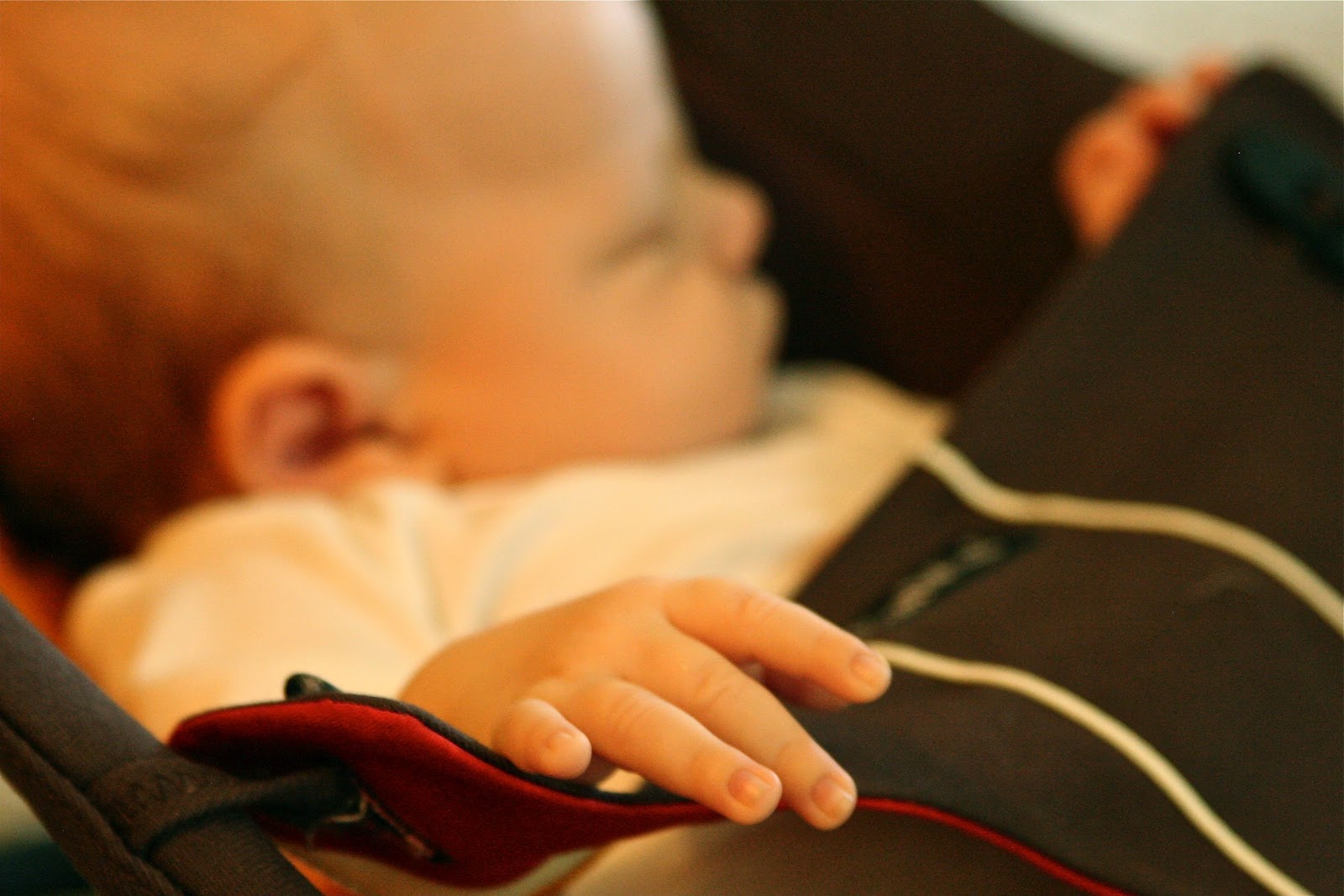
I’m starting to realise the extent to which this is true since, spending a lot of time with my baby, I keep imagining possible futures for him. And unlike those moms who imagine their kids becoming doctors or athletes or lawyers or other important muckymucks, I’ve become convinced that my son has the right build to be a dancer. He has these beautiful, slender legs that I’m convinced will be long, he’s strong and seems to want to stand on his own despite his six weeks (tomorrow), and when feeding, sleeping, or just hanging out, his hands will fall into the most graceful shapes. For an example, see picture.

It’s not that I want or expect him to become a professional dancer, but I like the idea that he will enjoy dancing. The truth is though, even this quite basic and understandable desire is about me. You see, music and his reaction to it gave me one of the most important moments of joy, of connection as a mother, in the last few weeks.

Back track a few months. Baby — just a fetus at the time — was starting to respond to sounds and music outside the womb. My husband and I were watching Fatih Akin’s documentary of Istanbul music, Crossing the Bridge: The Sound of Istanbul. I was lying on the couch, and my husband had his hand on my belly, feeling the occasional shifts and movements. Late in the movie, there’s a scene on the outskirts of Istanbul, in a bar filled with Romani musicians. The musicians are well sauced, and the music is frenetic. One of the Roma interviewed talks about the spirit of the music, how in hearing it, you simply have to get up to dance. When classical Turkish music is played, he says, people just sit and watch.

All the time, the song is rising in a crescendo, the baby is moving like mad, and when the final beat strikes, he gives a good, solid kick in perfect time! My husband and I both feel it and look at each other in amazement. This only grows in the next scene, a short of classical Turkish music — true to form, the baby stopped moving immediately and stayed still for the rest of the movie.

We joked many times later that he liked gypsy music. In fact, as a fetus, he tended to react to fast dance music in general. Fast forward to five weeks after birth. I am tired from interrupted nights and what feels like constant feedings. I am gradually growing in love with this beautiful little creature, but I don’t quite know what to do with him yet. Newborns aren’t very interactive, after all. And then, one day when I’m feeling down, I remember the music he liked in the womb.

So I get the iPod that usually plays rain sounds all night, search for some “gypsy” music, and play it for him while he lies on the bed. We listened to Romanian and to Flamenco music, and his little arms and legs flew in every direction. Sometimes I guided his movements, sometimes I let him just react to it on his own. And can I add that random baby flails sometimes look like flamenco arms? Just sayin’.

Maybe he was reacting to the music, grooving in his own baby way. Maybe he had no clue what was going on. I never can tell with him. But it was a real moment of connection for me, reminding me that the little boy who now runs my life was once in my womb, dancing in time to the beats outside.

Review of Maha Al Musa’s Dance of the Womb

As I near my due date, my thoughts turn more and more towards preparing for birth and labour, rather than just keeping fit and dealing with the aches and pains of pregnancy. For a while now I’ve been watching and working with sections of the Maha Al Musa’s 2-DVD set, Dance of the Womb: A Gentle Guide to Belly Dance for Pregnancy and Birth (which I received as a review copy), and I’m happy that I’ve played with all of it just at the right time in my pregnancy.

In what sense? Dance of the Womb is much less a workout, and much more a guide to and meditation on connecting with your body to have the best pregnancy and birthing experience possible. To be frank, I don’t think I would have appreciated it very much in my second trimester — I did take some peeks into the program, but was not moved to work with it just yet. And I was lucky to have a pretty active third trimester, for the most part, which enabled me to take on more challenging prenatal programs and even normal dance DVDs. (Though I wasn’t jogging or weight lifting or anything I probably wouldn’t do anyway!) But working with Dance of the Womb as everything in my body is starting to get heavy and painful, and as labour itself approaches, has been just right.

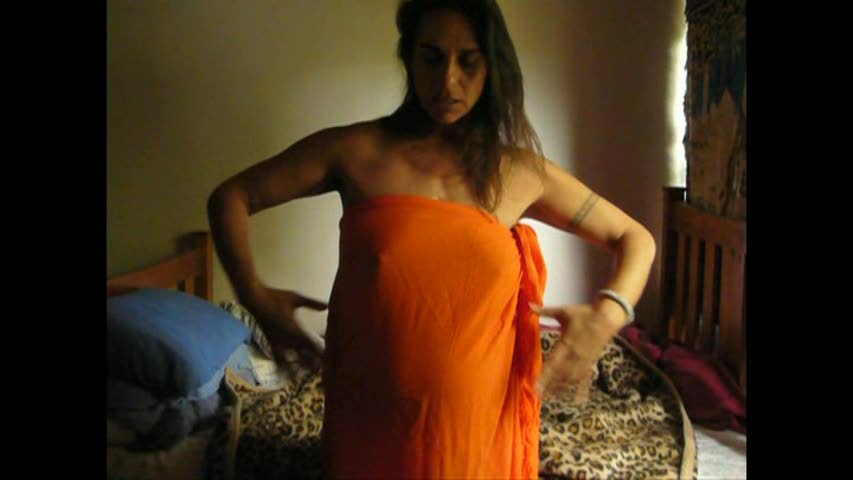
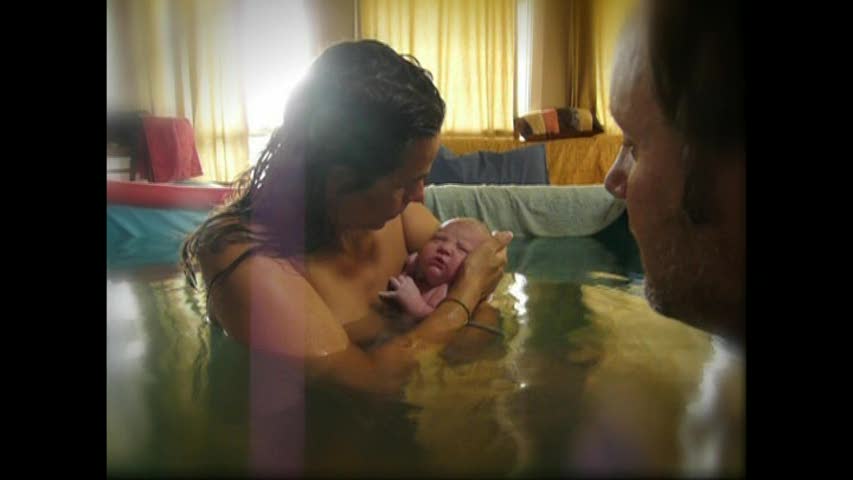
Dance of the Womb has two very different components. One DVD contains a short film of Maha’s home birth of her third child. Between beautifully-shot landscape scenes, photographs, and videos of the birth itself are interspersed interviews with Maha’s midwives. This is an intensely personal film, and really, for lack of a better word, quite amazing. Again, I think this isn’t something I appreciated so much earlier on in my pregnancy, but as I’ve come to see how many of the women I know wound up with cesarean sections recently (the vast majority), I’ve wound up more passionate about being able to labour naturally and with a minimum of interference. I would be too nervous to have a home birth, at least right now, but seeing that it’s possible, and seeing Maha do it, is truly inspiring at this point in my pregnancy.

It’s also inspiring in a practical way. Labour is a long process in many cases, and very different from what they show in the movies. Actually, it’s also quite different from the movies I saw in the Lamaze class on dealing with pain naturally and in the hospital’s prepared childbirth class. Those tend to be shorter and to focus on the last, most painful part of the first phase of labour (transition) and the birth itself. As astounding as all of those births are (both my husband and I are in tears when the lights go up), the videos themselves make the process look rather horrifying and unmanageable. The documentary in Dance of the Womb has a lot of shots of Maha walking and moving around, and as boring as this probably is to someone not currently with child, it’s great to see how she manages most of labour, and that she can manage it. The video also inspired me in nitty gritty ways. While I don’t live in the paradise of nature Maha inhabits, I do have a little bit of a park just outside my apartment, and only when I watched her video did it occur to me that I could spend some of my time outside instead of cooped up, communing with the carefully landscaped nature available to me!

Astoundingly beautiful

The first DVD contains the dance program itself. This is broken down into the following chapters:

Warm Ups (45 min)
The Circle (26 min)
The Spiral (9 min)
The Figure 8 (12 min)
The Cervix (4 min)
The Hands & Arms (13 min)
The Chest (7 min)

This is, as should be obvious, an enormous amount of instruction and practice time. What this means, practically, is that it was a little tricky for me to get started with it. I really had consciously to set aside a good chunk of time for it, and even then had to break it apart into two sessions. Again, this makes sense at the end of pregnancy, as I wind down from the usual pace of my work and more carefully take time to take care of myself.

 
The Warm Up is a program all on its own, comprised of a variety of yoga-based stretches and movements for improving bodily mobility. The instruction is incredibly precise, and the pace is slow. There is much focus on concentration and breath. Despite the fact that I’ve done what feels like a million prenatal workouts by now, I was still surprised by how many movements in this section were new to me. They effectively stretch every part of the body (every part), and are quite satisfying. I’ll add that I was working with this during a pretty high anxiety week, and it really helped to calm me down.

The subsequent chapters are all dance based, but also all subtly different from each other. Each takes as its focus either a part of the body or a basic shape associated with bellydance, and each teaches bellydance movements. However, some chapters are structured like more typical dance instruction, and teach you movements and variations on them (like the figure 8), while others introduce a basic shape or idea and then have you move and improv freely (hands & arms). Instruction is detailed and from the ground up — while I picked up some new things, a woman who had never bellydanced before in her life could learn to do these movements comfortably and safely. Moreover, Maha often gives tips on using the particular movement in childbirth, especially when the form would be different for labour than it would be in “proper” bellydance.

The key sections are the circle and the spiral, probably because those are the most elemental movements both for bellydance and for birthing. The focus here is really not on dancing in a performance sense, but on using the movements to enter a meditative, trance-like state. And it works, at least for me. Again, this is a quality of the video that I think makes it less suitable for an energetic early pregnancy, but fabulous for the end stretch. If I go into labour tomorrow (and this is not unlikely), I will probably play the circle and spiral chapters and move along with them.

You have to be creative to figure out how to suit the program to your needs. The 45-minute warmup would be enough for any day, and does incorporate some of the bellydance moves too. You could do the warmup and then a variety of chapters, or just some of the chapters on their own. The pace is slow and careful enough that I don’t think a lengthy warmup is really necessary.

Dance of the Womb: A Gentle Guide to Belly Dance for Pregnancy and Birth is a valuable compendium of preparation, information, and inspiration for birth.

Mala on setting up a dance practice

If you haven’t had a chance to read it yet, do go and take a look at Mala’s post on setting up a dance practice:

http://malabhargava.com/belly-dance/your-kind-of-practice.html

This is something I’m obsessed with, since I have so many videos, so much enthusiasm, and so little time. The best thing I’ve done for my practice is starting this blog and trying to review videos more often — it motivates me to work with new programs and revisit old ones.

But what spoke to me most about Mala’s post is this: sometimes we amateurs want to be super-organized and ambitious about dancing, especially when we fall, and fall hard, for something as enchanting as bellydance. But the thing is, it’s sometimes good to remember that we’re not professionals. That doesn’t mean not taking dance seriously, but it does mean that we have to remember to have fun with it, because nobody is giving us a grade or a cheque at the end of our dances. We’re doing it for ourselves.

Review of Rosa Noreen’s Delicious Pauses

Belly dance videos have come a long way since I made my first purchase, over ten years ago, of a Veena and Neena video that consisted mainly of them hopping side to side for what seemed like an eternity. We got better “basics” videos… then we got better workouts, and better drills… videos focused on all kinds of specialized forms of the dance (can you say “tribal style iranian-texan fusion with double feather poi and an isis tail”?). But one of the most inspiring innovations in the industry, from where I sit as a consumer and lover of dance, has to be the videos that deal with high-level dance concepts: how to refine movements, the tricks of performing, and how to convey a feeling or tell a story with dance. Rosa Noreen’s new DVD, Delicious Pauses: Negative Space in Movement, is just such a program.

Now let me start by saying that I have my biases when it comes to bellydance. While there are many fabulous dancers who practice forms of it, the ones that make me happiest to watch — and who most make me want to dance — are those who dance with a certain kind of simplicity. Now, that doesn’t mean simplicity is easy to achieve, but rather that they imbue the most basic movements with expression, fluidity, tension. And this is actually hard work. So right from the start, I was drawn to the concept behind Delicious Pauses: using drawn out movements, dramatic stops, and “negative space” to keep the audience engaged and interested.

The DVD itself has three sections. The first is a theoretical introduction, in which Rosa Noreen describes the kinds of pauses she will teach later in the DVD, along with some other principles of her methodology. I won’t give away the whole bag here, but I will say the most interesting for me was her use of breath to aid either a sense of calmness or a dramatic move. I’m used to thinking about breath in yoga, but have never managed to do it much in dance, and this video really made me see how integral a part of dance conscious breath (and not just remembering to breathe) can be.

If you’re like me, the theory will leave you interested but confused. This is where the second section comes in, a series of detailed exercises in which Rosa Noreen has you practice the different kinds of pauses. Now, this is very methodically done: for, say, undulations, she reviews all the principles, shows you how different pauses might work with an undulation, has you practice them in a follow-along drill (no talking, just on-screen text), and then has you improvise using the same movements.

I loved how incremental this strategy was, and how it kept building up on itself. Rosa Noreen repeats the concepts a lot, but it turns out they mean different things when applied to different movements. Having the theory and then showing all the ways it can be applied using practical exercises is just excellent teaching, in my opinion. And while only the main sections are in the DVD menu, the chaptering is detailed enough that I could easily skip to a certain section or repeat what I needed.

What I found was that once I hit the “improv” segments, my body started taking over… but it also started almost unconsciously incorporating the different kinds of pauses into other moves as well. This is really superb training for improv, because it’s not about doing a million moves, but about being able to vary the basic moves in interesting ways. By the end of this video, you can do six variations on a horizontal hip figure 8 without really even thinking about it too much!

The final section includes two combinations that have you practice the pauses and concepts, this time in a slightly different way — for example, with a languorous sweep of an arm, or a intentful pose. To be honest, they didn’t look like much when I watched them, but I did find when doing them that they also “taught” in a different way than the theory and exercises. The combos are presented and drilled in super small increments, then added together, re-explained, and drilled. For someone who has an easy time learning choreography, this would probably be tiresome. I am not that person, so I happen to be happy for very slow choreo teaching, and kind of wish every teacher did it this way!

Delicious Pauses is only about 75 minutes long, but it contains material that will be worth going over repeatedly. Although all the instruction is with bellydance moves — and you do have to know the moves already — the concepts could be more generally applicable to dance. I’ve watched it through once and then worked with the exercises and choreo once, and already I feel different performing the same moves. I have a better sense not just of what it’s like to slow down (and in fact, it’s harder to slow down than to speed up), but the kinds of effects and sensations I can get from varying regular speed, staccato, and slow movements.

This is really smart stuff, and lot of thought and care has been put into the making of this DVD. We’re light years beyond Veena and Neena’s “genie hop.”

Delicious Pauses is available at Amazon via the link, and from http://rosanoreen.com/. I received a review copy of the DVD from Rosa Noreen.

Review of Kaeshi Chai’s Expressive Bellydance Veil

Years ago, when I lived briefly in New York City, I managed to catch a few bellydance workshops and classes here and there. I took classes at Serena Studios (I think I still have my card with a few unstamped spots on it), and took a veil-oriented class with Elena Lentini in which I managed to wind up more tangled and dazed than I care to admit. During one of the workshops I took, I remember noticing Kaeshi Chai quietly doing her thing at the side of the room, and being impressed that a dancer who was already well known was continuing her training with us plebes. So when I saw Kaeshi begin her veil video by acknowledging her influences, among them Serena Wilson and Elena Lentini, it was a full-blown dose of New York nostalgia.

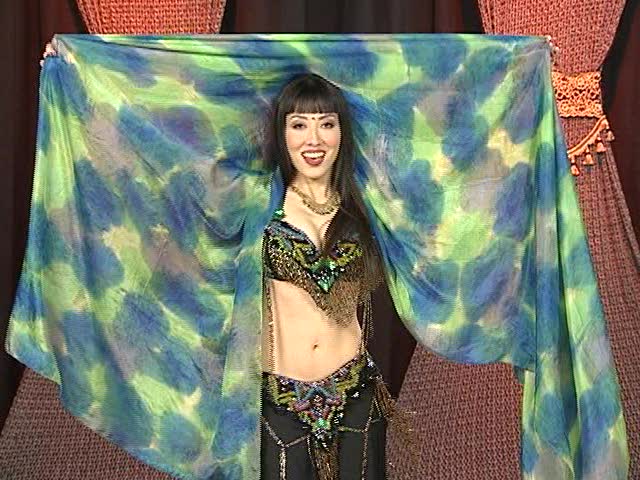
Kaeshi Chai’s Expressive Bellydance Veil is a compact introduction to a range of veil moves. I approached it as a beginner in things veilish, having had very little veil work in class (hence my confusion in Lentini’s studio), and not having worked with any other veil DVDs yet. Kaeshi begins by describing different kinds of veils available and explaining how to steam it. (Useful!)

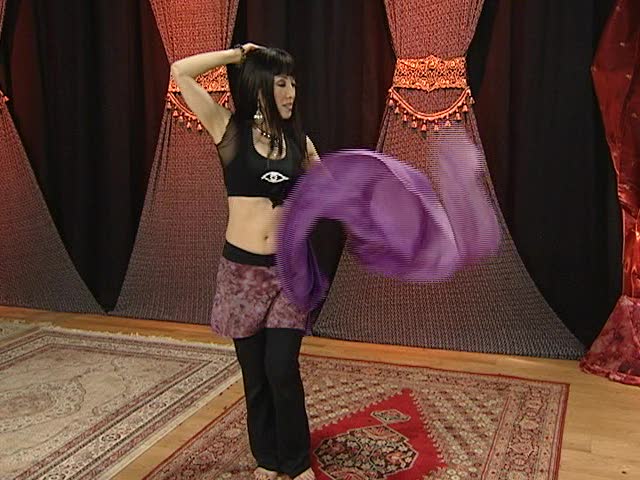
As for the rest of the video, I think it’s best to think of it as a sort of movement encyclopedia. She introduces basic veil moves (like “around the world” and “butterfly”) in one section. This is followed by six combo sections, three with veil moves that begin from the front of the body, and three beginning in the back. In each combo, Kaeshi actually presents another three veil moves, and then puts them together into a small combination, which she repeats a few times.

The instruction is careful, but quick. Kaeshi will often show how a move looks, then demonstrates it slowly, often setting the veil down to explain the hand or arm paths without it. Then she has a few more practices, sometimes giving little tips along the way. A couple more sections after the combos show you how to move into a vertical hold on the veil, and show veil ropes, turbans, and whips.

My experience was that I was surprised by how quickly I got some of the moves, and how frustrated I got with others. The DVD doesn’t have a lot of drilling, so I think to make it work you really have to focus on little bits — take it one move at a time — and just practice, practice, practice. I’ll clearly need quite a few tries to get a sense of the weight of my veil and how not to get it in my face every time I do the butterfly. I would also suggest doing a warmup focused on the upper body before beginning, since your arms, shoulders, and neck will benefit from being loosened up, and then ending the practice by stretching these muscles.

The final segment of the DVD is a costumed performance by Kaeshi that uses all of the moves she presented in the DVD. It’s very lively and peppy, not the sort of romantic and languorous dance one often expects with veil, and it was nice to see that the veil can be used for a variety of effects.

Because I’m almost an utter beginner, pretty much all of the veil moves were new to me. There were no veil wraps, which I actually have done in class, but there were to-me-unexpected moves like whip and rope that used the veil for a fast, dramatic effect. Will you like the video? The DVD is well chaptered, and Kaeshi is personable on screen. At 50 minutes, it moves very quickly through a lot of information, so you have to be willing to stop and drill on your own. And while there is a bit of attention to how certain veil moves or arrangements might work with particular bellydance moves or steps, the focus here is clearly on what you can do with the veil itself rather than on creating a whole dance.

I think this video would be good for someone who would like a manageable introduction to holding and using the veil, or who wants to add some new veil moves to their repertoire. I don’t think it would satisfy someone looking for a long, everything-about-veil video with lots of drills and choreography. As for myself, I really enjoyed it because I was able to fit it in at the end of a long day, and can imagine returning to practice individual moves, which is my level right now. But it also made me curious for more on how to put a dance together!

Expressive Bellydance Veil is also available from Hollywood Music Center (from whom I got a review copy).

Working with Carmine Guida’s Baby Beginner Doumbek Workshop

Take enough bellydance classes, listen to enough Middle Eastern music, and eventually you have to come to terms with a simple fact: you’re going to have to learn to recognize and dance to the rhythms.

DOUM!

Now, I’m guessing that for most people this is not a hardship. Then again, most people can clap in time with a crowd, whereas I was always the person who clapped exactly halfway between the beats. I’ve had people explain some bellydance rhythms in class, but that’s just way too little exposure to really learn. I’ve played around with the rhythm lessons on videos like Jenna and Raquy’s The Heartbeat of Bellydance: Rhythms & Belly Dance Combinations for Drum Solos, but although that kind of program is valuable for learning how to dance to rhythms once you know them, for me it was still too little.

Eventually I recognized that if I really wanted to improve my sense of rhythm, I’d just have to ahead and learn how to drum. And frankly, the doumbek is a pretty sexy musical instrument. Did I mention I’m also pretty unmusical? So an instrument where I wouldn’t have to worry about melodic pitch really appealed to me.
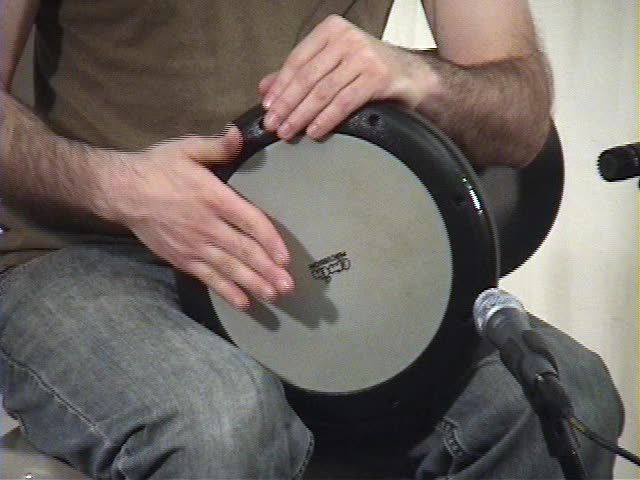
This is by way of introduction to Carmine T. Guida’s Baby Beginner Doumbek Workshop, a DVD that starts at the beginning — at the very, very beginning — of learning how to play a doumbek. Which is great, since I think a lot of the material you can find assumes some facility at drumming, and goes at a pretty fast pace. But I’m not the only dancer who has wanted to learn a bit of doumbek, and the fingers we learn to move so gracefully are not always adept at making dums and teks!

Although I have a review copy from Carmine, I think it actually doesn’t make sense to watch the video once and review it. I do have a tiny bit of background: I took a world drumming class this spring, and whether we used doumbeks or djembes, we learned new rhythms very slowly, and were taught to practice them a lot. So I’ll work with the video gradually, and let you all know how it goes.

Some first reactions: 

The first cool thing you’ll notice is not even on the DVD — it’s the inside cover. Open up the cardboard DVD case and you’ll see all the basic rhythms taught in the main workshop. I think this is nothing short of brilliant. Simple, but brilliant. I’m a visual person, and I often need to see a rhythm written down as well as to hear it. However, files included on DVDs tend to be annoying to work with, since I’d have to print them or the like, and just having the rhythm pop up on the screen means that I can’t practice with it. Having a handy, portable guide to the rhythms is wonderful, because I can use it to practice without even putting on the video.

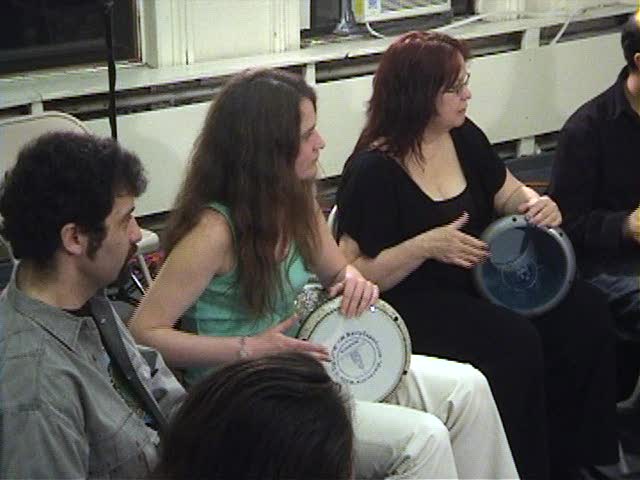
The instruction is a filmed workshop, and Carmine begins with the very basics: how to hold the drum, a relaxed posture, finger positions, and how to hit the drum with the dum and the tek. My previous teacher had us do our teks with more of a closed hand (or maybe I just followed incorrectly!), and following Carmine’s instructions gave me a nicer sound that was easier to achieve. A few basic drills (again, all different from what I’d done before) help students switch between dum and tek — trickier than it sounds at first.

I recognize that look of intense concentration…

The workshop context is actually really nice. This kind of thing can be distracting in dance instructionals, but with drumming, where so much is about getting into a groove with others, it really makes sense. Carmine jokes around with the students which makes the whole thing more fun, and when he corrects them I notice that I was making the same mistake.

The thing that was very different from my class was this: while we were taught to count out rhythms, Carmine teaches them by sound. I worked with the sections for maqsum and baladi to start with. In each, he plays the very bare bones of the rhythm a few times slowly, then has the group join in and repeat. Once they get it, he might embellish the rhythm a few times, regularly returning to the skeleton form. On the one hand, I’m used to counting and missed it a bit. On the other, I liked that this way of teaching taught a focus on the general shape and sound of a rhythm, rather than an abstract count. Some of the workshop members seem to be dancers, and certainly much of the audience of the DVD will be too, so it makes sense to teach a kind of instinctive feeling for how the rhythms sound.

So far, I’m already excited about getting up tomorrow morning and tormenting my neighbours with baby maqsum and baby baladi! Next time: saidi, and my personal nemesis, the dreaded ka.

Baby Beginner Doumbek Workshop is also available at http://www.carmine.com/.

Review of Secrets of the Stage Volume One

Secrets of the Stage Volume One: A Performance Course for Belly Dancers came out a while ago — 2007 to be exact — and around that time Michelle did a giveaway and I wound up with a copy. I remember watching it back then, but for some reason I wasn’t in the right place yet to appreciate the video. I’m not sure why. Maybe I didn’t have the patience to sit and watch dancers enough… or maybe I wasn’t thinking intensely enough about how to make bellydance my own. Whatever the reason, my current state, physically a bit slowed down but with an unusual amount of time on my hands, led me to turn to it again. I’m not looking to perform in the near future, so I’m really writing this from the perspective of a learning dancer who simply wants to improve, and to think more deeply about the dance I love.

Zari guides her audience

The video consists of several sections:

Calmness and Simplicity
You and Your Music
Focus and Energy Projection
Exercises

The four “theoretical” sections feature one or more brief introductions by Michelle Joyce which are then followed by full-length dance clips of dancers: Adriana, Nanna Candelaria, Sandra, Shoshanna, Zari, Zaheea, and Michelle herself. As you watch each clip, the dancer “narrates,” reflecting on the dance you’re watching or her dancing in general.

There are some truly memorable moments. For example, in the “Calmness and Simplicity” section, Adriana describes performing a glass dance in which the glasses cracked when she stepped on them. In the video, you cannot see her bat an eyelid out of time, but to hear her tell it, the crack was so loud that the front rows of the audience heard it.

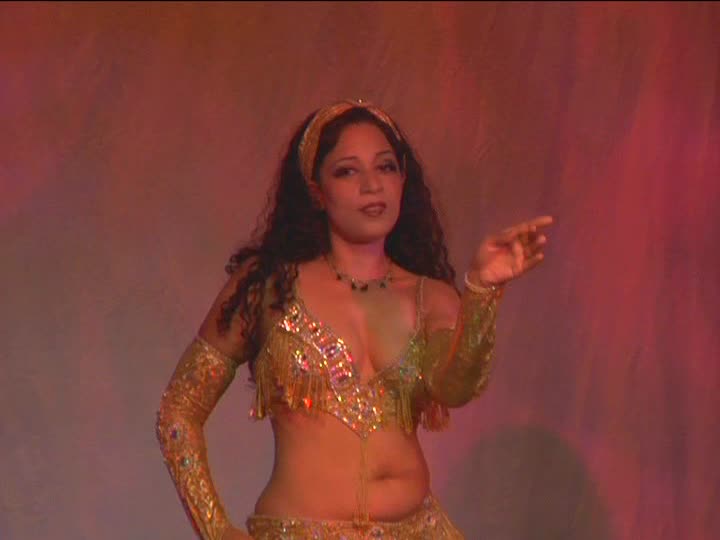
In Adriana’s clip, the narration tells you the backstory behind a dance. In other cases, the dancer speaking teaches you how to see what is in front of your eyes. Zari performs a haunting dance to “Ana Bin Tezarek,” and part of what makes it so haunting, you learn, is the way she changes focus between her body, the audience, and so on. I think I would have noticed that Zari dances with varied expression and that she uses her eyes wonderfully, but I wouldn’t have known that it’s not just about looking up or down, but about guiding the audience’s interest in a certain conscious way. This doesn’t just tell me how to learn from Zari, but is also a kind of training in how to watch other dancers, what to look for, how to learn the craft.

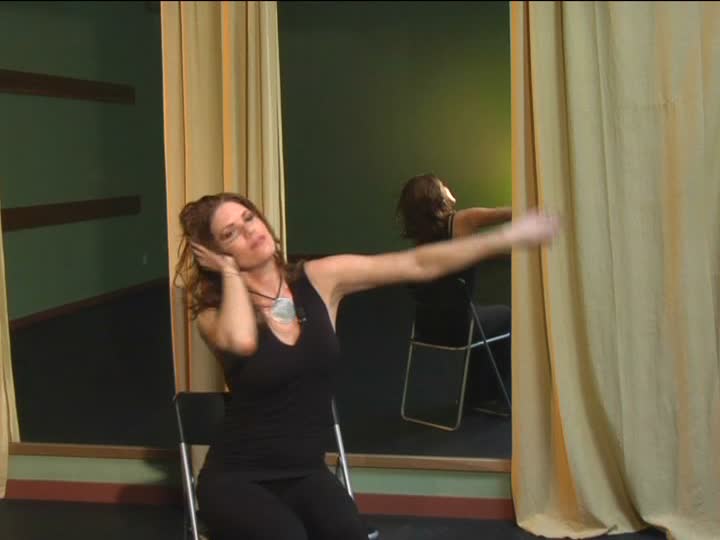
Michelle demonstrates how dynamic sitting in a chair can be

One of the things I loved about this video was discovering a number of dancers I really, really enjoy watching. While all were lovely, I’m left wanting hours more of Zari, Sandra, and Nanna, all very different from each other, but all embodying qualities I adore about the dance. Another quality I loved was the focus on simplicity in the first section. There are a ton of bellydance instructionals out there that will teach you how to accomplish complicated drills and combinations, but how many, even five years later, reinforce the idea that simplicity in dance can also be beautiful and delicious to watch?

Finally, the exercises. There is a guided relaxation, a chair exercise in which you only dance with your upper body, an improv exercise in which you dance to the same short clip of music four times without repeating your movements, and a brief focus exercise in which you place your focus with intention. I did all of these (minus the guided relaxation) on a different day, when I was warmed up from another workout. And frankly, I thought they were kind of genius.

The chair exercise really forces you to exploit the movement potential of your upper body — chest, hands and arms, head, facial expressions. The improv exercise features seven different musical clips, and not only did it prompt me to be creative and to move across the floor more than I usually would, but it also made me listen to how different the clips were from each other musically, how each one “asked” me to perform different kinds of movements. The focus exercise was brief — I need to practice it with my own music — but I found it took my attention from my own body and its movements to points outside my body. This changed the feeling of dancing completely, and really allowed my body to react to the music on its own, without as much interference from me — if that makes any sense!

Even though I watched Secrets of the Stage Volume One all the way through twice and did the exercises, I feel I’ve barely begun to scratch the surface. There is so much information in here, too much to absorb all at once, and the real test will be to practice the exercises with my own music. Still, I found the video marvelously liberating — this is really a program about dancing rather than about performing a series of movements in a certain way, and as such, it is deeply pleasurable both to watch and to work with.

Secrets of the Stage Volume One is also available at Cheeky Girls Productions.