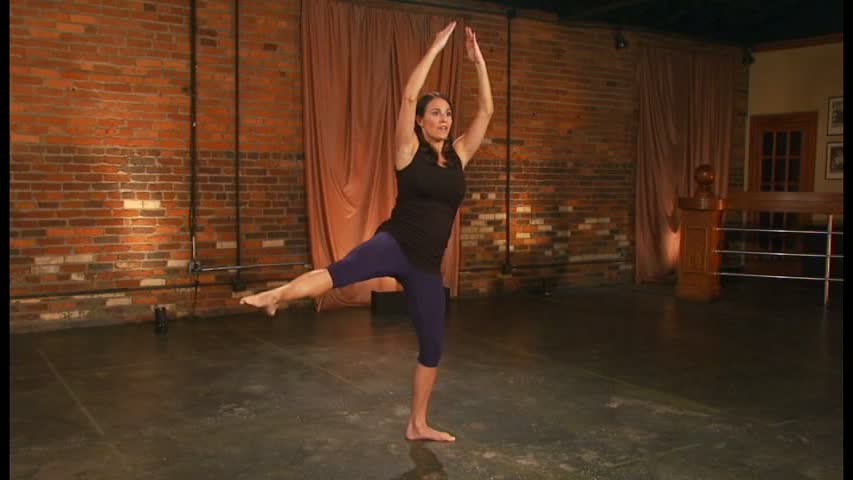
Review of Maha Al Musa’s Dance of the Womb

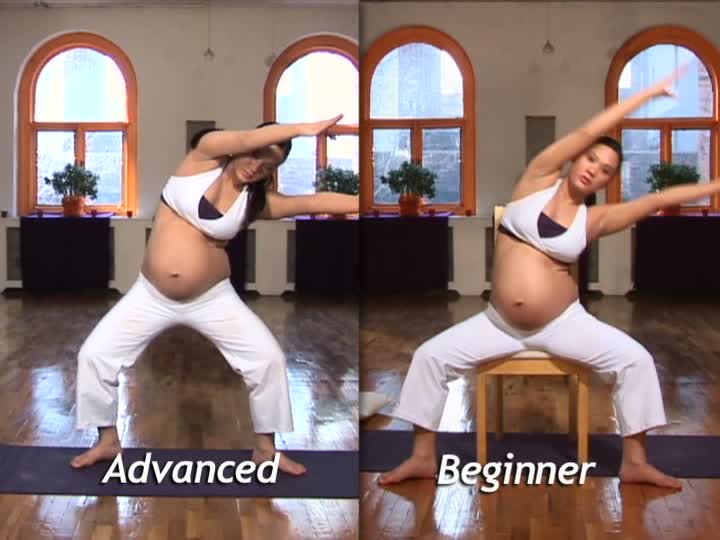
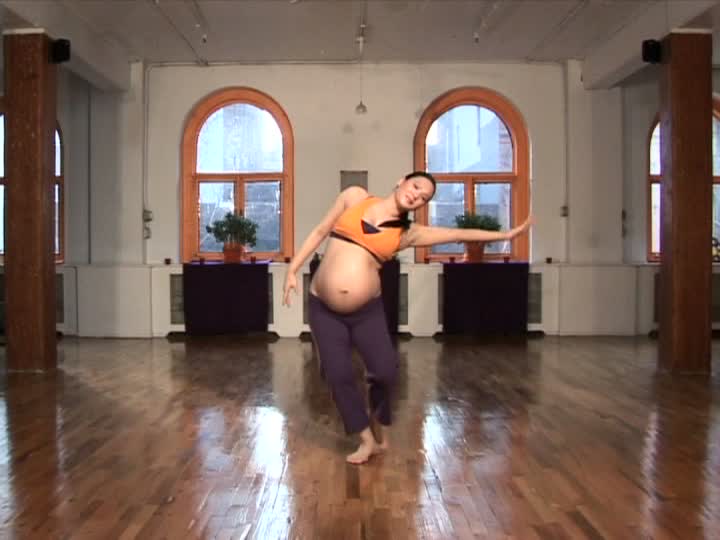
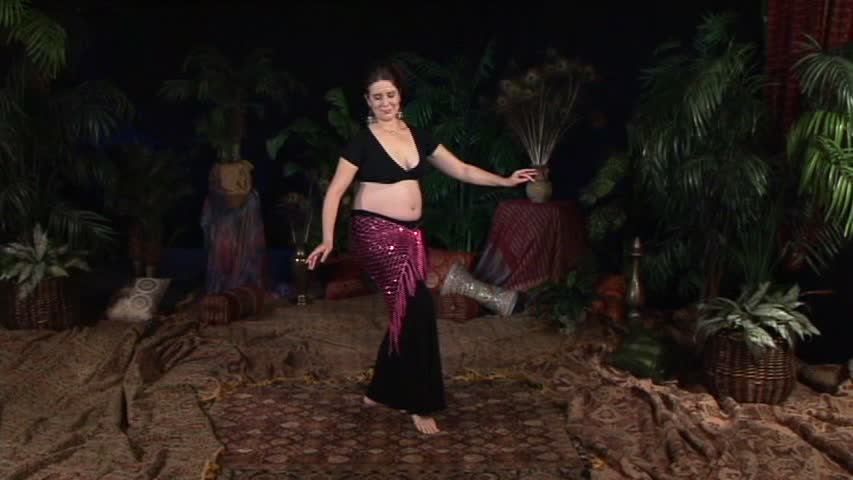
As I near my due date, my thoughts turn more and more towards preparing for birth and labour, rather than just keeping fit and dealing with the aches and pains of pregnancy. For a while now I’ve been watching and working with sections of the Maha Al Musa’s 2-DVD set, Dance of the Womb: A Gentle Guide to Belly Dance for Pregnancy and Birth (which I received as a review copy), and I’m happy that I’ve played with all of it just at the right time in my pregnancy.
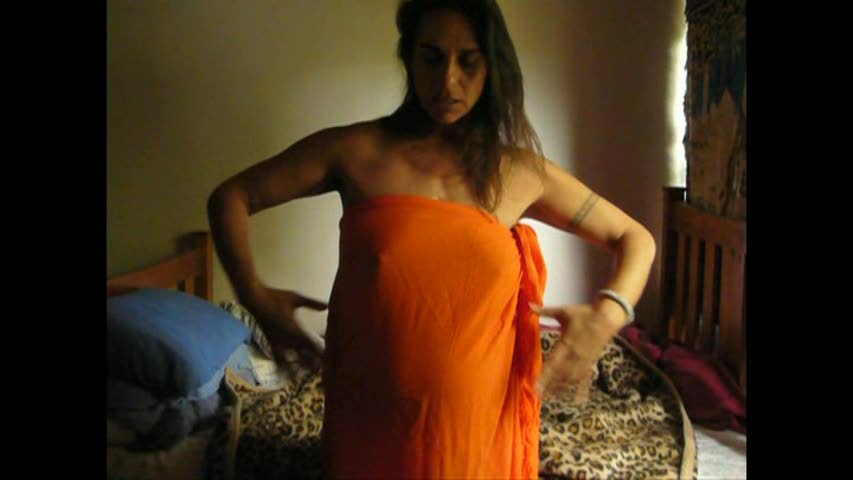
In what sense? Dance of the Womb is much less a workout, and much more a guide to and meditation on connecting with your body to have the best pregnancy and birthing experience possible. To be frank, I don’t think I would have appreciated it very much in my second trimester — I did take some peeks into the program, but was not moved to work with it just yet. And I was lucky to have a pretty active third trimester, for the most part, which enabled me to take on more challenging prenatal programs and even normal dance DVDs. (Though I wasn’t jogging or weight lifting or anything I probably wouldn’t do anyway!) But working with Dance of the Womb as everything in my body is starting to get heavy and painful, and as labour itself approaches, has been just right.

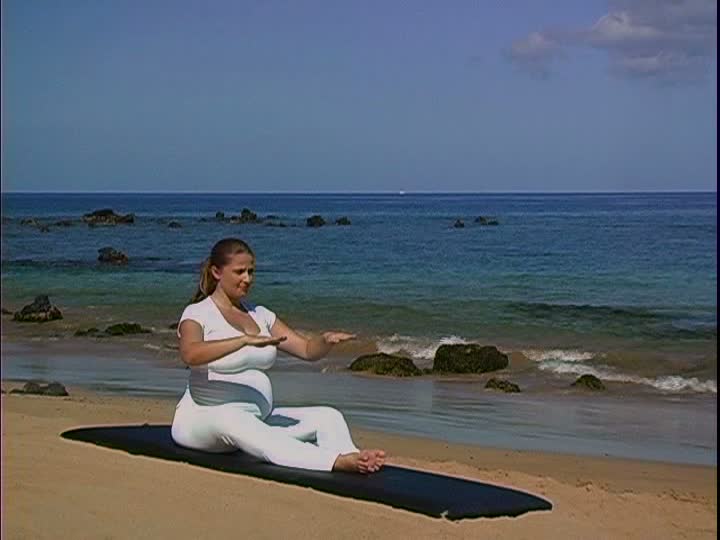
Dance of the Womb has two very different components. One DVD contains a short film of Maha’s home birth of her third child. Between beautifully-shot landscape scenes, photographs, and videos of the birth itself are interspersed interviews with Maha’s midwives. This is an intensely personal film, and really, for lack of a better word, quite amazing. Again, I think this isn’t something I appreciated so much earlier on in my pregnancy, but as I’ve come to see how many of the women I know wound up with cesarean sections recently (the vast majority), I’ve wound up more passionate about being able to labour naturally and with a minimum of interference. I would be too nervous to have a home birth, at least right now, but seeing that it’s possible, and seeing Maha do it, is truly inspiring at this point in my pregnancy.

It’s also inspiring in a practical way. Labour is a long process in many cases, and very different from what they show in the movies. Actually, it’s also quite different from the movies I saw in the Lamaze class on dealing with pain naturally and in the hospital’s prepared childbirth class. Those tend to be shorter and to focus on the last, most painful part of the first phase of labour (transition) and the birth itself. As astounding as all of those births are (both my husband and I are in tears when the lights go up), the videos themselves make the process look rather horrifying and unmanageable. The documentary in Dance of the Womb has a lot of shots of Maha walking and moving around, and as boring as this probably is to someone not currently with child, it’s great to see how she manages most of labour, and that she can manage it. The video also inspired me in nitty gritty ways. While I don’t live in the paradise of nature Maha inhabits, I do have a little bit of a park just outside my apartment, and only when I watched her video did it occur to me that I could spend some of my time outside instead of cooped up, communing with the carefully landscaped nature available to me!
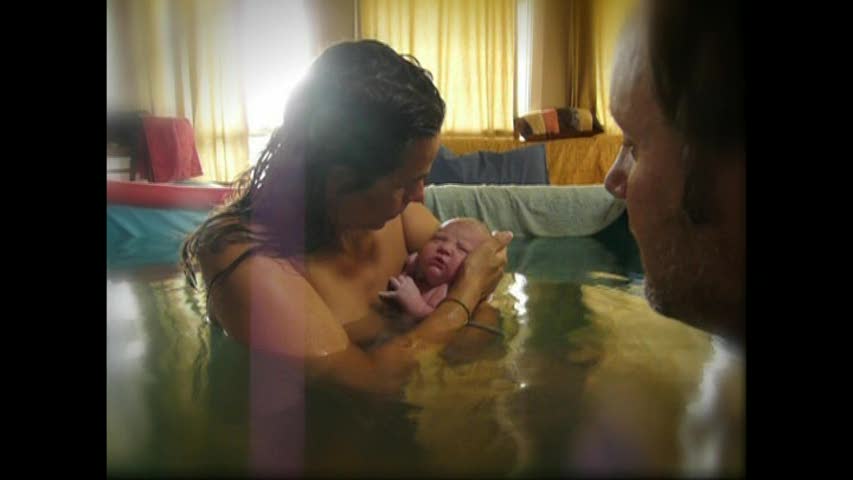
Astoundingly beautiful

The first DVD contains the dance program itself. This is broken down into the following chapters:

Warm Ups (45 min)
The Circle (26 min)
The Spiral (9 min)
The Figure 8 (12 min)
The Cervix (4 min)
The Hands & Arms (13 min)
The Chest (7 min)

This is, as should be obvious, an enormous amount of instruction and practice time. What this means, practically, is that it was a little tricky for me to get started with it. I really had consciously to set aside a good chunk of time for it, and even then had to break it apart into two sessions. Again, this makes sense at the end of pregnancy, as I wind down from the usual pace of my work and more carefully take time to take care of myself.
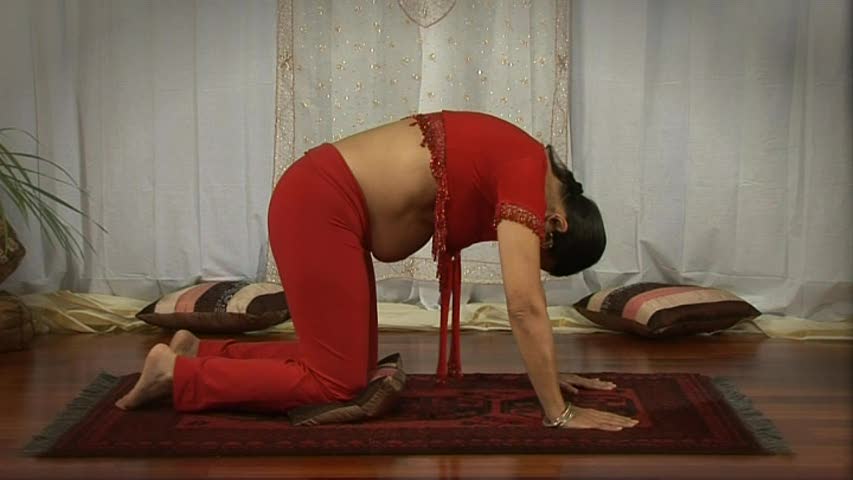
 
The Warm Up is a program all on its own, comprised of a variety of yoga-based stretches and movements for improving bodily mobility. The instruction is incredibly precise, and the pace is slow. There is much focus on concentration and breath. Despite the fact that I’ve done what feels like a million prenatal workouts by now, I was still surprised by how many movements in this section were new to me. They effectively stretch every part of the body (every part), and are quite satisfying. I’ll add that I was working with this during a pretty high anxiety week, and it really helped to calm me down.
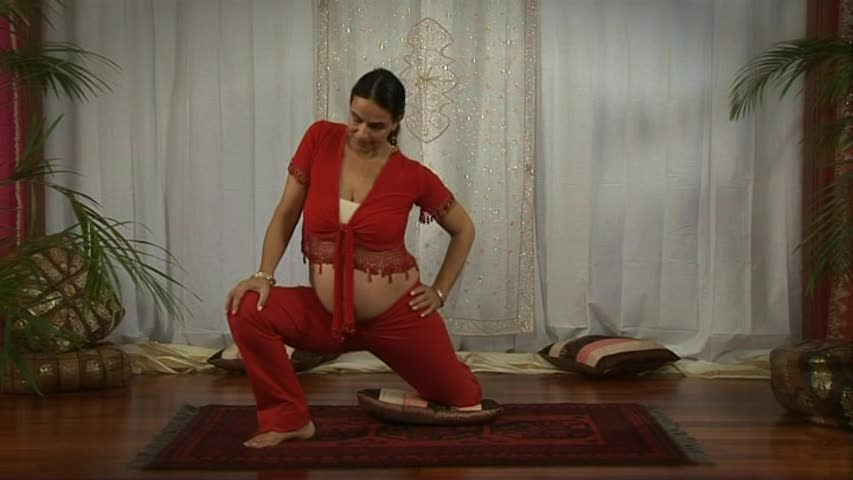
The subsequent chapters are all dance based, but also all subtly different from each other. Each takes as its focus either a part of the body or a basic shape associated with bellydance, and each teaches bellydance movements. However, some chapters are structured like more typical dance instruction, and teach you movements and variations on them (like the figure 8), while others introduce a basic shape or idea and then have you move and improv freely (hands & arms). Instruction is detailed and from the ground up — while I picked up some new things, a woman who had never bellydanced before in her life could learn to do these movements comfortably and safely. Moreover, Maha often gives tips on using the particular movement in childbirth, especially when the form would be different for labour than it would be in “proper” bellydance.

The key sections are the circle and the spiral, probably because those are the most elemental movements both for bellydance and for birthing. The focus here is really not on dancing in a performance sense, but on using the movements to enter a meditative, trance-like state. And it works, at least for me. Again, this is a quality of the video that I think makes it less suitable for an energetic early pregnancy, but fabulous for the end stretch. If I go into labour tomorrow (and this is not unlikely), I will probably play the circle and spiral chapters and move along with them.
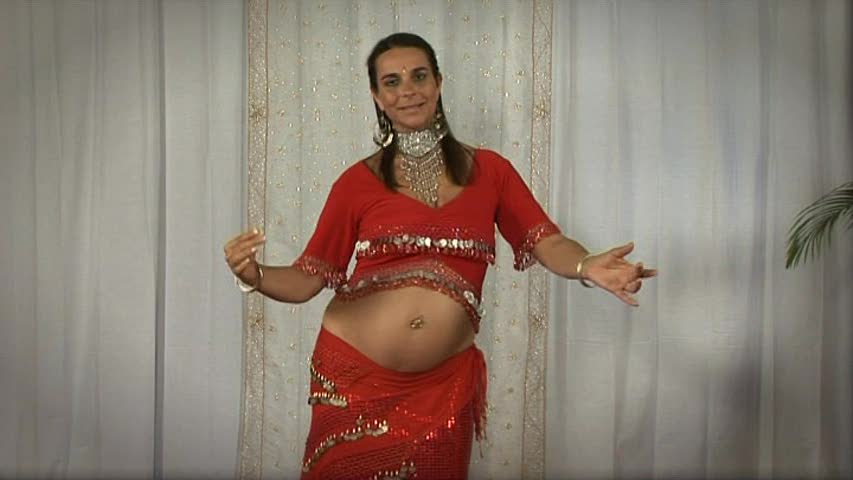
You have to be creative to figure out how to suit the program to your needs. The 45-minute warmup would be enough for any day, and does incorporate some of the bellydance moves too. You could do the warmup and then a variety of chapters, or just some of the chapters on their own. The pace is slow and careful enough that I don’t think a lengthy warmup is really necessary.

Dance of the Womb: A Gentle Guide to Belly Dance for Pregnancy and Birth is a valuable compendium of preparation, information, and inspiration for birth.
Review of Tracey Mallett’s 3 in 1 Pregnancy System

There are a couple of things that are confusing about Tracey Mallett’s pregnancy videos. The first is that she’s done two, 3 in 1 Pregnancy System and Fit For Pregnancy. I have both, and if you read their covers they seem pretty similar. Both make a big deal about being 3-in-1 in multiple ways — three stages of pregnancy, three disciplines (yoga, pilates, and sculpting), and three body sections. This makes it seem as though you’re going to get some kind of complicated modular system with an elaborate DVD menu. This is not the case.

Look! Normal sofa cushions! I have those too.

At least as far as 3 in 1 Pregnancy System, which I did this morning, is concerned, what you get is a simple, hour-long workout that does indeed balance all the body parts and draw from different movement practices, and that has modifications for the third trimester. And you know what? That’s just fine. The video really hit the spot for me, and if anything, I’m rather relieved that I could just do it without making too many decisions.

The workout is divided into four sections (four? four? what happened to three?!):

Warm Up & Core Conditioning
Lower Body
Upper Body
Partnered Flexibility

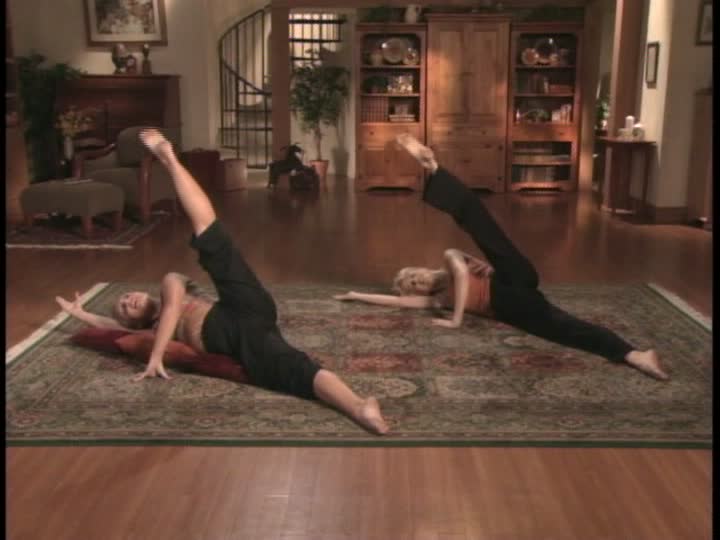
Tracey has you mainly warm up using yoga moves, but most of the video seems pilates-based. I’m near my due date and not feeling that strong right now, despite maintaining a movement program, and I was able to do all but one position in the entire video — the plank. There is a modified hundred, which I haven’t seen on other prenatal videos, more abdominal work that is challenging but just barely doable for me right now, and some nice leg strengthening exercises. The toning moves are mixed in with some very satisfying stretches, which I really like. And the upper body section uses light weights to give you a little bit of muscular work.

So far so good. Sounds pretty basic, right? It is pretty basic. But I liked it. Tracey herself is adorable — she has an English accent, is pregnant in the video, and often jokes about not being able to perform certain movements anymore. She somehow makes the video really cheery and lighthearted. The attention to making moves comfortable for pregnant women is constant — I never felt rushed when moving from one position to another, always had time to get a sip of water, and even difficult moves felt controlled and well cued.

That’s it. I’m never going back to cushion-less pilates.

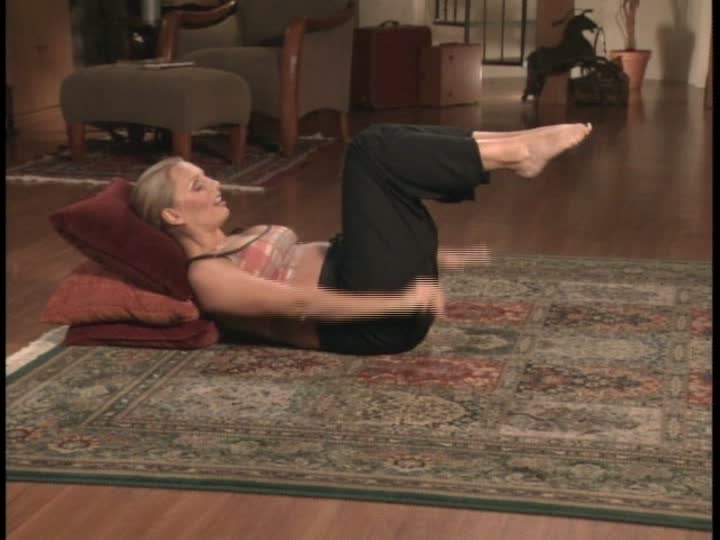
There is minimal prop use, but it’s also thoughtful. For example, Tracey has you use a folded towel under your palms to reduce the strain on the wrists in push ups (and it does!). She also has you use three cushions under your body while doing pilates leg exercises, and it makes the whole thing sooo much more comfortable! And guess what — these are not specialized yoga pillows or anything, but just regular sofa cushions. For once I didn’t have to adjust for the fact that I don’t have a yoga bolster in some kind of very specific shape.

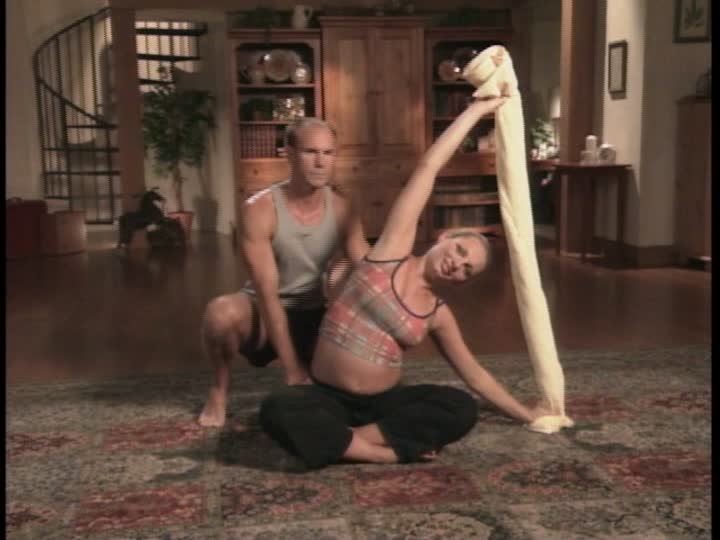
What ruins the numerology of the program is the “partnered flexibility” section — but while it spoils the numbers, it really makes the video. Tracey has her husband come in and help with some gentle stretches, most of them focused on the upper back and neck. Now, I did not get help with these, but Tracey’s husband often provides tips on how to do them alone. And still, they were so, so good. It’s easy to forget that pregnancy will take a toll on the upper back and neck too, and I suffer from tightness in that region anyway. (Who doesn’t?) The super-precise instructions given for these stretches gave me much deeper, more satisfying stretches than I usually get, and I expect to turn to them again and again just to deal with computer-related stiffness.

Husbands make great props, it turns out

So there you have it. Tracey Mallett’s 3 in 1 Pregnancy System is not nearly as complex as the cover would make it seem, but it challenged and stretched me in just the right ways for the third trimester. I can imagine doing it as a postnatal exercise too, as a way of gently building up strength again.

Review of Jennifer Gianni’s Fusion Pilates Birth Ball for Pregnancy

Jennifer Gianni is a pilates instructor and doula, and she has a number of DVDs out that offer pilates-based exercise programs for women to use while pregnant, after giving birth, and even with a baby in tow! Her most recent offering is a 3 DVD Box Set offering all of these options but using the Swiss ball (or “birth ball,” as it’s sometimes called) to guide the exercises. I received the set as a review copy, and since I’m still waiting for my little one to arrive, have worked with the first video in the series, Fusion Pilates Birth Ball for Pregnancy.

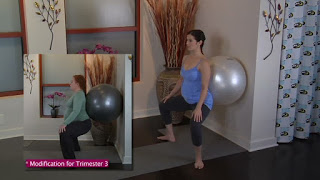
Modifications for different trimesters are often shown and explained

Gianni’s expertise in crafting careful prenatal workouts really shows in this program. The first section, “Fusion Essentials,” is really a long introduction to working out with the ball, doing pregnancy posture checks while sitting and standing, safe abdominal work, and pelvic floor exercises. This isn’t a workout: it’s more like a lecture interspersed with exercises you can do. Some sections, like “ab curl safety,” were not relevant to me yet, but I found the pelvic floor section really interesting. This is the first video I’ve ever seen that has suggested different pelvic floor exercises for different periods of pregnancy. More precisely, Gianni gives you exercises for strengthening and tightening the pelvic floor during the first and second trimesters, but for the end of the third trimester has you segue to practicing the relaxation of the pelvic floor. Kind of makes sense, no? Most of the pregnancy is about keeping the baby in, and the very last bit is about getting it out!
The workout itself is composed of careful, small movements that work a variety of muscles. However, the point is not to feel the burn. I did this workout at 36 weeks and on a day when I really wasn’t feeling very strong, and still didn’t really feel “worked out.” Instead, the program seems to be more about using the ball to complete movements safely and veeeeeery precisely. Most of the workout is performed by a model who is well into her third trimester — and I think this would be the best target audience for the video anyway — but modifications are often shown in an inset window.

I think this program is really ideal for women in their third trimester, or women having pains or other difficulties during pregnancy. Jennifer Gianni is clearly aware of a pregnant woman’s potential limitations, and no exercise feels like it would be unsafe or jarring in the slightest. Some exercises are really delightful variations on moves you might know from other workouts — for example, doing squats with a ball behind you gives you a much more controlled movement that feels secure in late pregnancy.

That said, it’s really best called a “program” and not a “workout,” because if you want to sweat or feel muscular pain the next day, this is not the right video for you. I didn’t feel anything the next day — but I also didn’t feel any pain. It was a good way to get moving on a low-energy day, and to feel that I did something for my body without pushing too hard. It wasn’t a good way to tone my butt, even though there was a cool pilates leg exercise that did use those muscles.

Finally, a few small details about the DVD setup both positive and negative. I really liked that the sections are individually titled and divided, so you can skip easily to the beginning or end of a section. Also, the DVD has an index that has all the sub-chapters in both “Fusion Essentials” and the “Main Workout.” So if you want to work on “Releasing the Pelvic Floor,” you can jump right to that without the pelvic floor intro or strengthening exercises. Great.

My complaints have to do with the setup in my home, and how I do video workouts. Most of the ball exercises required a wall, and most of my walls are covered in bookcases! It was pretty hard to find a spot in my apartment where I could see the screen and have access to enough wall to make the workout work. Also, the exercises often require a bit of setup, but the section begins with ball and sometimes blankets already in place. In practice, this meant I had to get up, pause my computer, set up most of the stuff, rewind to the beginning of the section, then get quickly into position so I could do the exercise. And at 36 weeks, I just don’t move that fast. If I were watching the video on a regular tv and had a remote control, it wouldn’t be so bad, but again, my particular situation, in which a laptop is how I watch DVDs, made the video less convenient to use than it could have been.

Fusion Pilates Birth Ball for Pregnancy is also available from http://www.fusionpilates.com/.

Review of MommyShape Prenatal Complete

If you’re looking for a moderately challenging, customizable workout to keep in shape while you’re expecting, MommyShape Prenatal Complete could be just the DVD for you. I received a review copy from its creator, Diane Angela Fong, and was very pleased with the program, though I think knowing what you’re getting is the key to being satisfied with it. So far, I’ve worked with it twice, taking advantage of its modular structure. I haven’t done every exercise on the video, but I have used it in two ways I consider typical.

Structure

The workout is basically divided into five sections:

Warm Up
Sculpt & Stretch
Dance it out!
Yoga & Relaxation
Cool Down

The times for these are given, and you can pick and choose which you will do, though you do have to click again for a new section. Doing all of them would take about 70 minutes, which if you’re heavily pregnant you might find a bit much (though I would have done it easily earlier in my pregnancy). But this morning, for example, I did the Warm Up, Dance it out! and Cool Down segments, which took a little over half an hour, and I felt like I got a good workout out of it. At the beginning of each section, Diane tells you what props you’ll need for that section, which is a good chance to pause and get things in place.

But here’s the kicker: if you want a little bit of each, you can also do the “MommyShape Complete” workout, which has segments from each section, and is 50 minutes long. I actually did this version earlier in the week, and I really like the inclusion of this option. I love it when DVDs have a lot of material, but if a program is too long, it can become overwhelming, and I’m less likely to use that DVD when I’m busy. So having a simple, one-click workout that will provide a bit of cardio, a bit of sculpting, and a bit of stretching, is just right, and a great introduction to the DVD.

Difficulty

Diane is a professional dancer, and despite being 35 weeks pregnant in the video, is in excellent shape. She moves quickly from one position to another — much faster than I could! Especially in the sculpting and yoga sections, there are modifications to make positions easier depending on your level or trimester, but I can tell you that despite partially modifying, I really felt a burn in my thighs the day after doing the “Complete” program. (In a good way.) If you’re not in the habit of watching a video through before doing it (and because of time constraints, I’m not), you may be frustrated with how quickly Diane moves. However, this could also be a positive — when you’re doing a segment for the second time, you’ll waste less times with explanations and lengthy setup.

Dance

The dance segment is also tricky, but lo and behold, there is a separate 15-minute dance instructional that goes through the moves more slowly. The first time I did the video I didn’t bother with this, impatient chipmunk that I am, and I was able to follow along with almost everything just fine. I did watch the instructional before doing the program again, and that helped, but it’s not strictly necessary if you have dance experience.

The dance itself is a cardio workout with a mix of bellydance, African, modern, and Latin dance moves. Diane repeats it three times, using arm variations to keep it interesting, and then does a modified, slowed-down version for a cool-down. I have to say I really liked this segment, despite, or maybe because of the fact that it’s so different from my usual bellydance. Diane performs the moves with grace, which I find inspiring, and for a while there I felt that I was taking a modern dance class in an airy California studio. (Instead of, you know, in my living room.) And I really felt tired by the end.

My two warnings are that Diane doesn’t mirror, so you have to adjust for left and right, and while there is light rhythmic music in the background of the dance segment, the dancing is not done to the beat. These didn’t throw me off, since the general feeling of the dance portion was more loose and flowing, but they could if you are expecting mirroring and timing.

In sum, MommyShape Prenatal Complete would be great for you if you are earlier on in your pregnancy or have maintained a light workout routine, if you can adjust for left and right, and if you have some experience with basic dance moves. At 35 weeks, I find it gives me enough of a workout to really feel I have done something — beyond just stretching — but is still doable. If you are completely out of shape and/or want to be able to get everything on the first go, this is probably not the best program for you. My favorite aspects of the DVD are that it’s customizable but doesn’t force me to make decisions if I don’t want to, and that the dance segment is fun and well-performed.

MommyShape Prenatal Complete is also available at http://mommyshape.net/.

Amira’s Belly Dance for the miserable mornings

When I first worked with Amira’s Belly Dance & Yoga For Pregnancy (reviewed here), I really enjoyed it but wondered how often I would have enough time to do the full 1.5 hour workout. Oh, silly, innocent me! How naive I was as I was entering my third trimester. Little did I know in those halcyon days that sleeping through the night would soon become a special treat.

Backwards undulation as labour prep

So early this morning, sleep-deprived for a few days now, angry at the world and everyone around me, and having just felt my baby turn head up, I decided to give up on my ill-fated attempts to fall asleep again. I had a meeting to get to in the morning, but still plenty of time to get in, well, a full 1.5 hour workout — and after several restless nights, my body needed it.

Let’s just say this: the careful yoga stretches and deliberate and beautiful bellydance movements took me from being murderous to being almost — happy! Once or twice, I even found myself smiling. Everything was much harder for my exhausted body to perform, but it also felt so much more necessary. This time, since I’m closer to my due date, I also paid more attention to the “Exercises During Labor” section. In fact, these exercises are also bellydance movements (pelvic drops, umis, and a lower-body backwards undulation), but I tried to imagine myself stringing them together during labour, mentally training for the big event. There were also yogic breathing exercises which I found amazingly soothing, including one that timed breathing to head rolls, which I think I could actually keep track of during labour! And the “Cool Down” section has a series of shoulder stretches that were particularly satisfying after nights of fighting with pillows and days of tensing up at work.

The last time I did Amira’s Belly Dance & Yoga it was fun. This time around, it helped me face the day. When I finished, I set up some couch cushions for a shavasana and pretty promptly… fell asleep!

Review of Dancing For Birth: Prenatal Dance and Birth Wisdom

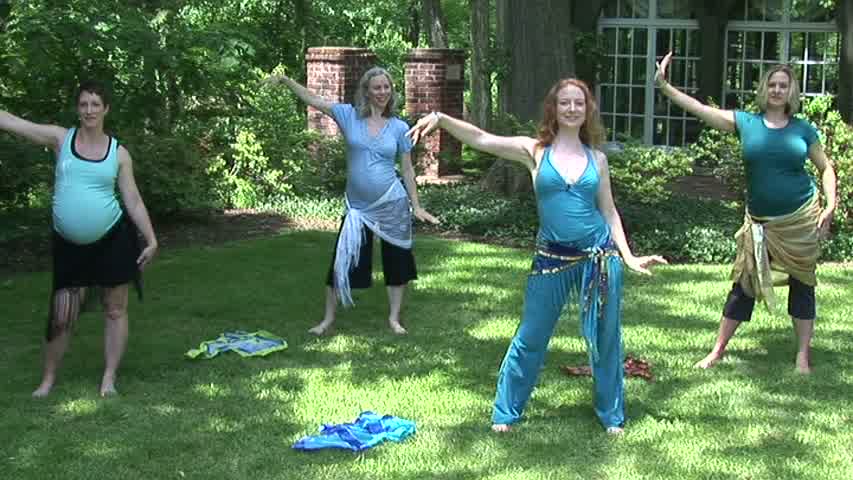
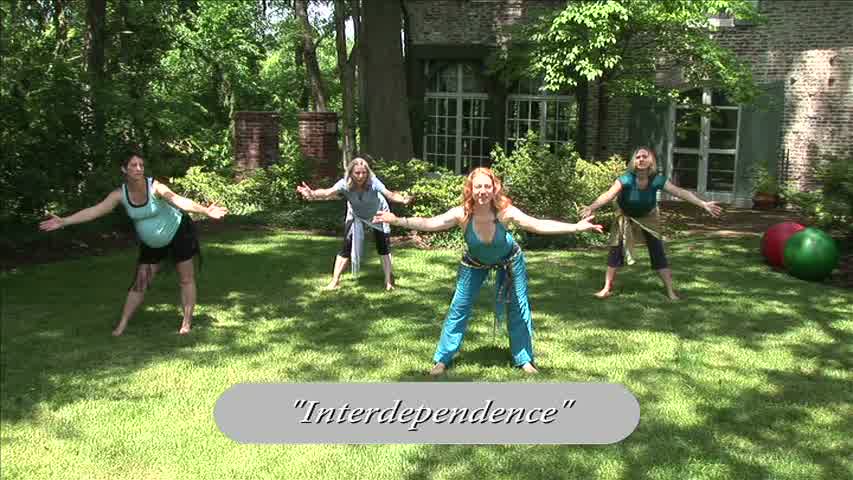
Dancing for Birth is a program founded by Stephanie Larson and based on the premise that dance and movement will help women navigate pregnancy and, especially, labour. They offer dance classes for women from pre-conception to post-partum, instructor training, and the DVD, Prenatal Dance and Birth Wisdom. I received a review copy of the DVD, and have been looking forward to trying out another prenatal dance offering. Larson leads the program in a garden, accompanied by three other women, one of whom is visibly pregnant. There are motivational segments to the DVD, but I tend to find those kinds of exercises forced, so I gave them a skip.

Dancing for Birth as Prenatal Workout

The DVD is definitely at the gentle end of the spectrum. When I did it I was suffering from back pain, and at no point did it aggravate me. In fact, my pain has been gone since the day I did it, which makes me think it was just the right level of exertion for someone in the third trimester, fatigued and achy. Doing the dance program will probably raise your heart rate a little, but if you’ve been active in any other way you’re unlikely to feel like you’re exercising. There is a nice warmup on an exercise/labor ball, the moves from which could be used apart from the video. At the end, a short segment on abdominal and pelvic work introduces a few exercises you could repeat outside of the video.

The movements Larson presents are inspired by bellydance, African, Caribbean and Latin dance. There are a few small combos in the bellydance section, but for the most part this is a one-move-at-a-time program. They generally feel good to do, and many of them resemble what I’ve learned in labour prep classes. Larson is a certified doula, so this is not a surprise!

Dancing for Birth as Dance Program

If you have dance training and especially bellydance experience, you will probably be confused by much of the DVD. I’m not as good a judge of the other dance forms, but most of the dance movements are introduced as bellydance, and they would probably be better described as “bellydance inspired.” I found myself repeatedly correcting movements when I performed them, making sure, for example, that my horizontal figure-8’s were truly horizontal. And wondering why I was stomping before doing a hip bump.

The strangest aspect was the arm work. It generally did not look bellydanceish (and I think that’s a shame, since this is such an easy way to look graceful when feeling massive and pregnant), and at one point it was confusing for me precisely because I do study bellydance. To wit: the “go-to” arm pattern for large hip circles is generally to fold the hands to the chest when leaning forward (thus also modestly covering heaving cleavage), and to open the arms out when leaning backwards. In this video, the arms do the opposite — they open out with the lean forward, and fold together during the lean back. Someone else may not have trouble with this, but I found myself floundering constantly because the movement was so counter-instinctive to me. Again, when doing hip sways with snake arms, I’m used to having the arm and hip on the same side go up at the same time — the instruction on this video has you do the opposite.

The individual movements and combos are usually performed for a random amount of time, and then abruptly stopped. Larson does sometimes count out the moves, sometimes to 8, sometimes to 10, but repetitions on the other side might be done without a count, and may vary in number. Cueing is not mirrored. There is soft background music, but the movements are not performed to the music. Again, if you’re happy to just follow along and go with the flow, you may not mind. But if you’re used to the structure of balanced sides and reps of eight, you will probably be frustrated.

At the same time, I think the instruction is not really detailed enough for a beginner. There is some attention to posture, which is always good, but the moves are done in “follow along” format, and some of the background dancers struggle to follow too.

In short, Dancing for Birth is fine as a gentle movement practice for labour, but not solid dance instruction.

Review of Eva Bondar’s Pregnancy Workout

Eva Bondar’s Pregnancy Workout has one major strength, one major flaw, and is generally just fine in betweeen.

Eva showing you how to conduct your kegels

The strength? Its kegels workout. First of all, it’s one of the longest I’ve seen in any video. Eva uses her hands to help you visualise the muscular contractions, and it’s helpful. What I particularly like about this kegels practice is that it also focuses as much on kegel muscle relaxation as on it’s tension. I’ve always wondered about all these kegel exercises that are all about tensing the muscles, when what you’re really preparing for is conscious relaxation of those muscles during labour. Now, I know that’s easier to relax a strong muscle than a weak one, so these practices do make sense, but why not exercise the relaxation itself? The birth prep books have you relax every other muscle, and yet this is hands down (erg…) the most important one on the day of birth!

The weakness? Eva is frustratingly unspecific in her instructions. She will often start a movement and only later tell you verbally what the movement should be doing. She’ll tell you to lift a leg or do something on a side without specifying which. (Which is actually not so bad.) She’ll tell you to do something for one final rep, and then go on doing it for three or four more reps. If I’m face down in some awkward position, and heavily pregnant to boot, I don’t want to have to crane my neck to look at the screen to figure out what I should be doing!

For the most part, Eva Bondar’s Pregnancy Workout is a nice, very stretchy, quite gentle, pilates-based prenatal workout. There were a few moves I hadn’t done on other videos, and generally lots of delicious-feeling side stretches. There is also a back segment, which is a very good idea for when you’re starting to carry extra weight in the front. I can imagine doing it again, especially on days when my other pilates prenatal workouts seem too hard (this is by far the easiest), and perhaps the second time around I won’t be so annoyed by the vague instructions!

Review of Jennifer Jiménes’ Let’s Dance Together – Prenatal Dance Fitness

While it’s been a lot of fun trying different prenatal workouts — and a lifesaver in terms of how I feel — the analytical side of my brain also enjoys seeing how many different kinds of programs are out there. I’ve already reviewed several prenatal prep DVDs with dance components. In fact, Naia, Sera Solstice, and Amira‘s programs all use bellydance, which I’m increasingly convinced is just perfect for both pregnancy and labour movement itself. Earlier today I took a Lamaze class on natural comfort measures near Dallas, and almost all the moves the instructor suggested women do in labour — hip bumps, pelvic tilts, hip circles — are basic components of bellydance. She even suggested a kind of shimmy for helping with back labour, or with a baby that is malpositioned!

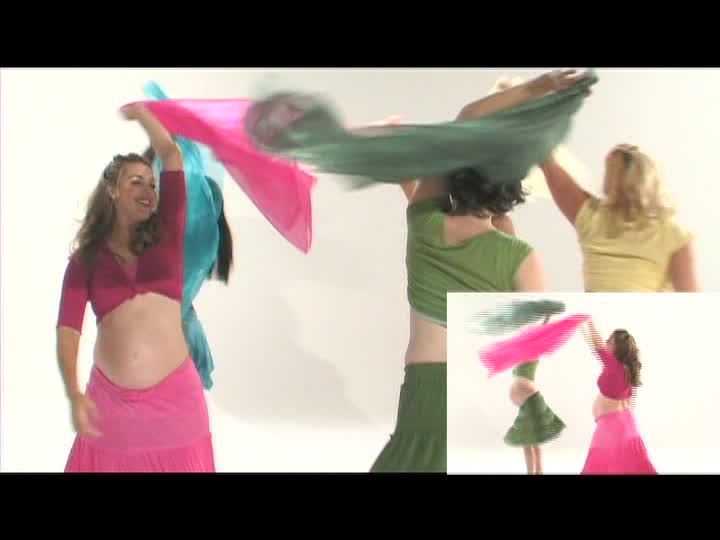
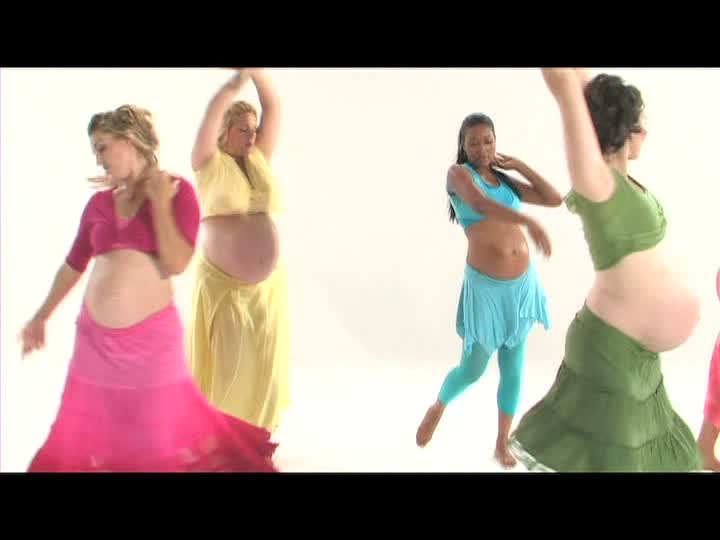
This is a long intro to Jennifer Jiménes’ Let’s Dance Together – Prenatal Dance Fitness, but that’s because I want to explain what makes this program different. I received a review copy of the program, and Jennifer included a note in which she explained that it’s more about developing “inner trust” in your body than typical dance fitness. The difference begins with the staging. Instead of a single instructor facing the camera, or, say, three different practitioners modeling trimester variations, this video has a group of pregnant women, dressed brightly, sitting, standing, and dancing in a circle. Already doing the video feels less like instruction and more like participation. In fact, this is one of the few videos I’ve done which I felt encouraged me not even to look at the screen — and this is a good thing. It’s hard to relax and turn inward when you’re looking up at a screen.

The program begins with a gentle warmup that stretches out every bit of your body, with some really nice seated exercises for the legs and a variety of flowing movements done on all fours to relax the lower back and pelvis. The latter chapters include a labour prep section, including an exercise to help you maintain stamina through pain, and a meditative cool down. But what I really want to talk about is the dance segment.

Now, when I go to a dance class or watch a dance instructional, I want to be taught something. When I’ve been to dance classes where students were asked to free dance at the end of class, I was invariably stressed out by the experience — not because I don’t like to improvise, but because I feel too self-conscious, especially when others are there. If you’d told me that this video had a significant portion devoted to free dance, I would not have been excited. But in truth, I wound up loving it.

Why? Well, first of all, it’s not totally free dance. You’re invited to explore movement, but Jennifer calls out different parts of your body to focus on, as in “dance with your shoulders!” Both times I did this video, I was amazed at how creative I could be with that amount of prompting — I found my body performing moves I’d learned formally in dance classes, moves I’d seen other dancers do, or just totally new motions I invented because they felt good. It was, cheesy as it sounds, liberating.

The bright colours strike a Merce Cunningham vibe…

It feels wonderful to be heavily pregnant and realise that your body still can do things that feel so lovely. But I think this kind of exercise could be great beyond pregnancy too — how much better would those stressful improv moments in dance class have been if the teachers had guided the movement like this? A lot of dancers love choreography but are scared of improv, and I think a gentle practice like the one in Let’s Dance Together is a perfect way of breaking out of the choreography box. I wasn’t as enthusiastic about the second dance segment, which was a kind of circle dance with scarves, but the “Free Dance” portion was enchanting and made me want to do it again and again.

Did the program lead me to trust my body more, or to feel better prepared for labour? I think it’s hard to answer that question before actually giving birth. I will say this: I think the workout, and especially the free dance section, are excellent at giving you practice at figure out what kinds of movement make your body feel good. The fact that you’re not following someone else’s count or precise movements, but taking each of the exercises and doing them in a way that stretches and strengthens your muscles in the best way for you, is, I suspect, good practice for labour, when you have to set your own pace and figure out what works in easing the pain. And if labour is a dance, as I’ve sometimes heard it described, it has to be improvised.

Jennifer Jiménes’ Let’s Dance Together – Prenatal Dance Fitness is available on Amazon via the link, or from Jennifer’s website, Let’s Dance Together.

Yoga for the miserable days

Under the very capacious category titled, “Things they never tell you before you get pregnant,” one of the entries has to be:

Sleep deprivation begins before the child is born, not after.

This is the result of a spicy cocktail of anxiety dreams, a big, uncomfortable belly, acid reflux, and the need to urinate every twenty-six seconds (give or take two seconds). Now to make this even more fun, try going to the hospital for a nine-hour “prepared childbirth” class, and you will ask yourself the following:

Why did no one show me lengthy videos of women in labour, oh, about seven months ago?

Why did no one explain to me the mechanics of the human pelvis, and the two corkscrew turns a child has to make to exit through it, at some point during my education?

But the sordid reality is, no one did, and now you are tired, scared, and wondering how you will deal with a baby who screams all night when just having your sleep interrupted already makes you miserable.
I’m fine, really, how was your week?

Well, the glorious thing is that I did manage to sleep for most of the night last night, and eager to get back to some modicum of sanity and productivity, started the day off with Yoga Journal’s Yoga for your Pregnancy. I didn’t have much time nor much energy, so I decided just to stick to the 30-minute “energizing workout,” which as I previously wrote, was not particularly vigorous. But I wasn’t ambitious — I just wanted to stretch everything out a bit, to feel my body move in a pleasant way, and to prepare for a longer program tomorrow.

The result? Magic. Seriously. I love the pilates and dance-based workouts I’ve been doing lately — and look forward to reviewing more — but there really is something special about yoga. And there’s something really special about yoga that you’re doing for yourself, when you don’t really care about looking good or pushing past your limits or impressing anyone with how you can balance on your pinky.

I took it so slowly today, but really focused on the deep, deep breathing, and on making each stretch and movement count. My old yoga instructor would have been talking about “intention” — without really knowing it, I did have an intention for this simple little yoga practice, and that was to centre myself again. And it worked. When I got up, I was sure that my body was wonderful, I was having the easiest pregnancy any woman had ever had, I wasn’t afraid of labour, and that wiping another human being’s poop for the next few years would be absolutely hilarious.

I’ve read it a thousand times, I’ve heard it said just as often, but I still have to learn it myself: yoga is not about “getting ninety minutes” in or setting a record. But to me, it’s not about spiritual awakenings either. It’s just about allowing myself to take an effective, cheap happy pill with no side effects.

Review of Suzanne Bowen’s Long and Lean Prenatal Workout

Suzanne Bowen’s Long and Lean Prenatal Workout is one gorgeous pilates-based workout. Actually, to tell you the truth, it doesn’t feel like a prenatal workout at all. Suzanne herself is not visibly pregnant in the video, and there’s almost no “baby” talk. She does tell you to take rests and get water more frequently than you’d hear in a normal pilates workout (rather than the “keep going, you can do this!” typical of exercise mavens). And those of us who have watched lots of prenatal workout intros can tell that the workout does not involve any exercises dangerous for pregnant women — not much bouncing, and nothing done on the back. But given all that, this is the first prenatal workout I’ve done during which I repeatedly forgot I was pregnant — and at seven months, that’s a feat.

The workout is divided into three main sections:
Standing – 20 minutes
Mat – 20 minutes
Stretching – 10 minutes

There is also a 10-minute postnatal abs section taught by Leah Sarago that I haven’t, for obvious reasons, looked at or tried yet.

What’s the scoop? The standing segment was ballet-inspired but eminently doable. There are light squats and lunges, but all done so precisely that even my usually-weak knees didn’t protest for a moment. (And have been fine all day afterwards.) Most of the leg series are accompanied by arm movements that will really warm you up. This section felt really beautiful, and gave me a feeling of lightness I haven’t had in a while.

The mat work segment was, frankly, challenging. I don’t have an enormous amount of upper-body strength anyway, and found I simply had to take breaks here and there. And there was an oblique exercise that I could have done easily before pregnancy, but at seven months was just not going to happen anymore! But, to my surprise, the abdominal exercises were much easier to accomplish without strain than in other prenatal videos.

Also excellent was the stretching segment. While it helped to be warm for this, I would recommend it as a stand-alone program to anyone who is pregnant or has back pain. The leg, hip, and back stretches were extremely effective and satisfying, even though Suzanne warns you not to push yourself too hard or too far. I could feel my prenatal sciatica slipping into nothingness…

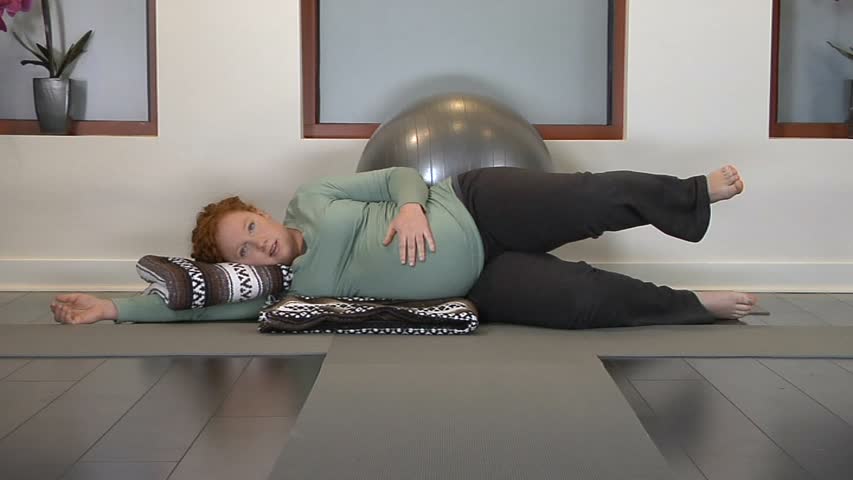
The workout closes with the invitation to relax while sitting on or your side, while music plays for a while. I wound up not finding this music all that relaxing, but when I turned off the video I realised I was surprisingly refreshed given the practice. The Long and Lean Prenatal Workout is a program I expect I’ll be using even when pregnancy is only a memory!