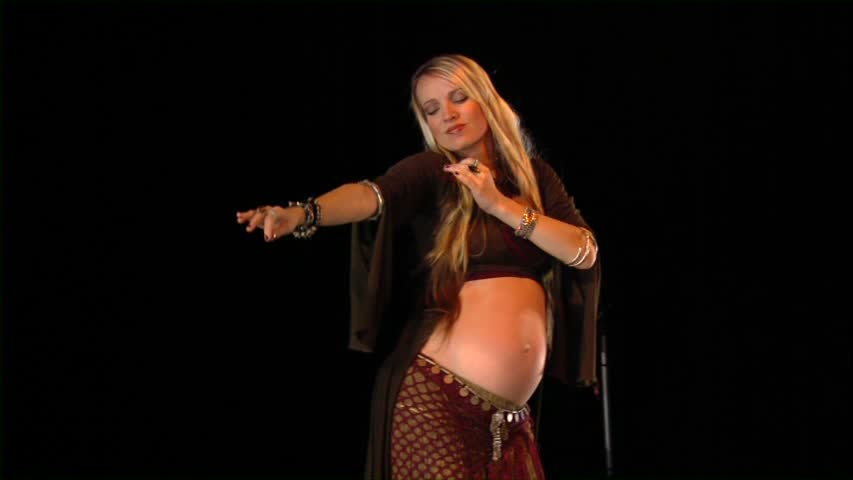
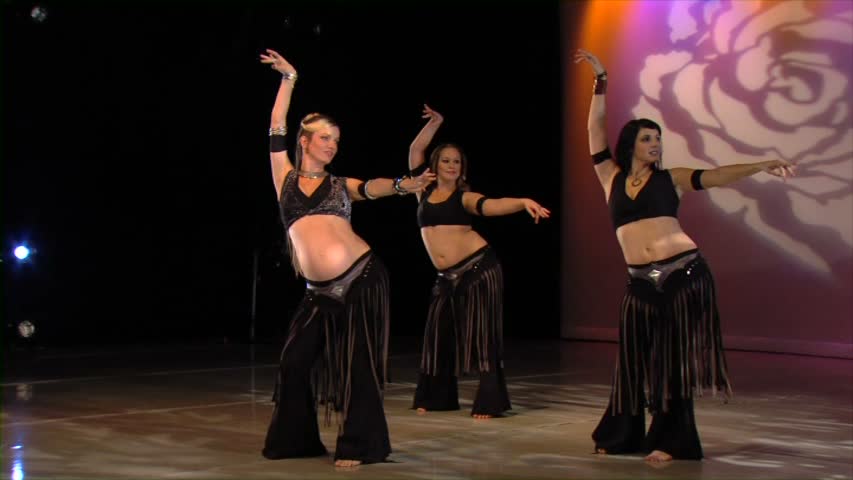
Amira’s Belly Dance for the miserable mornings

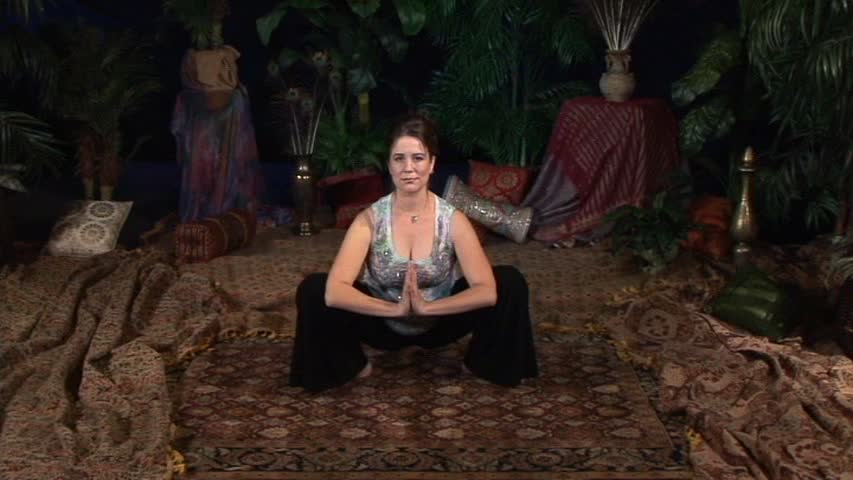
When I first worked with Amira’s Belly Dance & Yoga For Pregnancy (reviewed here), I really enjoyed it but wondered how often I would have enough time to do the full 1.5 hour workout. Oh, silly, innocent me! How naive I was as I was entering my third trimester. Little did I know in those halcyon days that sleeping through the night would soon become a special treat.

Backwards undulation as labour prep

So early this morning, sleep-deprived for a few days now, angry at the world and everyone around me, and having just felt my baby turn head up, I decided to give up on my ill-fated attempts to fall asleep again. I had a meeting to get to in the morning, but still plenty of time to get in, well, a full 1.5 hour workout — and after several restless nights, my body needed it.

Let’s just say this: the careful yoga stretches and deliberate and beautiful bellydance movements took me from being murderous to being almost — happy! Once or twice, I even found myself smiling. Everything was much harder for my exhausted body to perform, but it also felt so much more necessary. This time, since I’m closer to my due date, I also paid more attention to the “Exercises During Labor” section. In fact, these exercises are also bellydance movements (pelvic drops, umis, and a lower-body backwards undulation), but I tried to imagine myself stringing them together during labour, mentally training for the big event. There were also yogic breathing exercises which I found amazingly soothing, including one that timed breathing to head rolls, which I think I could actually keep track of during labour! And the “Cool Down” section has a series of shoulder stretches that were particularly satisfying after nights of fighting with pillows and days of tensing up at work.

The last time I did Amira’s Belly Dance & Yoga it was fun. This time around, it helped me face the day. When I finished, I set up some couch cushions for a shavasana and pretty promptly… fell asleep!

Review of Dancing For Birth: Prenatal Dance and Birth Wisdom

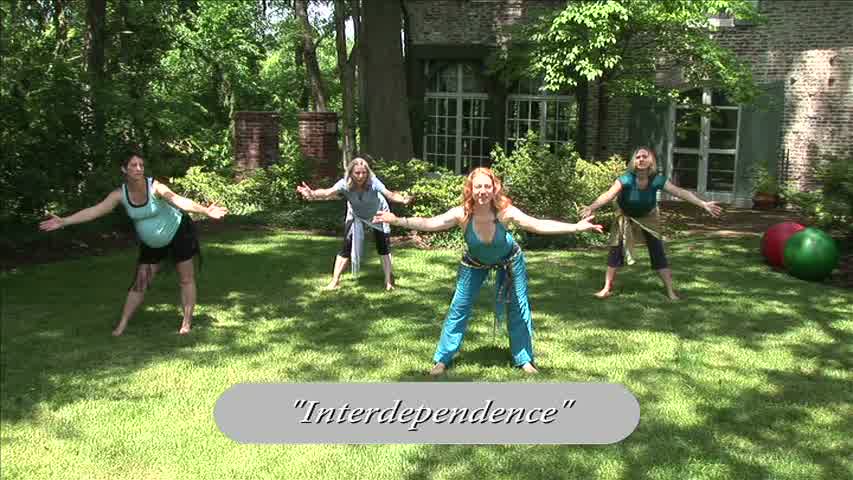
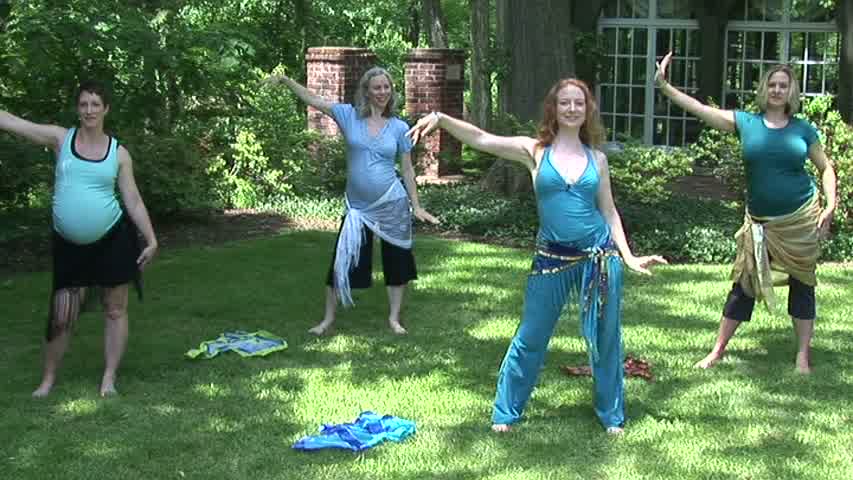
Dancing for Birth is a program founded by Stephanie Larson and based on the premise that dance and movement will help women navigate pregnancy and, especially, labour. They offer dance classes for women from pre-conception to post-partum, instructor training, and the DVD, Prenatal Dance and Birth Wisdom. I received a review copy of the DVD, and have been looking forward to trying out another prenatal dance offering. Larson leads the program in a garden, accompanied by three other women, one of whom is visibly pregnant. There are motivational segments to the DVD, but I tend to find those kinds of exercises forced, so I gave them a skip.

Dancing for Birth as Prenatal Workout

The DVD is definitely at the gentle end of the spectrum. When I did it I was suffering from back pain, and at no point did it aggravate me. In fact, my pain has been gone since the day I did it, which makes me think it was just the right level of exertion for someone in the third trimester, fatigued and achy. Doing the dance program will probably raise your heart rate a little, but if you’ve been active in any other way you’re unlikely to feel like you’re exercising. There is a nice warmup on an exercise/labor ball, the moves from which could be used apart from the video. At the end, a short segment on abdominal and pelvic work introduces a few exercises you could repeat outside of the video.

The movements Larson presents are inspired by bellydance, African, Caribbean and Latin dance. There are a few small combos in the bellydance section, but for the most part this is a one-move-at-a-time program. They generally feel good to do, and many of them resemble what I’ve learned in labour prep classes. Larson is a certified doula, so this is not a surprise!

Dancing for Birth as Dance Program

If you have dance training and especially bellydance experience, you will probably be confused by much of the DVD. I’m not as good a judge of the other dance forms, but most of the dance movements are introduced as bellydance, and they would probably be better described as “bellydance inspired.” I found myself repeatedly correcting movements when I performed them, making sure, for example, that my horizontal figure-8’s were truly horizontal. And wondering why I was stomping before doing a hip bump.

The strangest aspect was the arm work. It generally did not look bellydanceish (and I think that’s a shame, since this is such an easy way to look graceful when feeling massive and pregnant), and at one point it was confusing for me precisely because I do study bellydance. To wit: the “go-to” arm pattern for large hip circles is generally to fold the hands to the chest when leaning forward (thus also modestly covering heaving cleavage), and to open the arms out when leaning backwards. In this video, the arms do the opposite — they open out with the lean forward, and fold together during the lean back. Someone else may not have trouble with this, but I found myself floundering constantly because the movement was so counter-instinctive to me. Again, when doing hip sways with snake arms, I’m used to having the arm and hip on the same side go up at the same time — the instruction on this video has you do the opposite.

The individual movements and combos are usually performed for a random amount of time, and then abruptly stopped. Larson does sometimes count out the moves, sometimes to 8, sometimes to 10, but repetitions on the other side might be done without a count, and may vary in number. Cueing is not mirrored. There is soft background music, but the movements are not performed to the music. Again, if you’re happy to just follow along and go with the flow, you may not mind. But if you’re used to the structure of balanced sides and reps of eight, you will probably be frustrated.

At the same time, I think the instruction is not really detailed enough for a beginner. There is some attention to posture, which is always good, but the moves are done in “follow along” format, and some of the background dancers struggle to follow too.

In short, Dancing for Birth is fine as a gentle movement practice for labour, but not solid dance instruction.

Review of Jennifer Jiménes’ Let’s Dance Together – Prenatal Dance Fitness

While it’s been a lot of fun trying different prenatal workouts — and a lifesaver in terms of how I feel — the analytical side of my brain also enjoys seeing how many different kinds of programs are out there. I’ve already reviewed several prenatal prep DVDs with dance components. In fact, Naia, Sera Solstice, and Amira‘s programs all use bellydance, which I’m increasingly convinced is just perfect for both pregnancy and labour movement itself. Earlier today I took a Lamaze class on natural comfort measures near Dallas, and almost all the moves the instructor suggested women do in labour — hip bumps, pelvic tilts, hip circles — are basic components of bellydance. She even suggested a kind of shimmy for helping with back labour, or with a baby that is malpositioned!

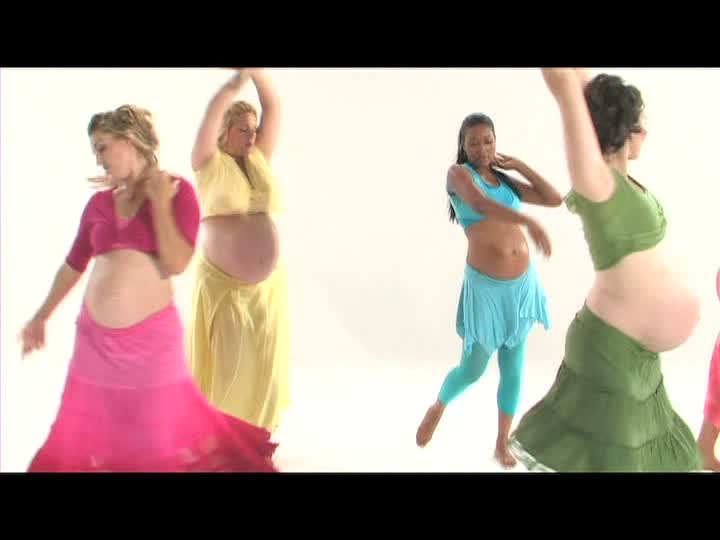
This is a long intro to Jennifer Jiménes’ Let’s Dance Together – Prenatal Dance Fitness, but that’s because I want to explain what makes this program different. I received a review copy of the program, and Jennifer included a note in which she explained that it’s more about developing “inner trust” in your body than typical dance fitness. The difference begins with the staging. Instead of a single instructor facing the camera, or, say, three different practitioners modeling trimester variations, this video has a group of pregnant women, dressed brightly, sitting, standing, and dancing in a circle. Already doing the video feels less like instruction and more like participation. In fact, this is one of the few videos I’ve done which I felt encouraged me not even to look at the screen — and this is a good thing. It’s hard to relax and turn inward when you’re looking up at a screen.

The program begins with a gentle warmup that stretches out every bit of your body, with some really nice seated exercises for the legs and a variety of flowing movements done on all fours to relax the lower back and pelvis. The latter chapters include a labour prep section, including an exercise to help you maintain stamina through pain, and a meditative cool down. But what I really want to talk about is the dance segment.

Now, when I go to a dance class or watch a dance instructional, I want to be taught something. When I’ve been to dance classes where students were asked to free dance at the end of class, I was invariably stressed out by the experience — not because I don’t like to improvise, but because I feel too self-conscious, especially when others are there. If you’d told me that this video had a significant portion devoted to free dance, I would not have been excited. But in truth, I wound up loving it.

Why? Well, first of all, it’s not totally free dance. You’re invited to explore movement, but Jennifer calls out different parts of your body to focus on, as in “dance with your shoulders!” Both times I did this video, I was amazed at how creative I could be with that amount of prompting — I found my body performing moves I’d learned formally in dance classes, moves I’d seen other dancers do, or just totally new motions I invented because they felt good. It was, cheesy as it sounds, liberating.

The bright colours strike a Merce Cunningham vibe…

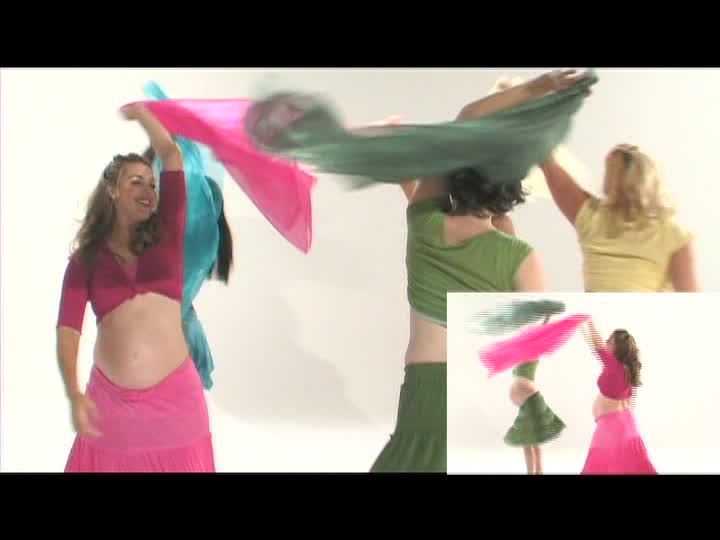
It feels wonderful to be heavily pregnant and realise that your body still can do things that feel so lovely. But I think this kind of exercise could be great beyond pregnancy too — how much better would those stressful improv moments in dance class have been if the teachers had guided the movement like this? A lot of dancers love choreography but are scared of improv, and I think a gentle practice like the one in Let’s Dance Together is a perfect way of breaking out of the choreography box. I wasn’t as enthusiastic about the second dance segment, which was a kind of circle dance with scarves, but the “Free Dance” portion was enchanting and made me want to do it again and again.

Did the program lead me to trust my body more, or to feel better prepared for labour? I think it’s hard to answer that question before actually giving birth. I will say this: I think the workout, and especially the free dance section, are excellent at giving you practice at figure out what kinds of movement make your body feel good. The fact that you’re not following someone else’s count or precise movements, but taking each of the exercises and doing them in a way that stretches and strengthens your muscles in the best way for you, is, I suspect, good practice for labour, when you have to set your own pace and figure out what works in easing the pain. And if labour is a dance, as I’ve sometimes heard it described, it has to be improvised.

Jennifer Jiménes’ Let’s Dance Together – Prenatal Dance Fitness is available on Amazon via the link, or from Jennifer’s website, Let’s Dance Together.

Finally got a veil!

So, I have quite a few veil DVDs, some of which I also need to review, and I thought the next few months would be a great time to do so. My torso and belly might not be as flexible, but I can still use my arms, right? The thing is, I’ve done very little (like, really, really little) in-class veil work, and even that was years ago and rather randomly taught. And this week, when I was working with Jennifer Jimenez’ “Lets Dance Together – Prenatal Dance Fitness” (review coming soon) and got to the scarf/veilwork section, I went to find the piece of chiffon I’ve had lying around for years and — could not for the life of me find it. I found practice zills, hip scarves, poi, all kinds of little props I have hanging around, but no chiffon! I realised the awful truth — I badly needed a veil.

But what kind? It turns out that bellydance videos have varying amount of information on choosing a veil. Veil with Aziza and Kaeshi Chai’s Expressive Bellydance Veil both go over the basics, silk and chiffon, and Kaeshi also shows how to steam iron your veils to keep them looking fresh. There’s a small section on choosing veils in Sarah Skinner’s Seven Veils, but the really long introductions are in Skinner’s Bellydance with Veil and Shoshanna’s Fabulous Four Yard Veils. Skinner’s intro is more of a show-and-tell — you can tell that she’s really in love with her veils! — and she focuses quite a bit on the makeup of the fabric and the look, weight, and hemming of the veil, going through varieties of chiffon and even more unusual fabrics. Shoshanna doesn’t deal with quite as many kinds of fabrics, but she gives more examples of how particular veils might work in dance, what moves she likes to do with what kinds of veils, and also which veil fabrics are too heavy and might cause injury!

Other resources I like are Dina Lydia’s article, “Making a Veil,” and Zorba’s “So Many Veils, So Little Time!” In the end I went to Little Egypt, a store and bellydance school here in Dallas, and picked up a couple of silk veils at their sale that were pretty much cheaper than on eBay! (And a little practice cane… because I’m bad.) I’d still like to get to a fabric store nearby and see what kinds of chiffon are out there, and if I can make a really sturdy — or at least disposable — practice veil out of some on-sale fabric, but for now I’m ready to go!

Review of Amira’s Belly Dance & Yoga For Pregnancy Prenatal Exercise

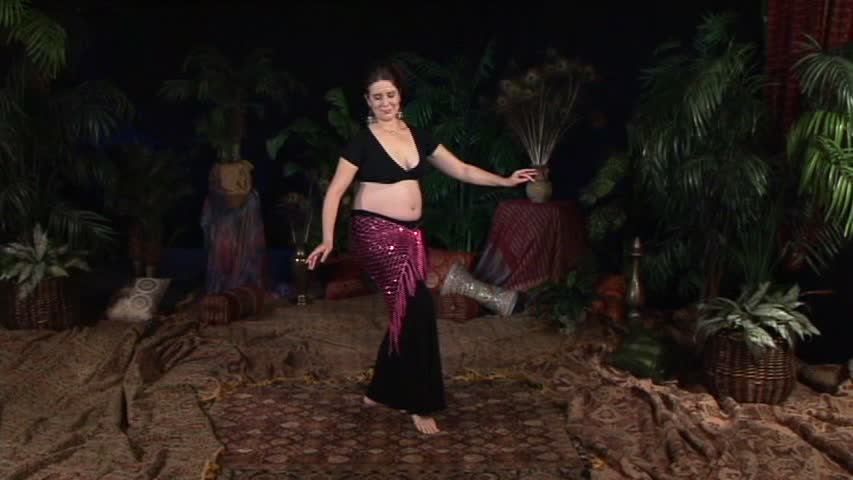
My exploration of dance-based prenatal DVDs continues with Amira’s Belly Dance & Yoga For Pregnancy Prenatal Exercise, a massive three-and-a-half hour video that includes yoga and strength exercises, dance movement instruction and practice, birthing prep, interviews with health professionals and dancers, and two performances. Amira provided me with a review copy, and in our correspondence she mentioned having intended to make a much shorter program — I guess she got carried away with the research!
Amira’s yoga warmup

So this video is really several programs in one: the first, which most people will probably buy it for, is a gentle conditioning program for pregnant women with a strong dance component. The second is a reflection on childbirth from several different perspectives: Amira’s as dancer, pregnant woman, and researcher, those of a midwife and a chiropractic doctor, and testimonials from six dancers who had children. These programs are also intertwined to some extent. I’ll deal with the second program first.

Amira’s Belly Dance & Yoga For Pregnancy Prenatal Exercise for Childbirth Information

The thrust of Amira’s work is very much about recovering non-Western modes of bodily movement and preparation for childbirth. This can be seen in her introduction, and in little segments between the exercise sections of the workout. My own reaction to this was split. On the one hand, it’s incredibly silly to force women to give birth lying down, and it’s also patently clear that many of the movements in bellydance are precisely what doctors now recommend to pregnant women to alleviate pains and prepare for childbirth. “Ancient wisdom” is a broad and vague category, but there is clearly a lot we can learn from forms of movement that are not sitting at one’s desk. On the other hand, I also tend to resist idealizing either the past or non-Western medicine. Pregnancy is not a disease, but it is dangerous, and a lot of women died in the past who wouldn’t die today in North America or Western Europe. (Maternal mortality is still a major issue around the world, one Hilary Clinton has drawn attention to recently — see this, this, and this.)

Dancer Maggie shares her birth story

This is why what spoke to me most from this part of the video were the testimonials of dancers, who spoke about their own birth experiences. What came out of this was that pregnancy and birth are complicated, messy, and deeply individual. Some wound up having C-sections, some had tough pregnancies but were able to give birth vaginally, and every woman seemed to have a mix of joys and regrets. All thought they had benefited from their dance practice, but in different and nuanced ways — a feeling of femininity, a strengthened bond with the baby, or better body awareness. I loved that this section of the video showed that becoming a mother is not one-size-fits-all deal, even if many of us have ideas about what the “perfect” childbirth might look like.

Amira’s Belly Dance & Yoga For Pregnancy Prenatal Exercise as Prenatal Workout

The exercise section of the video contains five sections:

Yoga Warmup & Stretch
Strengthening
Belly Dance
Exercises During Labor
Cool Down and Stretch

This is quite a bit of material, and you will probably prefer just to do the warmup, cool down, and one of the sections in the middle on a normal day. I’ve tried it all except for the labor exercises, though these are mostly also bellydance movements, with the interesting addition of breathing practice that even women confined to bedrest can do.

The program is extremely careful, and very gentle. While you will stretch and strengthen your muscles, there are no jarring movements or even footwork. Everything is cued slowly and precisely. It means you should do this video on a day when you’re not in a rush (you might be frustrated with the pace), but also that you’re unlikely to injure or unduly strain yourself. Subtitles and inset videos will sometimes show modifications. And the program as a whole is a complete package — every part of your body will be gently stretched or worked, though it won’t feel like an intense workout. The best result was one I didn’t even notice right away. After doing this video, I had almost three days without sciatica pain.
Kitty paws help pregnant pain!

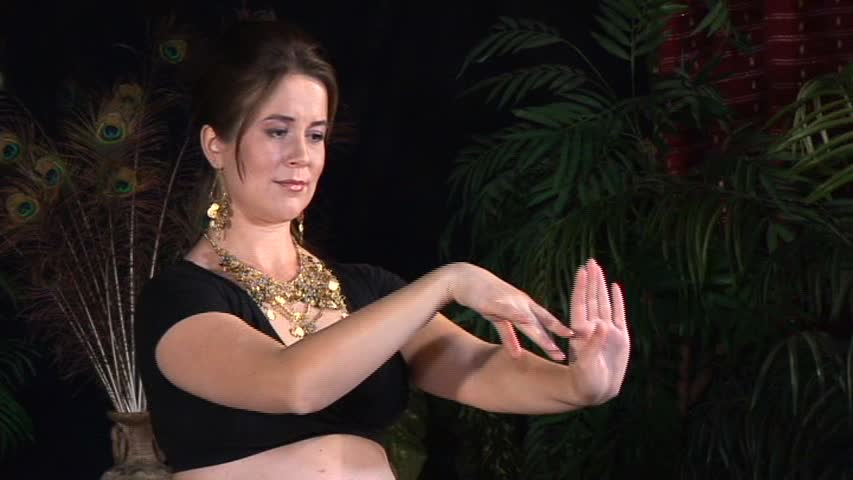
The “Belly Dance” section consists of basic movement instruction, but no choreographies. For women who are new to bellydance, Amira’s instructions will be approachable. More experienced dancers will not find challenging moves or routines, but I think this section would be a great long warmup for a pregnant woman continuing her dance practice. (It doesn’t have lots of lunges or extended shimmies that other warmups I know use, but which might be difficult or dangerous during pregnancy.) What I think is really valuable about this section, even for women who know how to do a chest circle and a maya, is that Amira’s slow and careful repetition of the movements forces you to pay attention to your basics. I found myself really focusing on the fundamentals, striving to extend my range of motion, and working on doing basic movements in a beautiful way. It made me think that there could be a plus side to dancing when pregnant!

And yes, bellydance does feel very good when you’re pregnant! What I found funny was that Amira included a section on arms and hands and claimed that it was for the beauty of the dance rather for any health benefits. Beautiful handwork is my favourite part of bellydance, so I’m with her on that, but I think she’s wrong on one point. Pregnant women are particularly vulnerable to carpal tunnel syndrome, and nothing is as great for that as bellydance hand flourishes are! They’re gorgeous, but they also have health benefits. Go figure.

The summary? You will love this DVD if you want a full but gentle prenatal workout, if you want to luxuriate in movement that will support your pregnancy, and if you want to hear about other women’s thoughts on and experiences of childbirth. You will not love it if you want a fast or sweaty workout, or if you do not want to hear about childbirth practices around the world (there are informational bits between the workout segments). You can get the DVD at www.pregnantbellydance.com.
Continuing choreography with Jillina

A few days ago I wrote about my fear of choreography. I realised that part of what I needed to do was to slow down. I may not be one of those people who can watch someone at the front of the classroom do a series of complicated steps and repeat them immediately (and I have, to my horror, been in rooms of dancers who can), but I can learn if I take my time. The ability to learn fast is different from the ability to learn at all. What came out of this were some good discussions on Bhuz and OrientalDancer.net, in which I got to hear about other dancers’ experiences learning to perform, being afraid of advancing in the dance, and learning how to learn choreography.

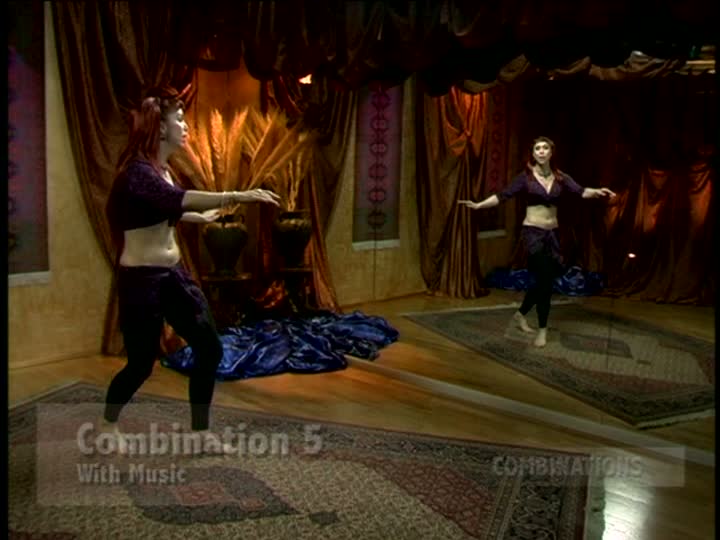
A few days ago I took advantage of Christmastime leisure and returned to Instructional Bellydance With Jillina – Level 1. My first time around, I had worked with the movement instruction section and arduously learned the first three combinations. Before beginning the second session, I ran through the first three combos from memory, to see how much I could recall on my own. (All of it!) I then repeated the sections for those three combinations, which gave me a really wonderful feeling — the transitions that had felt unnatural earlier now came easily and organically, and I barely had to think anymore.

The real surprise, though, was the fact that I sped through the next four combos. (There are only seven total.) For some reason, even though I was really tired when doing this practice, my body could just pick up the combinations this time around. I did have a little trouble with footwork, and I probably wouldn’t recollect as much of them now, but I was able to get up to full speed much, much faster than in the first practice session. This still involved a few repetitions of each combination’s instruction and practice segment, but I did not have to stop these quite as often. This was completely unexpected!

Again, Jillina’s video is nothing fancy — she uses just a few basic movements in combinations that are simple but lovely. But to me mastering them still felt like an achievement. By the end, the many spins had made me dizzy (I am pretty pregnant, after all!), but I did a run-through of all the combinations again and did some cool-down stretches on my own. I then reviewed the final section of the video, in which Jillina adapts the combinations into a choreography to “Alf La Waila Waila.” For the next practice, I’m planning to review all the combinations again as a warm-up, and then tackle the choreo to the song. I’m not sure how I’ll deal with having the patterns changed, but at least the music will now be a help. This whole choreography thing is starting to seem… doable.

An omi a day keeps the doctor away!

Shira posted this little goodie on Tribe, and I simply had to share. Israeli researchers recently found that attending bellydance workshops decreased the rate at which women had to go to the doctor. The average age of the participants in the study was 49, so it may just have been regular movement, but I still think it’s a cool bit of news. Read the news at the link:

Israeli researchers: Belly dancing good for women’s health

The Eternal Beginner; or, Beating the fear of choreography with Jillina

Bellydance has been a source of joy and frustration to me. Joy, because it’s the dance that really speaks to my soul, the dance that feels right on my body, the dance that helped teach me to feel comfortable as a woman when I was just becoming one. Frustration, because the intensity of my studies and work, the frequent moves during my twenties, and my own fear and self-consciousness have kept me from progressing beyond beginner.

I took my first bellydance class almost ten years ago in Toronto. In that time, I’ve taken classes and even quite intensive workshops in Connecticut, New York, Berlin, and Texas. But the longest I every stayed with one teacher was right at the beginning — since then I’ve had trouble finding classes in one city, in the next I had trouble finding a studio I liked, in another city I spent too little time, and the class I took this spring with a teacher I liked was cancelled without notice. Despite the fact that I’ve done much harder classes, when I go to a new teacher I describe myself as a beginner. There is so much I still don’t know, and I don’t want to be the annoying student who judges herself to be intermediate. But this does mean I’m always breezing through the basics, and never really learning to put things together.

(The funny thing is that when I put on music and just jam, I have no trouble improvising…)

My worst fear is of choreography. Maybe it’s due to the memory of trying out for arts school when I was ten, and a dance teacher running through complicated steps which everyone around me could magically pick up. They all turned left, while I was turning right! The truth is, choreography is not something I pick up quickly, especially if it’s not introduced with music or doesn’t really make sense with the music. I’ve never quite figured counting out. But taking regular classes this spring taught me something: I can learn combinations and choreography if I practice them really incrementally, and repeat them often. I’m not the person who can watch twenty-four counts’ worth of moves and repeat them afterward without a hitch, and perhaps I never will be — but that doesn’t mean I can’t learn if I’m willing to be more patient.

So, today, I decided to work on beating my fear of choreography. I searched my video library for a DVD that would have simple choreos with repetition, and came across a video I’ve had for ages: Instructional Bellydance With Jillina – Level 1. I thought the mix of quick review of the basic moves and small, manageable combos would be just right — and it was. Jillina first introduces the combinations slowly and then drills them 3-4 times with music. After teaching the seven combinations, she then goes through them again, but modifies them into a choreography to “Alf La Waila Waila,” and has you practice that.

Part of my resolution was that I would not try to do the whole video. My current condition (28 weeks pregnant) means it would probably be unwise anyway. But I wanted to see if I could really learn a few combos if I applied myself, rather than doing the program as a whole and always feeling that I can’t keep up. So today, after working with Jillina’s technique review, I just focused on the first three combinations. They were simple, easy, but lovely with the music. (I’m not one of those people who think bellydance has to be incredibly complicated to be beautiful.) When I found that a particular transition or movement was counter-intuitive, I paused, and kept rewinding and repeating the drill until it felt natural. And I added my own breaks to repeat everything from the top. Finally, after learning the first three combinations, I stopped the video and practiced all three together several times on my own.

I found slowing down like this really liberating. Jillina gives no instructions for arms and hands except when she’s choreographed snake arms, so once I had internalized the combinations I found I could follow her or improvise my own stylization. And, to my surprise, the process of learning combos and footwork was not as difficult as it usually is. I will probably do some pilates tomorrow and pick up the Jillina again in two days, and see how much has entered muscle memory, how much I need to relearn, and how things go with the next combinations. But for now, I’m excited, for the first time, about choreography.

What are your experiences learning choreography?

Review of Sera Solstice’s Goddess Dance: Prenatal Bellydance & Meditation

As much as I tend to hate anything with “goddess” in the title, especially with combined with “pregnancy” or “bellydance,” I love Prenatal Bellydance & Meditation and by the end of it, have a bit of a girl-crush on Sera Solstice. This is the first prenatal bellydance program that leads you through what feels like real dancing. Moreover, the aesthetics of it are simply delightful.

This woman’s dancing is perfection

I’m going to review this from two perspectives — as a prenatal workout and as a dance instructional. The video also has two meditation segments, but I’m not quite into that right now.

Prenatal Bellydance & Meditation as prenatal workout:

Sera is eight months pregnant during the filming of the video, and she explains that she has chosen movements based on what she has found satisfying for her pregnant body. She doesn’t mention consulting any medical literature on safe movements for pregnancy, but nothing she does contradicts any indications I’ve seen. Her backup dancers demonstrate the moves for early pregnancy and postnatal, but there really isn’t too much difference in most sequences.

The beginning warmup is dancey, smooth, but quite minimal — I suggest complementing with your own basic movements like cat stretches, leg stretches, and neck and shoulder rolls. The dance combos themselves are great for a woman who’s growing. Yes, they push a little further than the very basic movements of other prenatal workouts, but it ultimately feels very good. Although Sera often talks about the need to lower awareness to the hips and pelvis, I think the real strength of this program is in what it does for the upper body. I’m in my sixth month of pregnancy, and I end every day feeling pain in my upper back and rib area. While my yoga videos do provide good side stretches, there really is nothing like bellydance to stretch upper abdominals, upper back muscles, and obliques.

The workout as a whole is not heavy on the cardio, but you will feel it, especially if you have been doing lighter, pregnancy-type exercise. I added a necessary cool-down and stretch on my own. There is one hilarious section in which Sera explains the most complicated Kegels I’ve ever heard of, and then guides you to do them along with a series of bellydance movements. This was too much for me! Look, if you want me to move all those muscles separately and precisely, muscles I have never been asked to control to that extent in my life, then I had better be sitting on the ground thinking about that and only that. It’s not gonna happen during an omi.

Prenatal Bellydance & Meditation as dance workout:

I loved the video as a dance workout. I don’t think it would be the right thing for someone trying bellydance for the very first time. Although Sera does give quite lengthy explanations of the movements, using good visuals, you have to pick them up pretty quickly to be able to move along with the video. It takes most women a bit of time to learn a flat-footed maya or an omi or even a chest circle. However, if you have some experience of the moves, her instruction is great for improving your execution of them. The combinations are manageable, but not boring, especially if you also think about getting the hands and arms right.

Most importantly, Sera is a really beautiful dancer. I tend not to get as excited about tribal fusion, since it often seems to lack the fluidity and grace I love about more traditional bellydance forms. Sera is the person to prove me wrong. Her movements are an education in grace, and it’s saying a lot that following her makes you feel like you are dancing.

Disclosure: I received a review copy of this DVD from World Dance New York.

Habibi Journal — now online!

When I first got into bellydancing I heard a bit about Habibi, a journal about Middle Eastern dance published between 1993 and 2002. I was so curious. I used to check in on the Gilded Serpent regularly, but only a few of its articles are really substantive. (And its reviews quite superficial and congratulatory — which made them useless for me, a budding collector.)

Well, Shareen el Safy just announced that much of Habibi, which she published, is now available online:

The Best of Habibi

I was lucky enough to take a long workshop with Shareen a few years ago in New York. I still haven’t gotten around to working with the videos I bought, and I only remember a few of the moves she taught, but what really stayed in my memory were her reflections on the dance itself. She talked about how dance is not just a way of interpreting music for the audience, but that the dancer’s role is also to communicate the “deliciousness” of the movement to those watching her. What I loved was her focus on the internal, private, and sensuous aspects of a dance that tends to seem showy, entertaining, and “available” — at least when compared to modern dance or ballet.

I’ve only skimmed a bit through the Habibi archive, but a lot of the articles seem to reflect this thoughtful approach to a dance that is often misunderstood, and often approached with technique but not with soul. The one article I read, which I absolutely loved, was Suhaila Salimpour’s recollection of working as a dancer in Lebanon. I can’t wait to discover more of the writing on Habibi.