Review of 10 Minute Solution Prenatal Pilates, with Lizbeth Garcia

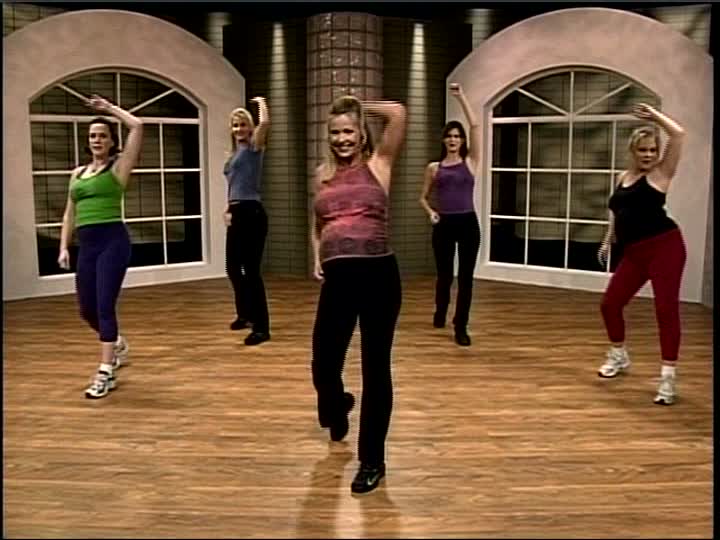
I’ve been feeling pretty fit and pleased with myself lately, but 10 Minute Solution Prenatal Pilates pretty much kicked my butt tonight. Maybe it was my body telling me to take a day off, or maybe it was the fact that I was working with the video pretty late in the day. But while I meant to try all five prenatal segments (there is also one postnatal workout), I only did two full ten-minute parts and about half of two others.

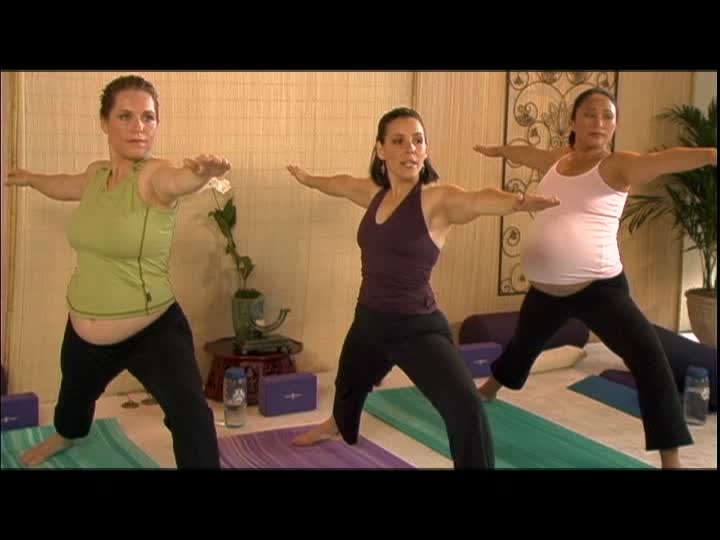
Lizbeth shows how it’s done

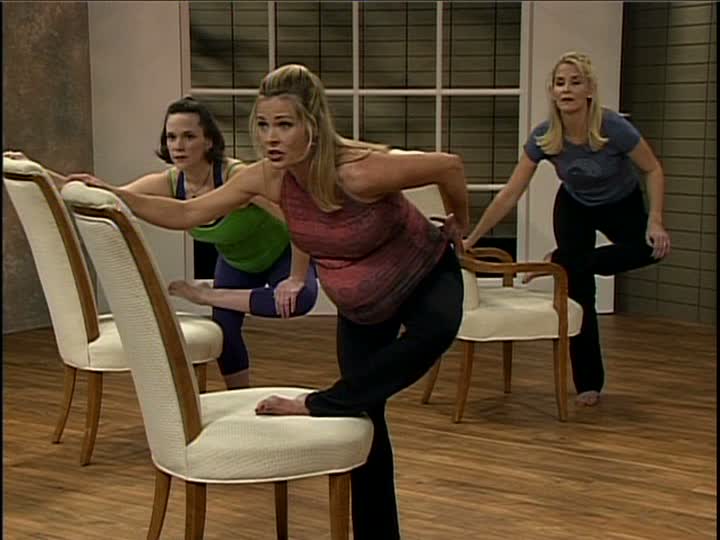
Despite the fact that this program made me feel, well, weak, I think I’ll wind up a fan. It’s one of the most strenuous workouts I’ve tried so far, without leading to overheating. Both the “Standing Pilates” and “Total Body Pilates” segments have significant arm work, with light weights, which not only feels pretty good for the upper back but reminds you that you can work out more than my hips and back during pregnancy! The “Core Pilates” segment has you prop yourself up with pillows and then do modified pilates abdominal work, and trust me, you will feel this, especially if your other workouts have avoided the abdominal muscles. “Pilates for Buns & Thighs” will give you serious burn in the aforementioned regions, and “Pilates for Flexibility” offers some really delicious stretches. Basically, the pace is fast enough and the exercises challenging enough that you could do just one ten minute segment a day and feel that you had done something for your muscle tone. The DVD allows you to customize your own workout, so you can decide how much you want to do and in what order.

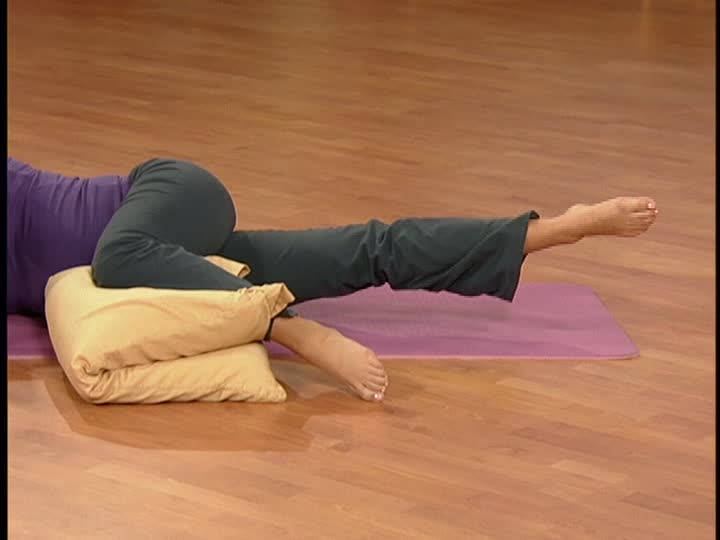
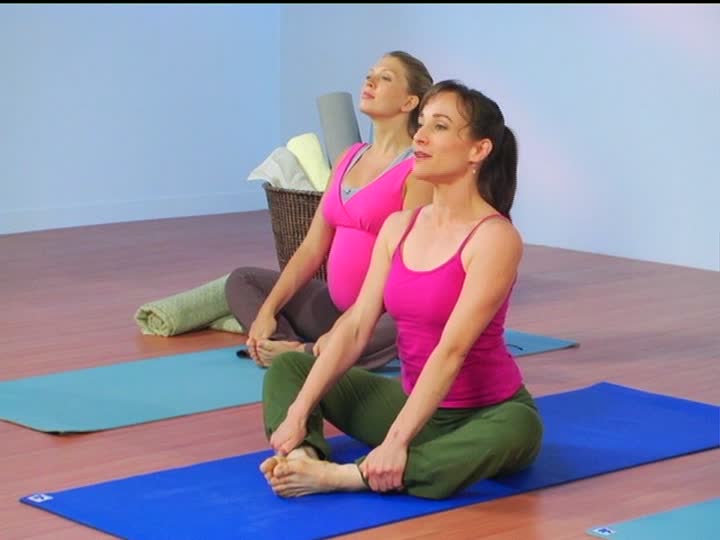
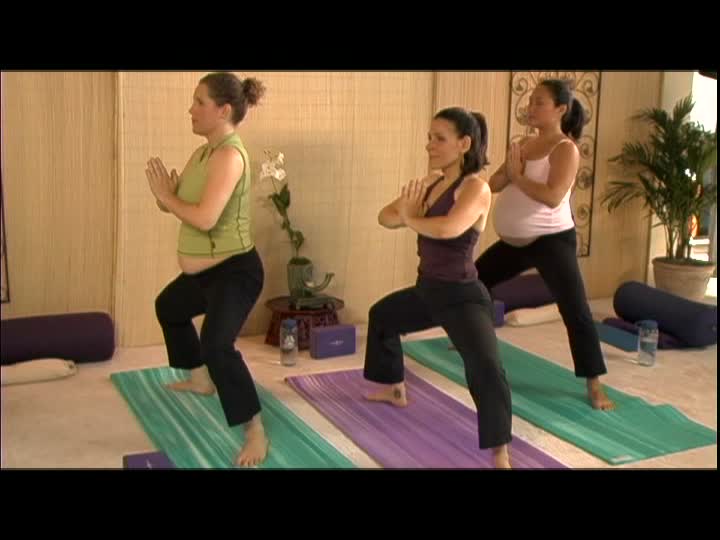
Pregnancy, it turns out, is no excuse to ignore your inner thighs

Lizbeth Garcia is visibly pregnant throughout the exercises — though also visibly buff! I’m easily annoyed by too-peppy workout instructors, but she is just cheery enough without grating. (And there’s something a little rough about her voice that I really like too.) And — I think this is kind of adorable — although the picture on the DVD has her perfectly styled, in the actual video her workout shirt is too short for her belly. I think pregnant women can sympathize!

An omi a day keeps the doctor away!

Shira posted this little goodie on Tribe, and I simply had to share. Israeli researchers recently found that attending bellydance workshops decreased the rate at which women had to go to the doctor. The average age of the participants in the study was 49, so it may just have been regular movement, but I still think it’s a cool bit of news. Read the news at the link:

Israeli researchers: Belly dancing good for women’s health

The Eternal Beginner; or, Beating the fear of choreography with Jillina

Bellydance has been a source of joy and frustration to me. Joy, because it’s the dance that really speaks to my soul, the dance that feels right on my body, the dance that helped teach me to feel comfortable as a woman when I was just becoming one. Frustration, because the intensity of my studies and work, the frequent moves during my twenties, and my own fear and self-consciousness have kept me from progressing beyond beginner.

I took my first bellydance class almost ten years ago in Toronto. In that time, I’ve taken classes and even quite intensive workshops in Connecticut, New York, Berlin, and Texas. But the longest I every stayed with one teacher was right at the beginning — since then I’ve had trouble finding classes in one city, in the next I had trouble finding a studio I liked, in another city I spent too little time, and the class I took this spring with a teacher I liked was cancelled without notice. Despite the fact that I’ve done much harder classes, when I go to a new teacher I describe myself as a beginner. There is so much I still don’t know, and I don’t want to be the annoying student who judges herself to be intermediate. But this does mean I’m always breezing through the basics, and never really learning to put things together.

(The funny thing is that when I put on music and just jam, I have no trouble improvising…)

My worst fear is of choreography. Maybe it’s due to the memory of trying out for arts school when I was ten, and a dance teacher running through complicated steps which everyone around me could magically pick up. They all turned left, while I was turning right! The truth is, choreography is not something I pick up quickly, especially if it’s not introduced with music or doesn’t really make sense with the music. I’ve never quite figured counting out. But taking regular classes this spring taught me something: I can learn combinations and choreography if I practice them really incrementally, and repeat them often. I’m not the person who can watch twenty-four counts’ worth of moves and repeat them afterward without a hitch, and perhaps I never will be — but that doesn’t mean I can’t learn if I’m willing to be more patient.

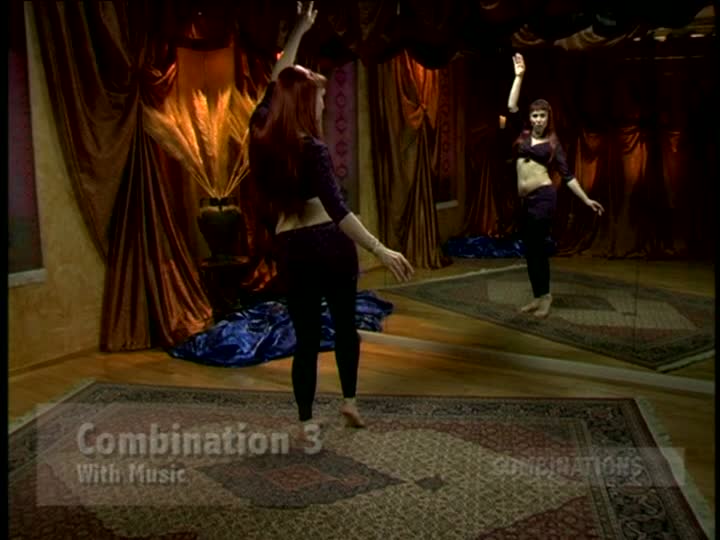
So, today, I decided to work on beating my fear of choreography. I searched my video library for a DVD that would have simple choreos with repetition, and came across a video I’ve had for ages: Instructional Bellydance With Jillina – Level 1. I thought the mix of quick review of the basic moves and small, manageable combos would be just right — and it was. Jillina first introduces the combinations slowly and then drills them 3-4 times with music. After teaching the seven combinations, she then goes through them again, but modifies them into a choreography to “Alf La Waila Waila,” and has you practice that.

Part of my resolution was that I would not try to do the whole video. My current condition (28 weeks pregnant) means it would probably be unwise anyway. But I wanted to see if I could really learn a few combos if I applied myself, rather than doing the program as a whole and always feeling that I can’t keep up. So today, after working with Jillina’s technique review, I just focused on the first three combinations. They were simple, easy, but lovely with the music. (I’m not one of those people who think bellydance has to be incredibly complicated to be beautiful.) When I found that a particular transition or movement was counter-intuitive, I paused, and kept rewinding and repeating the drill until it felt natural. And I added my own breaks to repeat everything from the top. Finally, after learning the first three combinations, I stopped the video and practiced all three together several times on my own.
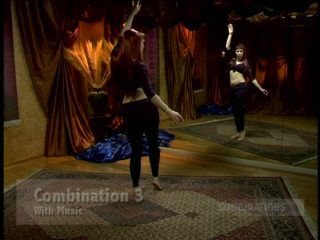
I found slowing down like this really liberating. Jillina gives no instructions for arms and hands except when she’s choreographed snake arms, so once I had internalized the combinations I found I could follow her or improvise my own stylization. And, to my surprise, the process of learning combos and footwork was not as difficult as it usually is. I will probably do some pilates tomorrow and pick up the Jillina again in two days, and see how much has entered muscle memory, how much I need to relearn, and how things go with the next combinations. But for now, I’m excited, for the first time, about choreography.

What are your experiences learning choreography?

Working with Prenatal Yoga Complete

I’m not ready to do a review of Prenatal Yoga Complete yet, since I’ve only worked with one program. This is more of a preliminary report!

I wasn’t sure whether to spring for this video, since quite a few people on Amazon did not like it. There are so many options out there, why go for something poorly rated? However, when I realised that it’s basically Iyengar yoga, I was too tempted, and finding a cheap copy in the Amazon Marketplace, decided to go for it.

I don’t have a lot of experience with Iyengar yoga in general. I went to one class at the BKS Iyengar Yoga Studio of Dallas a while ago, and keep meaning to go back. My recollection of the experience was this: I did not feel that drug-like relaxation that I usually get from a yoga practice, nor did it feel like a strain at any point, so I was at first disappointed. However, a little later I felt great, and since that one single class, I’ve found myself recalling the careful, precise instructions for the poses we did even when I’m doing other yoga programs.

That’s my way of saying that I suspect there’s something to this whole Iyengar thing, even if it’s not immediately satisfying the way a more active form of yoga is. And let’s face it, when you want the relaxation and release of yoga, setting up a million different props is probably not what you’re looking to do.

Prenatal Yoga Complete is a modular DVD, which I think is pretty cool. Basically, you choose a trimester and then you get a menu offering practices of varying lengths addressing different pregnancy issues and goals: things like dealing with morning sickness, back pain, or aiming for relaxation. The pregnancy sciatica has been cruel to me lately, so I chose a second-trimester back and hip workout.

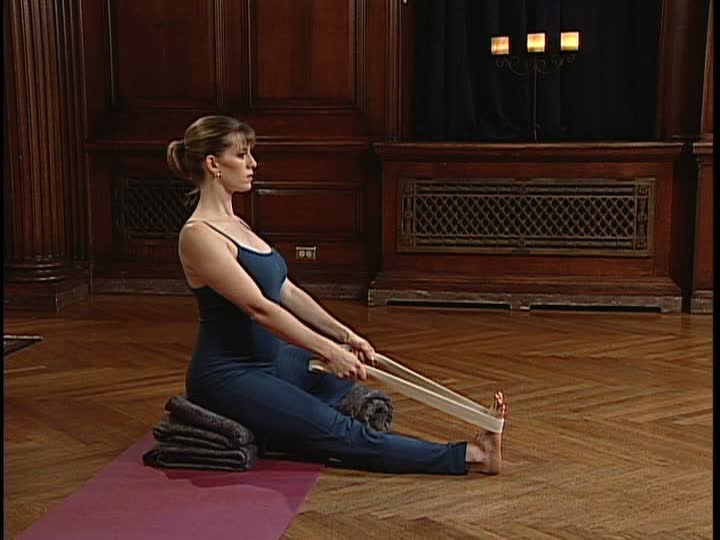
The modular construction of the video means that there isn’t flow from one asana to another — each is essentially a different clip. Set up often takes a bit of time, and even though the descriptions are detailed and long enough to allow you to get everything in place, sometimes you will have to pause the video. You need quite a few blankets, bolsters, blocks, etc., but Mary Pappas-Sandonas does suggest substitutions in the introductory clip on props. And a lot of poses are done against a wall, which was a challenge for me since I did not have a free wall handy, but I was able to do most poses just fine without it.

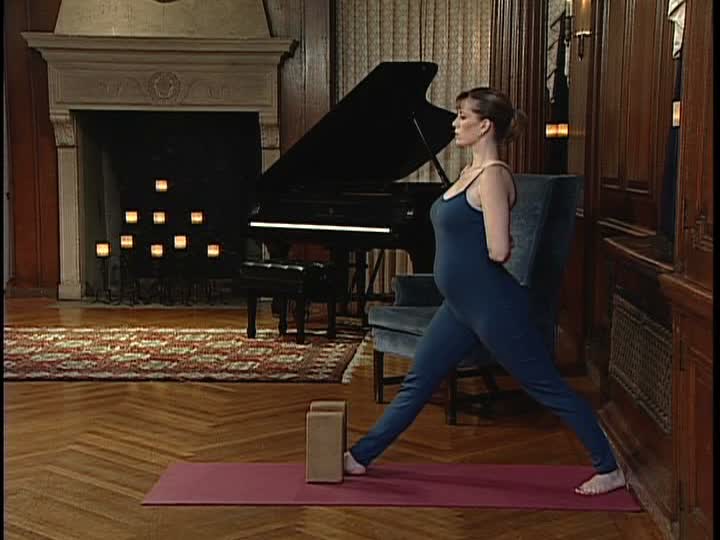
Little did you know that a grand piano is a useful yoga prop!

What I loved is that this program gives you time. If you enjoy that aspect of yoga that is about paying really close attention to every single muscle, aiming towards best alignment, and breathing through a challenging pose, this is the video for you. The props made many of the poses easier to achieve than what I’m used to doing in other prenatal yoga DVDs, but I made up for that ease with attentiveness. And some of the asanas, done carefully, were much harder.

I also loved that this program included a beautiful, ridiculously relaxing, supported shavasana. Instead of a guided visualization or instructions to “relax” different body parts, Pappas-Sandonas leads you through a deep breath relaxation. I found this much more effective. And — the best part — after the clip for the shavasana is over, the video goes to silence. (There is nothing worse than wanting to stay in corpse pose a bit longer but having some ridiculous DVD intro music play on infinite loop.) My sciatica pain isn’t completely gone, but out of all the stretches and programs I’ve done lately for it, this one has been the most effective. I’m looking forward to trying out the other workouts.

Review of Elena Brower’s Element: Prenatal & Postnatal Yoga

At one point while doing Elena Brower’s Element: Prenatal & Postnatal Yoga I thought: “hey, this is like what I know as yoga.” That seemed like a weird thing to think considering the number of yoga videos I’ve been doing lately. But Elena Brower’s program reminded me of the yoga classes I used to take in New York, in the kids’ playroom of our apartment building, with one super-intense and wonderful yoga teacher. It has the same kind of slow, careful movement, with very precise instructions that are sometimes difficult to conceptualize, but work brilliantly once you get what she means. Later, I checked the DVD case and realised Brower does Anusara yoga, which is what we were doing back then. Maybe it’s because it’s what I’m used to, but there’s something about Anusara yoga that really hits the spot for me — more dynamic than just one position after another, but more measured than vinyasa flow.

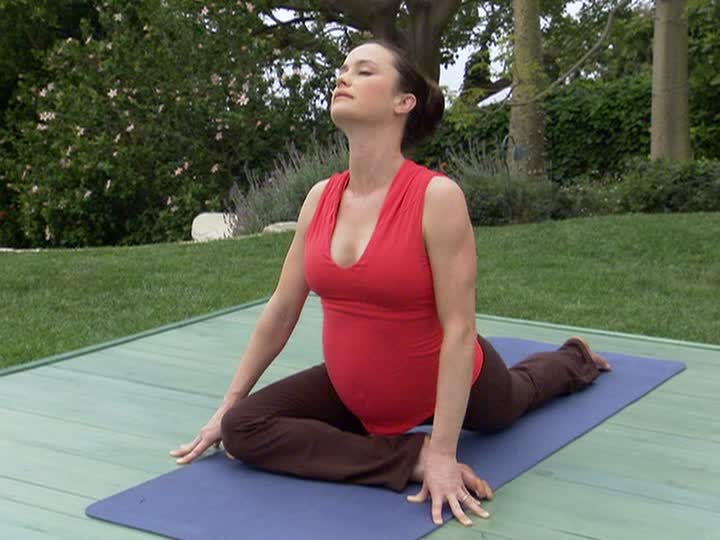
Pigeon pose — brilliant for prenatal back pain

The program itself is short: it’s about half an hour, and flies by in what seems like less time. There are subtle modifications for pregnant women, things like very careful twists and gentle backbends and squatting work. That said, it doesn’t feel like a prenatal program. It won’t get all the kinks out (at least it didn’t for me), and it’s not so much about relaxing or stretching. Instead, you get warrior poses, some pigeon poses and forward bends and downward dogs and moves in and out of plank, and a final seated relaxation.

While I was doing the video, I felt like I was building strength. It wasn’t nearly as tiring as Jennifer Wolfe’s Prenatal Vinyasa Yoga, but I could feel it. Then, strangely, when I finished the program, I felt like I hadn’t done anything at all! The only difference was that my hips felt looser.

The verdict? I’ll wait a bit and see how my body feels. I loved the precision of Brower’s instructions, the way focusing on one muscle or breath could enable me to stretch further comfortably. I would happily purchase more of her DVDs, and am certainly looking forward to working with the postnatal part of the program. However, I don’t think this video is the complete package for prenatal conditioning or relaxation. Use it in conjunction with other programs.

Review of Heather Seininger’s Yoga Pregnancy: Pre and Post Natal Workouts

Heather Seininger’s Yoga Pregnancy: Pre and Post Natal Workouts is basically the polar opposite of Jennifer Wolfe’s Prenatal Vinyasa Yoga, which I practiced with and reviewed yesterday. Whereas Wolfe’s program seems intended to be as close as possible to a real and vigorous Vinyasa yoga practice with a few modifications, Seininger’s program is short, easy, and seems more focused on giving pregnant women the basic stretches for back, chest, neck, and hips that they need to deal with everyday pains and prepare for labour.

The video also includes a postnatal workout, which I didn’t try for now. But the prenatal workout is just right when you really only want a stretch and a bit of strength building. Seininger has a very calm voice, and she matter-of-factly instructs you how to enter each position, each time giving you a moment to center yourself and find your balance. There are warrior poses, but here you have time to get into proper form and to check your foot placement. Every asana is done carefully, purposefully, and without rushing. There is a brief (too brief!) shavasana at the end. There are modifications shown for third trimester, and these are usually cued verbally as well.

If you’ve done any kind of yoga at all, this probably won’t challenge you too much. But it’s perfect maintenance for days when you want something light, and a good way to start the day.

Review of Jennifer Wolfe’s Prenatal Vinyasa Yoga

I don’t envy producers of workout DVDs. I figure they have a hard time pleasing their audiences — at least that’s what Amazon reviews tend to indicate. And here’s my theory for it: the prospective audience for a workout DVD is fundamentally split: there are the people who are so dedicated to their cardio/yoga practice/bellydance drills that they need videos to supplement their classes and gym visits, and then there are the people who haven’t done anything in a while, and figure the new Laotian dancing yoga & hooping video might be the thing that will inspire them to keep with a workout program. Needless to say, these groups of people will not be satisfied with the same video.

This problem is amplified with prenatal workouts. There are the superfit mamas who aren’t going to let a little thing like the 9-month gestation of human life get in the way of their muscle conditioning, and then there are the ladies whose backs are starting to hurt something fierce and who have been terrified by their natural childbirth books into doing some kind of prenatal yoga.

I tend to fall in the latter camp, but in the case of Jennifer Wolfe’s Prenatal Vinyasa Yoga I’m split. On the one hand, I’ve done enough regular yoga classwork in the past to agree that most prenatal yoga programs really are just stretching. They feel fabulous, but are probably not helping my condition too much. On the other hand — I find this program a bit too strenuous, even when doing all the third-trimester modifications. I actually bought it in a set, Complete Prenatal Vinyasa Yoga & Short Forms, which has a DVD with 15, 30, and 45 minute practices. Because I had time today, I thought I’d jump right into the 75-minute practice on the first video, but this was clearly a mistake. At one point I had to start taking breaks and doing child’s pose repeatedly, and Wolfe does encourage this, but it’s frustrating. And my lower back hurts this evening, making me think that I might have strained myself a bit. However, I’m willing to try the shorter programs and see if I can’t work up to getting something useful out of the longer, 75-minute practice.

For now, I’ll review positives and negatives of the long program, all through the filter of my own likes and pet peeves!

The Pluses

– The workout is generally quite well cued, including verbal cues for the modifications, and the presenters “mirror” what you should be doing, so it’s easy enough to follow.
– Breathing is indicated throughout (though Wolfe sometimes seems to lose track of what breath should go where — this gets confusing).
– While I usually worry about so many lunges and what they might mean for my weak knees, movement in and out of lunges is described very precisely, step-by-step, in a way that minimizes the chances of something going wrong.
– Wolfe repeatedly encourages you to take a break if you need it.
– The practice is vigorous enough to feel like a real workout. You really get warmed up, and you’re definitely building strength.
– There’s a longish squat section that feels really good, and that seems to be just the thing for birth prep.
– This is one of the few yoga videos I’ve ever seen, prenatal or not, that has a decent shavasana: Wolfe does a long, guided meditation, with light music in the background that is not annoying. That’s impressive.

The Minuses

– The safety notes often come in the middle or second repetition of a pose. They should come right at the start!
– This may be an issue with vinyasa in general rather than with this particular DVD, but the move from a lunge to a warrior posture is often too quick to really allow for proper alignment of the feet. Now, this is a video for people who have yoga experience, but being pregnant means that finding your balance and figuring out where your feet are is a longer process, and one that varies daily.
– Those lunges and downward-facing dogs get really repetitive. They also get tiring, but it’s easier to soldier through a program that’s more varied. In 75 minutes, a much greater range of yoga postures could have been done.
– There is a little, but not much, for the neck and shoulder area. Given that this is also an area where pregnant women typically have pain, it would have been nice to have more than a head circle in each direction and an eagle pose.

This is it so far — I’ll report on the other workouts as I use them, but this one was too much for me at present. Still, for building strength it’s probably a very good idea to do something a little more rigorous than sitting on a chair and doing a side stretch.

Review of Sera Solstice’s Goddess Dance: Prenatal Bellydance & Meditation

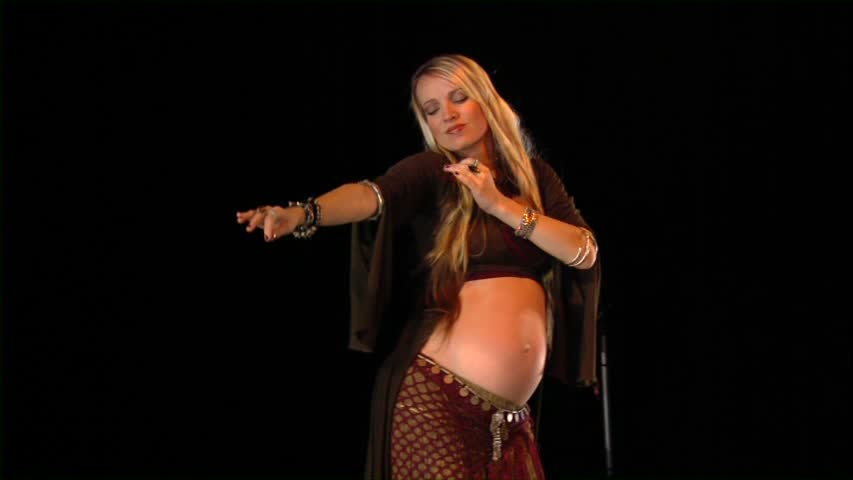
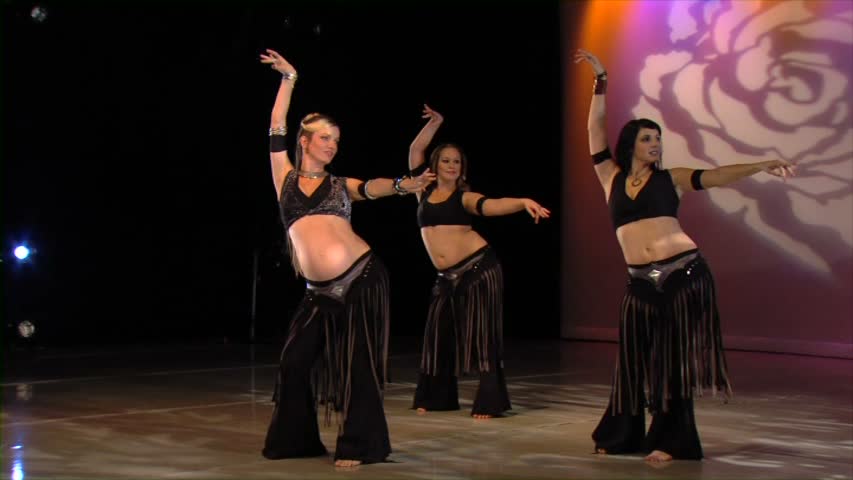
As much as I tend to hate anything with “goddess” in the title, especially with combined with “pregnancy” or “bellydance,” I love Prenatal Bellydance & Meditation and by the end of it, have a bit of a girl-crush on Sera Solstice. This is the first prenatal bellydance program that leads you through what feels like real dancing. Moreover, the aesthetics of it are simply delightful.

This woman’s dancing is perfection

I’m going to review this from two perspectives — as a prenatal workout and as a dance instructional. The video also has two meditation segments, but I’m not quite into that right now.

Prenatal Bellydance & Meditation as prenatal workout:

Sera is eight months pregnant during the filming of the video, and she explains that she has chosen movements based on what she has found satisfying for her pregnant body. She doesn’t mention consulting any medical literature on safe movements for pregnancy, but nothing she does contradicts any indications I’ve seen. Her backup dancers demonstrate the moves for early pregnancy and postnatal, but there really isn’t too much difference in most sequences.

The beginning warmup is dancey, smooth, but quite minimal — I suggest complementing with your own basic movements like cat stretches, leg stretches, and neck and shoulder rolls. The dance combos themselves are great for a woman who’s growing. Yes, they push a little further than the very basic movements of other prenatal workouts, but it ultimately feels very good. Although Sera often talks about the need to lower awareness to the hips and pelvis, I think the real strength of this program is in what it does for the upper body. I’m in my sixth month of pregnancy, and I end every day feeling pain in my upper back and rib area. While my yoga videos do provide good side stretches, there really is nothing like bellydance to stretch upper abdominals, upper back muscles, and obliques.

The workout as a whole is not heavy on the cardio, but you will feel it, especially if you have been doing lighter, pregnancy-type exercise. I added a necessary cool-down and stretch on my own. There is one hilarious section in which Sera explains the most complicated Kegels I’ve ever heard of, and then guides you to do them along with a series of bellydance movements. This was too much for me! Look, if you want me to move all those muscles separately and precisely, muscles I have never been asked to control to that extent in my life, then I had better be sitting on the ground thinking about that and only that. It’s not gonna happen during an omi.

Prenatal Bellydance & Meditation as dance workout:

I loved the video as a dance workout. I don’t think it would be the right thing for someone trying bellydance for the very first time. Although Sera does give quite lengthy explanations of the movements, using good visuals, you have to pick them up pretty quickly to be able to move along with the video. It takes most women a bit of time to learn a flat-footed maya or an omi or even a chest circle. However, if you have some experience of the moves, her instruction is great for improving your execution of them. The combinations are manageable, but not boring, especially if you also think about getting the hands and arms right.

Most importantly, Sera is a really beautiful dancer. I tend not to get as excited about tribal fusion, since it often seems to lack the fluidity and grace I love about more traditional bellydance forms. Sera is the person to prove me wrong. Her movements are an education in grace, and it’s saying a lot that following her makes you feel like you are dancing.

Disclosure: I received a review copy of this DVD from World Dance New York.

Review of Leisa Hart’s Fit Mama Prenatal Workout

Oh boy, oh boy, oh boy.

This morning I did Leisa Hart’s Fit Mama for the first time. Let’s face it, there’s a need for this kind of program. While there are countless prenatal yoga and pilates DVDs out there, there aren’t quite so many available with cardio workouts. And sometimes cardio is really what you need — not so much to lose weight (obviously), but to get a bit of energy and warm up the muscles in a way that stretches alone don’t accomplish.

In case you can’t tell, you’re supposed to be sexy now.

And, you know, I got it for five bucks at the local Half Price Books.

Having spent almost an hour in Leisa Hart’s company today, I’m pretty much speechless. On the one hand, there are some truly good things about this video. It did get me warmed up, it wasn’t too hard to follow along, the stretching section had a few moves I haven’t seen on other programs (including a very useful stretch for targeting the sciatic nerve), and there were a couple of abdominal exercises that were creative. Also, in the bonus section there is little video with a short stretch program that can be done standing, with a chair. This strikes me as valuable for those of us with desk jobs, who might really feel the need to incorporate a little extra movement into the day. I haven’t watched the labor prep/movements bonus video, but that may be useful too.

But who can say no to a sciatic stretch?

On the ooooooother hand… (you knew that was coming, didn’t you?). Oh lordy, is this video ever annoying. The salsa cardio section is not too bad, but it is quite repetitive. Hart has the idiotic cardio instructor habit of “encouraging” her audience with phrases such as, “Sexy!” “I see what you’re doing there!” “Put a bit of hip into it!” “Sassy!” “Can you be sexy when you’re pregnant?” (Wait, did I hear that last one correctly?)

I mean, really. How sexy can I look when I’m six months pregnant and doing the cardio vid version of salsa in yoga pants in the middle of my living room? Why do I even have to look sexy during this?

Move forward to the so-called “yoga” segment. This section of the program looks like a cardio instructor saw photos of yoga moves in a magazine and assumed they were actually stills from a very active practice. There are only a few positions, and each one involves bouncing in place. Rinse, repeat. Hart demonstrates her yoga cred by constantly mentioning “deep breaths.” Except, instead of taking the slow, deep breaths typical of yoga, she blows out in the loudest and most off-putting manner imaginable. I don’t think this woman has ever been near a yoga class in her life.

So what to say in the end? The video has some real benefits, it gets your blood moving, and the stretches are not bad. (Not complete — nothing for neck or shoulders — but not bad.) If you can enter a zen state where you just enjoy the sheer ridiculousness of it, you will probably get something out of it. I can’t imagine putting myself through the fake “yoga” workout again, but I would do the fake salsa and the stretching segment. At a fiver, it wasn’t a bad purchase, but it’s not a program to chase down.

Habibi Journal — now online!

When I first got into bellydancing I heard a bit about Habibi, a journal about Middle Eastern dance published between 1993 and 2002. I was so curious. I used to check in on the Gilded Serpent regularly, but only a few of its articles are really substantive. (And its reviews quite superficial and congratulatory — which made them useless for me, a budding collector.)

Well, Shareen el Safy just announced that much of Habibi, which she published, is now available online:

The Best of Habibi

I was lucky enough to take a long workshop with Shareen a few years ago in New York. I still haven’t gotten around to working with the videos I bought, and I only remember a few of the moves she taught, but what really stayed in my memory were her reflections on the dance itself. She talked about how dance is not just a way of interpreting music for the audience, but that the dancer’s role is also to communicate the “deliciousness” of the movement to those watching her. What I loved was her focus on the internal, private, and sensuous aspects of a dance that tends to seem showy, entertaining, and “available” — at least when compared to modern dance or ballet.

I’ve only skimmed a bit through the Habibi archive, but a lot of the articles seem to reflect this thoughtful approach to a dance that is often misunderstood, and often approached with technique but not with soul. The one article I read, which I absolutely loved, was Suhaila Salimpour’s recollection of working as a dancer in Lebanon. I can’t wait to discover more of the writing on Habibi.