Blogging Project Belly Dance: Season 2, Episode 1

You would think, given that I have a blog dedicated to dance videos and everything, that I would be totally up to date with Cheeky Girls’ Project Belly Dance. I’m not. I somehow never managed to watch the first season — what can I say, not only is life busy, but my husband is more interested in Top Chef, Project Runway, and RuPaul’s Drag Race (sometimes too interested…), so those are the reality shows I watch regularly. In fact, I even bought two of the DVDs that came out of Season 1, Project Belly Dance – The Final 6 and Andalee’s Musicality Matters, with the bonus disc. But as is usual with my life, I haven’t even gotten to watch those.

Anyway, since today was my day home with baby, I decided I would start watching Season 2. You know, enjoy the tension and everything. Baby watched quite a bit of it too — he was trying to nurse, but would sit up and look at the computer screen frequently, entranced by the belly dancing. I am raising him well.

Some first thoughts? First, I can tell that the producers really worked at making this a positive program, one that would show bellydance in a good light. We all know there is cattiness out there, whether at the amateur level or among pros, but the structure and editing here are all about good dancing vibes. Yes, this does not have the same kind of entertainment value as good ol’ reality show bitchiness, but I think it’s the right choice for bellydance. In fact, I read online that Lotus Niraja and Michelle Joyce were inspired by RuPaul’s Drag Race, a show that, at least in its first season, was also all about playing with reality show generic forms while keeping things warm and supportive.

The first episode has two sections. First, each contestant is introduced and performs a solo for the judging panel, and later, the contestants are challenged to produce a 1-minute group choreography and are invited to vote for the dancer who was best to work with.

While I was stunned by the level of choreography the dancers were able to come up with in such a short time — and by the fact that they made non-boring group choreo to boot — my favourite part was watching the solos and comparing the judge’s takes with my own. I found I often had similar reactions to some of the judges, but they had such better ways of explaining what I had seen — what looked captivating, what needed some work. And then there was a kind of attention to detail which is the hallmark of the pro. The judges noticed when a belt was off-kilter, when a facial expression was a bit too frozen, but also when the dancer had taken an artistic risk that was worth recognizing.

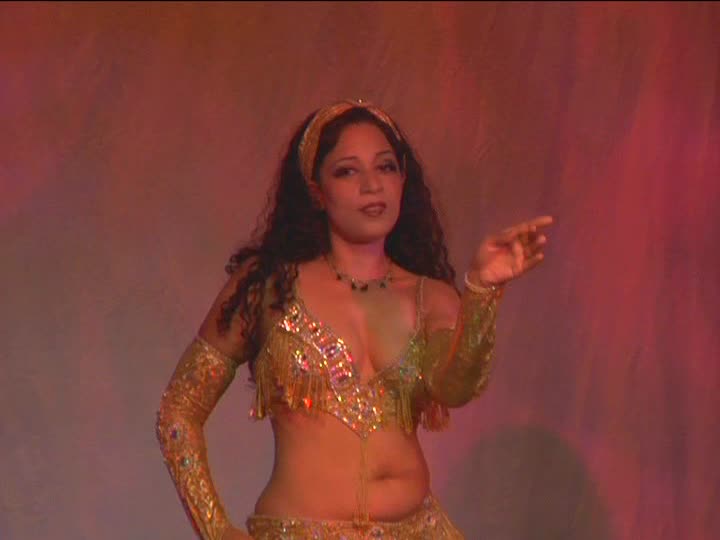
So which performance really stood out for me this episode? The sheer gorgeousness of LaUra:
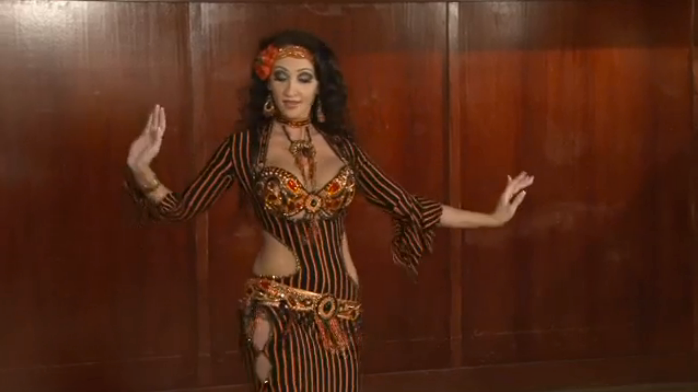
One of the judges said LaUra is who she’d like to learn from, and this was totally my feeling watching her dance. It was sophisticated but felt natural, everything looked good, and I thought, “I want to learn to dance like that!” Also, great hands and arms. This dancer knows what to do with her extremities.

Also, let’s be honest. I love that dress.

What about you? Which performance was your favorite this time around? 
Against Rigidity: Some Inspirations for Improvisation

Lately, I’ve been dealing with some challenges. How to navigate being a mom — even though my expectations of myself are not high, somehow they’re still too high for the reality. How to embrace my dancing where it is, skill-wise, rather than mourning the skills I don’t have. And in my own, real-life, for-money work, how to focus on and enjoy the work I’m doing now, rather than regretting what I didn’t do before.

And so I was inspired by some recent reading. The first comes from Alia Thabit, whose 90 Day Dance Challenge I’ve been doing for the past week, and actually even managing to keep up on. (Five days out of six!) In one of her recent “love notes,” Alia writes:

Why are so many classes so deadly serious? Drilling (I hate drilling), combos, choreo, all work, work work. Why do we always have to do what we’re told? Why do we so rarely get to dance?

Students, play in class. Embellish, reinvent, enjoy yourself. Do the drills differently. Make the combos your own. Reinterpret the choreo. Stand in back, be respectful, and explain your mission to your teacher so they don’t feel the need to correct you :). But quietly get your groove on–don’t ignore the class, just give yourself permission to add your own sauce.

This is the kind of thing that makes me want to shout “YES” and pump my fist into the air. Because here’s my dirty little secret… I hate choreos. I mean, I’m not very good at picking them up anyway, though lately I have begun to see the point of learning how someone else interprets the music. But whenever I see an ad for a workshop being offered with a choreo, I think to myself, “Why would I want to dance like someone else? Would I ever really perform someone else’s choreography?”

But when I think these things, I always tend to suspect that I do so because choreos are a weak point for me. It’s also good to hear someone who is a teacher confirm that it is, in the end, about making the dance your own.

The next bit comes from an article called “Letting Go of Perfectionism and Embracing Motherhood,” by Hala Khouri. I ran across it because I’m preparing to review Hala’s DVD, Yoga for Stress Reduction. Hala describes how having children forced her to modify her perfect ecowholegrainyogaeverydaynosugarorpolyester lifestyle:

As I was faced with birthday parties with “regular” cake (i.e. the white flour and sugar kind), crying babies with high fevers, and my boys’ insatiable appetite for superheroes and dinosaurs, I had to surrender to the fact that being rigid wouldn’t serve anyone. I noticed that sometimes fighting for my ideals felt unhealthy. It came from my own fear and need to feel in control. The last thing I want to do is dump my fear and neurosis onto my children. I have had to start discerning when I’m clinging to my idea of what’s right simply because I want to feel right (and make others wrong so I feel better about myself). I’m finding a middle ground that feels balanced.

Although I have no pretensions to the kind of perfection Khouri had before, I recognize bits of this in myself. My obsessions have to do with the baby’s sleep and with nursing. I resisted supplementing with formula for months, even though I was exhausting myself with round-the-clock nursing, because I was secretly proud that the baby hadn’t touched those chemicals. And yet, once I started supplementing a bit and wasn’t so exhaused, I found I also wasn’t so resentful of the nursing, and able to do it longer. The perfect was the enemy of the good.

As different as these examples are, both are about improvisation. After all, isn’t that what we’re doing when we take on a new role? And it helps to remember — it helps me at least — that improvising is what’s most fun. Cooking teachers and food writers have started to talk about the value of improvising in the kitchen rather than following recipes slavishly, and that’s really what I love about cooking. Why would I expect myself to follow a preset model in other parts of my life?

In which the writer performs at a wedding (sort of)

Another recent highlight was, as you might have guessed by the headline, performing at a friend’s wedding.

Now, this wasn’t a big formal thing, nor was it a real gig. The couple wanted their friends to put on little skits and the like, and I knew this was just my chance to pull out the ol’ hip scarf and foot undies and embarrass someone. Preferably not me.

Factors working in favour of this momentous event actually taking place included working with Nadira Jamal’s Rock the Routine and taking Cihangir’s workshops last weekend. What I wanted to do was to get my husband to play the doumbek and do a short improvised drum solo, and then go around and get everyone up to dance. I thought if we kept it short and sweet, there would be less time to screw up, and it would be obvious that we were amateurs doing something out of love for the couple.

It also helped that Cihangir mentioned during one of the workshops that the audience doesn’t notice much of the dancing anyway for the first bit of a dance, as they’re looking at you, checking out your costume, and so on. So I thought a stately, showy entrance would get me halfway there, and that already allayed some of the nerves.

The key was getting something sparkly to wear. I didn’t think the full bellydancer getup would be appropriate, especially given that I wasn’t doing a proper performance. But a friend and I went to the Saidi boutique here in Berlin, and after an hour or so of dedicated attention managed to find a gorgeous saidi dress, black with silver vertical stripes, and a light peach, translucent hip scarf to match. I may also have picked up a saidi cane on the way out. The golden goddess saidi dress I also fell in love with stayed in the store, hopefully for a future visit. As you can imagine, trying on the sparkly stuff was tough, grueling work. But I’m just that kind of person.

As the day approached, my love and I did some drum and dance improvising, and I reviewed Nadira Jamal’s notes for the drum solo.

Factors working against this performance? The fact that our son gave us about three hours of sleep the night before the celebration.

But the show must go on. As it happens, I wound up doing my best moves in the bathroom, as I grossly underestimated how slowly the evening’s festivities would progress. I wanted to be ready — with full makeup and warmed up — in time for our appearance. However, we were last on the program, and the precise nature of the performances was meant to be a surprise. Effectively, this meant that I spent about an hour hiding in the bathroom, stretching and practicing a variety of combos. Let me tell you, there’s nothing to combat stage fright quite like the prospect of escaping the smell of a public loo.

The dance itself was incredibly fun to do, if ultimately a bit messy. (There’s no video, and my memory is a bit blank of what I actually did, so the details cannot be reconstructed…) I had the DJ follow it up with Alabina’s Lolole which, since it has the same melody as “Please Don’t Let Me Be Misunderstood,” seemed like it would be an approachable, arabic-sounding but still hummable tune to start dancing too. Then I went around and started pulling people from their chairs and onto the dance floor.

The results? It was fun, I have a saidi dress and cane that are patiently waiting to be brought out again, I overcame a fear of mine, and all sorts of people asked me where I took classes. Somewhere, out there, there are photos. My husband and I proved to ourselves that we could still do zany things despite being kept up by a baby most of the night.

And from now on, no celebration is safe. I have a hip scarf and I’m not afraid to use it.

Çiftetellisi and Expression Workshops with Cihangir Gümüstürkmen

Dear readers, I have been away for a bit. Unlike most radio silences, this is not because I’m not dancing. In fact, as far as my busier-than-ever life allows, I’m dancing even more. Over the next few posts, I’ll share some memories and reflections.

Last weekend I took two workshops with the Berlin-based artist and dancer, Cihangir Gümüstürkmen. The first one was on Istanbul Çiftetellisi. One highlight was Cihangir’s discussion of the varied ways the word “ciftetelli” and its many, many spelling alternatives is used around the Mediterranean. It strikes me that North American dancers often like to find precise definitions for particular words — “it’s the dance done to this rhythm” or “it’s the dance performed in that place” — but dance history being what it is, a vague and flowing thing, hard and fast categories are pretty difficult to find.

Another highlight was doing a bit of floor work! I have some videos that touch on floor work, but I’ve never tried it myself, figuring I needed a lot more abdominal strength. If I’d known this workshop included it I probably wouldn’t even have signed up, but it was a tremendous amount of fun. I realised you don’t have to throw every move in the book into a floorwork routine, especially if it’s part of a longer song. And Cihangir gave us some very precise, very useful tips.

After a quick nursing/eating break, I returned to the dance studio for Cihangir’s “Express Yourself!” workshop. Now, I was in a position to compare this workshop with Rivkah’s mini-workshop on expression in dance that I recently did in Texas. Cihangir’s strategy was quite different. Rather than having us improvise dance to suit particular emotions, he began by teaching us a simple choreography, and drilling it a few times so we wouldn’t have to think about moves at all. Then he told us little stories, stories intended to inspire feelings, but without naming the emotion itself. We then danced the same choreography repeatedly, each time seeking to convey the feeling inspired by the story, not through the movements themselves, but by the way we performed the movements.

I loved this. It was basically a bit of method acting for bellydancers. What really worked for me was that some of Cihangir’s stories hit a chord in me. One instruction was to imagine dancing for the first time after being sick, and given my recent surgery, that is a feeling I can connect to. Another was to imagine dancing for someone who had never seen dance before, and again, given that I often dance for my baby boy, I could connect to that particular kind of joy too. I don’t know how the dancing looked, but I do know it felt wonderful.

Another thing Cihangir had us play with was clowning around. This was without a doubt the hardest assignment of all, but I think it’s important. I suspect it’s very hard for women to allow themselves to be a bit silly, silly enough to be funny. Part of the pleasure of bellydance is being beautiful in a really old fashioned way — long hair, lots of makeup, hyper-feminine clothing. How are we supposed to then consciously look ridiculous, albeit in a controlled way? Later, at home, I looked up some of Cihangir’s videos on YouTube and found that he’s a master of the form. So I leave you, for now, with this little jewel:

Back to basics with Neon’s Instant Bellydancer

Every now and then you just have to go back to the basics.

What’s the context? Well, there’s a bunch of context.

I recently signed up for the launch of Nadira Jamal’s online program, Rock the Routine. It’s what she calls a “home study” course, and I’m doing it at my own sweet pace — which is to say, at the pace permitted by an international move and a baby. Although I’m unlikely to perform a full cabaret bellydance routine anytime soon, I’m finding it great. Part of what’s so valuable about it is that following along with the program makes me see what I need to work on. While Nadira teaches improvisational strategies, as I try to work with them I start to notice which moves come really easily, and which bellydance moves have become, well, flaccid due to lack of practice.

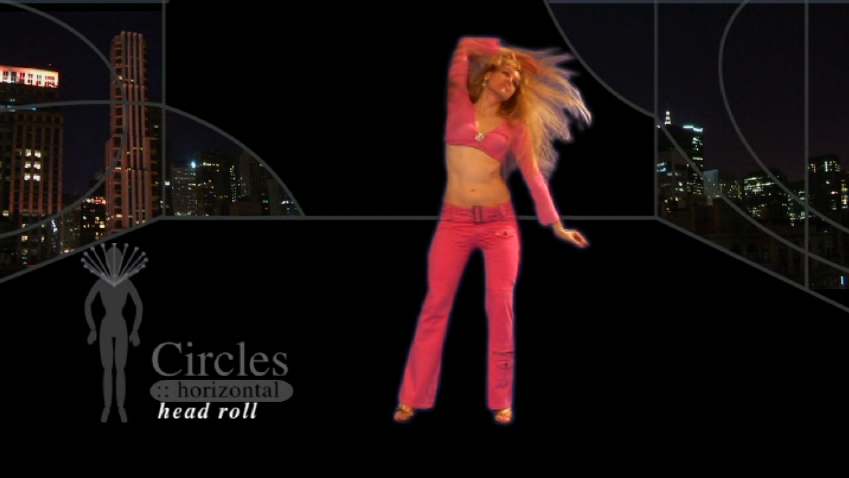
I’ve become frustrated enough with this that I decided I needed to go back to the basics. Not just basic choreo or easy drills, but the fundamentals. I didn’t want something with long explanations, but I wanted the chance to focus on the movements, to work on everything from the ground up. So I thought of Neon’s Instant Bellydancer.

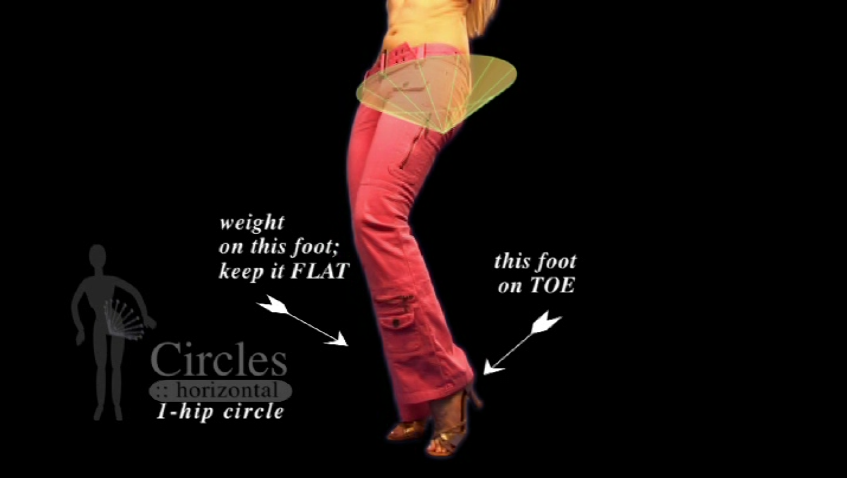
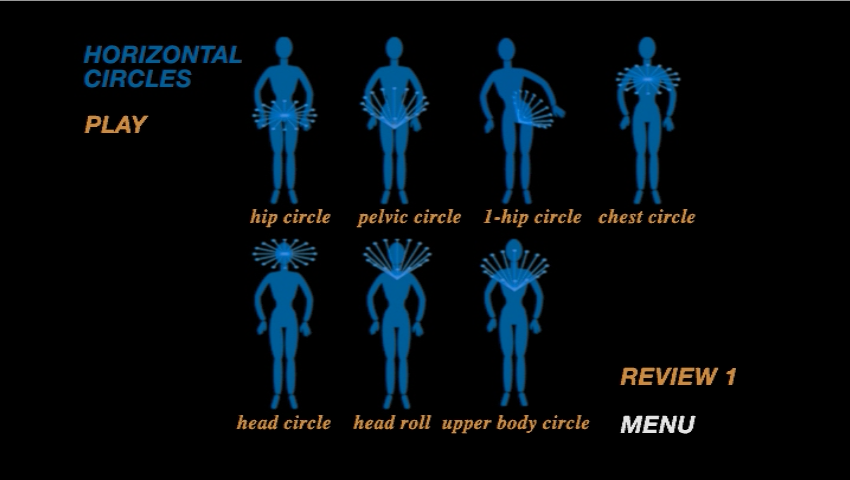
Now, the two Instant Bellydancer DVDs were among the first items in my bellydance video collection. (I bought the individual videos, Instant Bellydancer 1 and Instant Bellydancer 2 back then, and years later was sent a copy of the two-DVD set for review). Although it’s really more of a movement catalogue, not a thorough program of dance instruction, I loved it. And I loved the little geometric shapes used on the screen to indicate how movements should be performed.

The videos are not set up the way a basic bellydance course often is — the easiest movements first, and then harder ones — but by geometric shapes. And so the first video, for example, features:

Horizontal circles
Vertical circles
Horizontal semicircles
Vertical semicircles
Horizontal infinity loops (aka figure 8’s)
Vertical infinity loops
And two practice sessions.

Each shape is performed with various parts of the body: the hips, the chest, the head, and then the movements are put together into basic drills.

What is it like to work with Instant Bellydancer years later? On the minus side, the lack of a warmup really stood out for me. Given that it’s for beginners, it should have a warmup, especially since the moves start to really push your muscles if done correctly. There is also a section with head and upper body circles that is potentially dangerous. Neon gives multiple, and I mean multiple, warnings to avoid these sections unless you are warmed up and have strong neck muscles, but I suspect that some people might go ahead and do them anyway.

On the plus side, Instant Bellydancer is a fantastic way to review the basics if you already really know them but are out of practice. Some videos aimed at beginners introduce movements really slowly, which can be frustrating for review. Moreover, doing these now-familiar moves again, I was able to focus on subtle instructions I had missed the first time, like Neon’s hints for hand, arm, and head movements. And finally, I noticed how lopsided I am. Clockwise, I can do everything with ease, but counterclockwise, I really have to struggle! (You can bet that when I was doing the dishes today, I had Nancy Ajram on and was doing counterclockwise circles like crazy!)

I only made it through the horizontal circle section last night, but it was quite a bit to work with. More interestingly, I thought it would go wonderfully with Nadira’s tips on making friends with your safety moves, that is, with the moves you tend to resort to when out of ideas anyway. Some of Nadira’s instruction, on her blog and on Improvisation Toolkit Volume 1: Movement Recall, involves taking a basic move and doing variations of it. And in a way, this is precisely how the mini practice sessions on Instant Bellydancer work! One program is very basic, while the other is quite advanced and sophisticated, but their methodical approaches to dance make them work well together.

Back in the Groove

Sunday was a red-letter day for me — I went to my first dance classes in almost a year. The North Texas Middle Eastern Dance Association held a nifty fundraiser: seven local teachers volunteered their time to teach a series of “Cheap Thrills” workshops, at ten bucks a pop for non-members. I thought that this would be a perfect way to get back in the groove of dancing, so I hauled myself to Grapevine despite a sleepless night and rather a good deal of laziness.

My abs are still feeling a bit sore from the surgery, so I decided to pick two workshops that seemed like they wouldn’t be core intensive: “Dancing With Emotion” with Rivkah, and “Arms, Frames & Transitions” with Heather Wayman. The workshops may have been inexpensive and brief, but each was packed with material.

Rivkah had us do exercises to express sadness, anger, and joy. I found the first two, but especially sadness, incredibly difficult. I’ve never taken an acting class, and all the stagework I’ve done was in rather silly college theatricals in pretty absurd roles. At the same time, despite how vulnerable this kind of work left me feeling, I also think it is one of the most important things to work on in dance. I really can’t stand busy, overly-athletic dancing with no emotion behind it. It’s boring, it gives me no pleasure to watch. But when a performer can really embody an emotion — Zari’s dance in Secrets of the Stage Volume One comes to mind — the result is entrancing.

When we practiced dancing to a fun song and conveying the sense of delight in the music, I couldn’t help but remember a scene in Wim Wenders’ documentary Pina in which one of the dancers has the same task. I found myself emulating his moves, albeit with a bellydance vocabulary. Focusing on emotion made me dance in a completely different way, looser, less worried about variation, less hung up altogether. I’m not sure it looked good, but it certainly felt good.

Heather gave us a full program of arm poses, ways to move from one frame to another, and exercises for structuring and experimenting with dance. She introduced us to some of the tricks she’d picked up while doing Nadira Jamal‘s Mastery Mentoring Program. My favourite exercise of the class was picking three poses and then improvising the movements between them. This seemed like an excellent way to introduce more dramatic punctuation into a dance that would otherwise have rather boring arm work.

Doing these workshops, I remembered one of the things I love so much about dance class, proper dance class instead of videos. The whole world outside the studio disappears. There’s nothing like focusing on the tiniest detail — the pointing of a foot, the precise way of lifting a hand — for wiping all the tedious everyday worries from my mind.

Review of Bombshell: Dramatic Make up for the Stage, Photos & Glamourous Occasions

“If you look like the love child of a clown and a hooker, then maybe you have enough makeup on for the stage.”

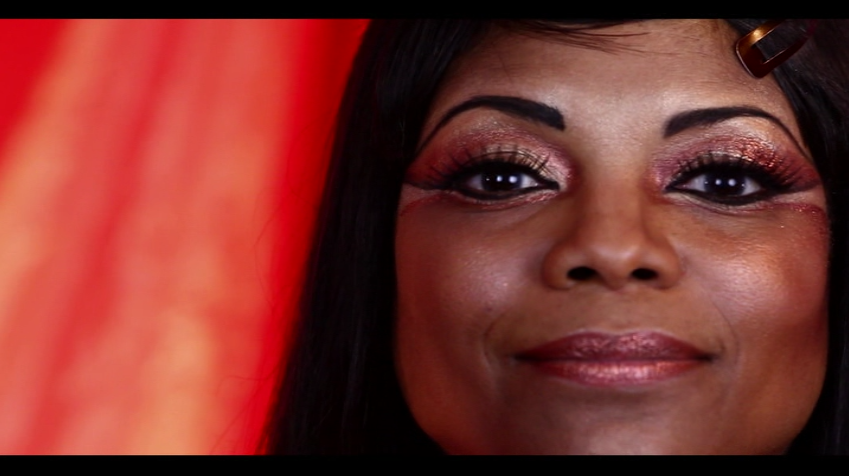
Princess Farhana’s description of a dancer’s war paint sums it up pretty nicely. Bombshell: Dramatic Make up for the Stage, Photos & Glamourous Occasions is not about subtlety, appropriateness, or painstakingly blending taupe into beige. It’s about glamour, colour, glitter, and having a hell of a lot of fun with your face.

A bit of background about myself: I’ve never thought of myself as particularly girly, and I don’t wear much makeup on a regular basis. I like the look of fresh skin, so I almost never wear foundation, and I work in a slightly conservative field, so purple mascara is out for daytime. Well, I’ve described Dr. Jekyll to you, but there is also Ms Hyde. Lurking deep inside me is not a girly girl, but a full-blown drag queen just dying to come out.

As a preteen, Kevyn Aucoin’s Making Faces was my makeup bible: I studied the pictures and descriptions, and wondered where in the world one could get the cream eyeshadow he used so often. I would do outrageous looks with my friends and photograph them. I began to acquire a perversely large makeup collection, with probably every shade of glitter and eyeliner imaginable. In the year I was finishing my dissertation, as a full-fledged Serious Person, I would interrupt the tedium by painting high glamour makeup looks on myself, running and showing my boyfriend, and then taking them off. In grad school I even wrote a seminar paper on anti-cosmetic rhetoric, and did a bit of makeup of student theatre. And my secret plan B has always been to go to cosmetology school and run off to Milan.

So this is to say that I’m passionate about makeup, I know a lot of tricks, even if I haven’t tried them, but because I don’t wear huge amounts of the stuff on a daily basis, there are also quite a few things I don’t know. For example, although I own several sets of false eyelashes, I’ve never managed to put them on.

I’ve secretly always wanted to do a Cleopatra look

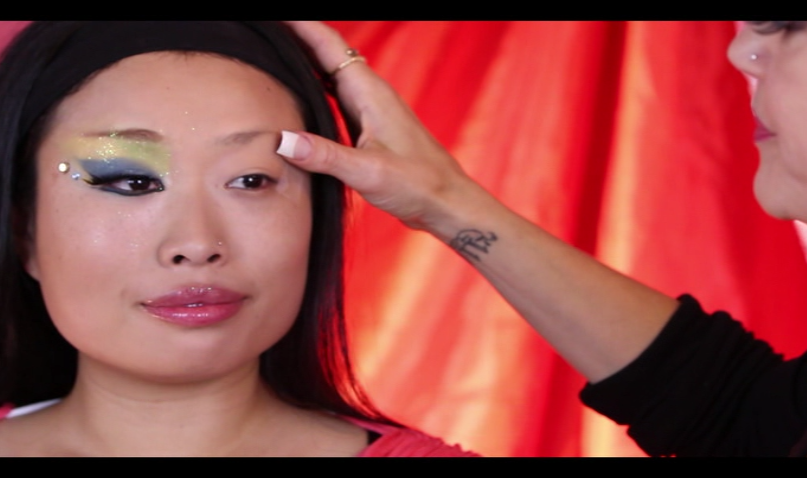
But I was, you can imagine, extremely eager to take a look at Bombshell. Princess Farhana kindly hooked me up with a review copy, and I’ve been watching it bit by bit over the past month. It’s a massive two-DVD set that covers some makeup basics such as tools, foundation and contouring, false eyelash application, and lips, and then proceeds to focus predominantly on eye looks: retro, movie star, smokey eyes, sixties’, Cleopatra-style, Arabic, modern colour-blocking, and mature makeup. (These are partly my names for the looks.) In a final chapter, Princess Farhana discusses the use of, what else, glitter!

What I was particularly curious about was this: when there are so many makeup how-to videos on YouTube (Lauren Luke famously used her YouTube channel to rise from rags to discount-makeup-riches), what would a DVD offer that would be new? Why shouldn’t I just watch a dozen YouTube videos instead?

Here are my answers to this:

– Video quality. Bombshell is professionally filmed, and it’s easy to see DeVilla and the Princess at work. This is not someone sitting in a darkened living room.

– Diversity. The models have different eye types, are of different races (there is an Asian and an African-American model), and ages. The Princess devotes one of the chapters to making hooded or small eyes look big. So while the instruction is nominally about how to do a variety of dramatic eye looks, all along there are tips and tricks for adapting makeup to different kinds of faces.

– Expertise. This is the big one! Princess Farhana, a bellydancer, and DeVilla, a bellydancer and makeup artist, bring their showbiz experience to bear on this. They teach a lot of techniques that are specific to the stage or to photography, skills such as: contouring for the stage, what colours look good in black and white photography, what looks bad in photography or in a small restaurant, how to use glitter to get glossy lips without the dangerous stickiness of gloss, how to use white makeup or crystal appliques to open up the eyes, and so on.

Throughout the videos, they differentiate between stage and everyday makeup looks, often suggesting how one look might be toned down or played up for a different context. They also give specific advice for performing in a restaurant or on a small stage vs the big theatre. This is the kind of expertise you won’t get on YouTube! I even liked the fact that, in the section on lashes, DeVilla demonstrates a painstakingly precise way of applying them, and Princess Farhana shows a quick and dirty showgirl version.

While I’m unlikely to be on a large stage anytime soon, I did learn a few things I can take away. For example, I’d used dots of white goo in the corners of eyes when doing stage makeup, but I didn’t know the more subtle ways this could be adapted to everyday wear. Princess Farhana shows some faster ways to blend, using her finger or glitter, that I might try when in a rush. And I’m much more likely to experiment with colours or combinations I don’t usually use. Such as lavender. Who uses lavender?

Is it still an objective review if I want to hang out with these two?

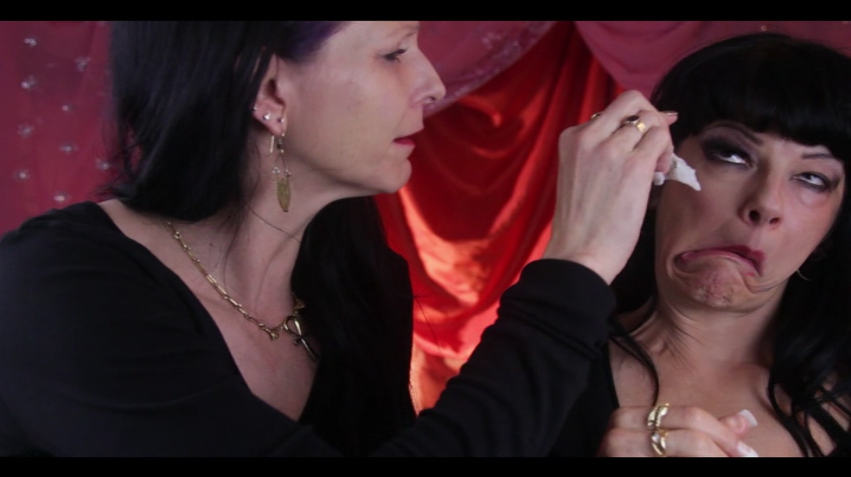
My favourite aspect of Bombshell is the way its two stars come across as completely chill and playful. I took a workshop with Princess Farhana ages ago, and I love her wacky sense of humour. She’ll be working on a look which looks completely ridiculous, but she’ll acknowledge that that particular step in the process looks weird, or that she’s making a stupid face to put on eyeliner. Then again, her little quips — she describes one makeup look as hanging out in an opium den with Rudolph Valentino — also show her range of references. (I have to think of those moments on RuPaul’s Drag Race or Project Runway when contestants don’t know what the 1940’s or 1970’s looked like! I always sound a deep, melancholic sigh.) In a final scene, DeVilla and the Princess wipe each other’s war paint off, laughing away. It’s just the right spirit: makeup is fun, a way to be outrageous, and always forgiving. After all, in what other part of life can you always wipe away your mistakes and try again?

Review of Secrets of the Stage Volume One

Secrets of the Stage Volume One: A Performance Course for Belly Dancers came out a while ago — 2007 to be exact — and around that time Michelle did a giveaway and I wound up with a copy. I remember watching it back then, but for some reason I wasn’t in the right place yet to appreciate the video. I’m not sure why. Maybe I didn’t have the patience to sit and watch dancers enough… or maybe I wasn’t thinking intensely enough about how to make bellydance my own. Whatever the reason, my current state, physically a bit slowed down but with an unusual amount of time on my hands, led me to turn to it again. I’m not looking to perform in the near future, so I’m really writing this from the perspective of a learning dancer who simply wants to improve, and to think more deeply about the dance I love.

Zari guides her audience

The video consists of several sections:

Calmness and Simplicity
You and Your Music
Focus and Energy Projection
Exercises

The four “theoretical” sections feature one or more brief introductions by Michelle Joyce which are then followed by full-length dance clips of dancers: Adriana, Nanna Candelaria, Sandra, Shoshanna, Zari, Zaheea, and Michelle herself. As you watch each clip, the dancer “narrates,” reflecting on the dance you’re watching or her dancing in general.

There are some truly memorable moments. For example, in the “Calmness and Simplicity” section, Adriana describes performing a glass dance in which the glasses cracked when she stepped on them. In the video, you cannot see her bat an eyelid out of time, but to hear her tell it, the crack was so loud that the front rows of the audience heard it.

In Adriana’s clip, the narration tells you the backstory behind a dance. In other cases, the dancer speaking teaches you how to see what is in front of your eyes. Zari performs a haunting dance to “Ana Bin Tezarek,” and part of what makes it so haunting, you learn, is the way she changes focus between her body, the audience, and so on. I think I would have noticed that Zari dances with varied expression and that she uses her eyes wonderfully, but I wouldn’t have known that it’s not just about looking up or down, but about guiding the audience’s interest in a certain conscious way. This doesn’t just tell me how to learn from Zari, but is also a kind of training in how to watch other dancers, what to look for, how to learn the craft.

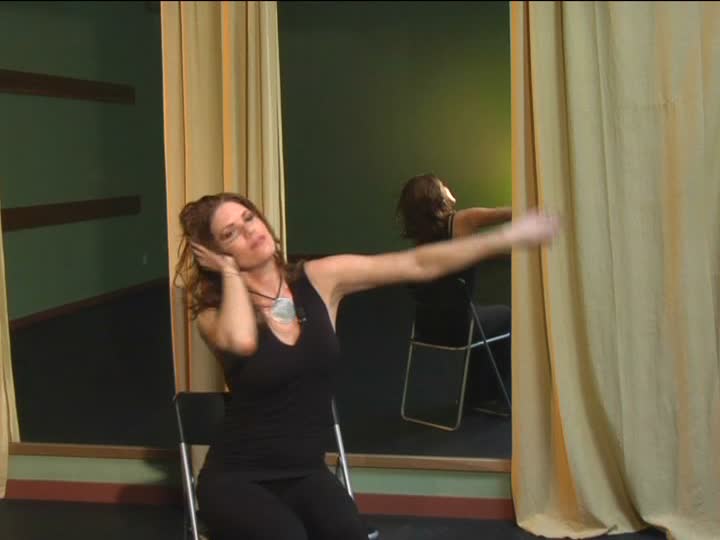
Michelle demonstrates how dynamic sitting in a chair can be

One of the things I loved about this video was discovering a number of dancers I really, really enjoy watching. While all were lovely, I’m left wanting hours more of Zari, Sandra, and Nanna, all very different from each other, but all embodying qualities I adore about the dance. Another quality I loved was the focus on simplicity in the first section. There are a ton of bellydance instructionals out there that will teach you how to accomplish complicated drills and combinations, but how many, even five years later, reinforce the idea that simplicity in dance can also be beautiful and delicious to watch?

Finally, the exercises. There is a guided relaxation, a chair exercise in which you only dance with your upper body, an improv exercise in which you dance to the same short clip of music four times without repeating your movements, and a brief focus exercise in which you place your focus with intention. I did all of these (minus the guided relaxation) on a different day, when I was warmed up from another workout. And frankly, I thought they were kind of genius.

The chair exercise really forces you to exploit the movement potential of your upper body — chest, hands and arms, head, facial expressions. The improv exercise features seven different musical clips, and not only did it prompt me to be creative and to move across the floor more than I usually would, but it also made me listen to how different the clips were from each other musically, how each one “asked” me to perform different kinds of movements. The focus exercise was brief — I need to practice it with my own music — but I found it took my attention from my own body and its movements to points outside my body. This changed the feeling of dancing completely, and really allowed my body to react to the music on its own, without as much interference from me — if that makes any sense!

Even though I watched Secrets of the Stage Volume One all the way through twice and did the exercises, I feel I’ve barely begun to scratch the surface. There is so much information in here, too much to absorb all at once, and the real test will be to practice the exercises with my own music. Still, I found the video marvelously liberating — this is really a program about dancing rather than about performing a series of movements in a certain way, and as such, it is deeply pleasurable both to watch and to work with.

Secrets of the Stage Volume One is also available at Cheeky Girls Productions.

Review of Jennifer Jiménes’ Let’s Dance Together – Prenatal Dance Fitness

While it’s been a lot of fun trying different prenatal workouts — and a lifesaver in terms of how I feel — the analytical side of my brain also enjoys seeing how many different kinds of programs are out there. I’ve already reviewed several prenatal prep DVDs with dance components. In fact, Naia, Sera Solstice, and Amira‘s programs all use bellydance, which I’m increasingly convinced is just perfect for both pregnancy and labour movement itself. Earlier today I took a Lamaze class on natural comfort measures near Dallas, and almost all the moves the instructor suggested women do in labour — hip bumps, pelvic tilts, hip circles — are basic components of bellydance. She even suggested a kind of shimmy for helping with back labour, or with a baby that is malpositioned!

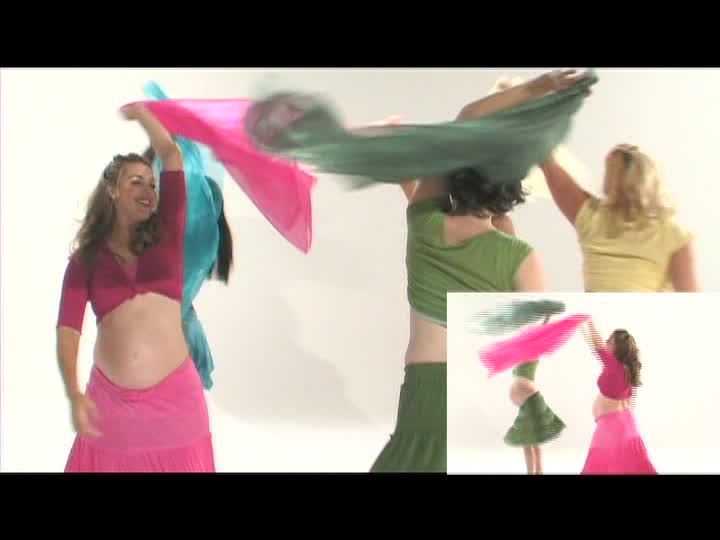
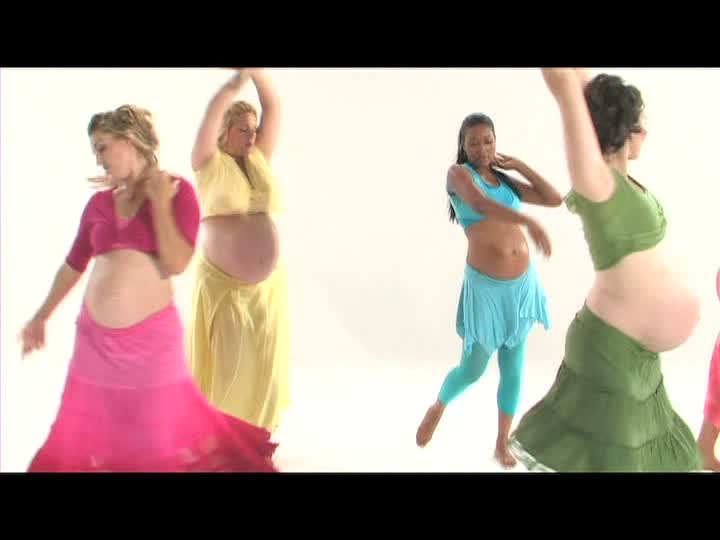
This is a long intro to Jennifer Jiménes’ Let’s Dance Together – Prenatal Dance Fitness, but that’s because I want to explain what makes this program different. I received a review copy of the program, and Jennifer included a note in which she explained that it’s more about developing “inner trust” in your body than typical dance fitness. The difference begins with the staging. Instead of a single instructor facing the camera, or, say, three different practitioners modeling trimester variations, this video has a group of pregnant women, dressed brightly, sitting, standing, and dancing in a circle. Already doing the video feels less like instruction and more like participation. In fact, this is one of the few videos I’ve done which I felt encouraged me not even to look at the screen — and this is a good thing. It’s hard to relax and turn inward when you’re looking up at a screen.

The program begins with a gentle warmup that stretches out every bit of your body, with some really nice seated exercises for the legs and a variety of flowing movements done on all fours to relax the lower back and pelvis. The latter chapters include a labour prep section, including an exercise to help you maintain stamina through pain, and a meditative cool down. But what I really want to talk about is the dance segment.

Now, when I go to a dance class or watch a dance instructional, I want to be taught something. When I’ve been to dance classes where students were asked to free dance at the end of class, I was invariably stressed out by the experience — not because I don’t like to improvise, but because I feel too self-conscious, especially when others are there. If you’d told me that this video had a significant portion devoted to free dance, I would not have been excited. But in truth, I wound up loving it.

Why? Well, first of all, it’s not totally free dance. You’re invited to explore movement, but Jennifer calls out different parts of your body to focus on, as in “dance with your shoulders!” Both times I did this video, I was amazed at how creative I could be with that amount of prompting — I found my body performing moves I’d learned formally in dance classes, moves I’d seen other dancers do, or just totally new motions I invented because they felt good. It was, cheesy as it sounds, liberating.

The bright colours strike a Merce Cunningham vibe…

It feels wonderful to be heavily pregnant and realise that your body still can do things that feel so lovely. But I think this kind of exercise could be great beyond pregnancy too — how much better would those stressful improv moments in dance class have been if the teachers had guided the movement like this? A lot of dancers love choreography but are scared of improv, and I think a gentle practice like the one in Let’s Dance Together is a perfect way of breaking out of the choreography box. I wasn’t as enthusiastic about the second dance segment, which was a kind of circle dance with scarves, but the “Free Dance” portion was enchanting and made me want to do it again and again.

Did the program lead me to trust my body more, or to feel better prepared for labour? I think it’s hard to answer that question before actually giving birth. I will say this: I think the workout, and especially the free dance section, are excellent at giving you practice at figure out what kinds of movement make your body feel good. The fact that you’re not following someone else’s count or precise movements, but taking each of the exercises and doing them in a way that stretches and strengthens your muscles in the best way for you, is, I suspect, good practice for labour, when you have to set your own pace and figure out what works in easing the pain. And if labour is a dance, as I’ve sometimes heard it described, it has to be improvised.

Jennifer Jiménes’ Let’s Dance Together – Prenatal Dance Fitness is available on Amazon via the link, or from Jennifer’s website, Let’s Dance Together.

Finally got a veil!

So, I have quite a few veil DVDs, some of which I also need to review, and I thought the next few months would be a great time to do so. My torso and belly might not be as flexible, but I can still use my arms, right? The thing is, I’ve done very little (like, really, really little) in-class veil work, and even that was years ago and rather randomly taught. And this week, when I was working with Jennifer Jimenez’ “Lets Dance Together – Prenatal Dance Fitness” (review coming soon) and got to the scarf/veilwork section, I went to find the piece of chiffon I’ve had lying around for years and — could not for the life of me find it. I found practice zills, hip scarves, poi, all kinds of little props I have hanging around, but no chiffon! I realised the awful truth — I badly needed a veil.

But what kind? It turns out that bellydance videos have varying amount of information on choosing a veil. Veil with Aziza and Kaeshi Chai’s Expressive Bellydance Veil both go over the basics, silk and chiffon, and Kaeshi also shows how to steam iron your veils to keep them looking fresh. There’s a small section on choosing veils in Sarah Skinner’s Seven Veils, but the really long introductions are in Skinner’s Bellydance with Veil and Shoshanna’s Fabulous Four Yard Veils. Skinner’s intro is more of a show-and-tell — you can tell that she’s really in love with her veils! — and she focuses quite a bit on the makeup of the fabric and the look, weight, and hemming of the veil, going through varieties of chiffon and even more unusual fabrics. Shoshanna doesn’t deal with quite as many kinds of fabrics, but she gives more examples of how particular veils might work in dance, what moves she likes to do with what kinds of veils, and also which veil fabrics are too heavy and might cause injury!

Other resources I like are Dina Lydia’s article, “Making a Veil,” and Zorba’s “So Many Veils, So Little Time!” In the end I went to Little Egypt, a store and bellydance school here in Dallas, and picked up a couple of silk veils at their sale that were pretty much cheaper than on eBay! (And a little practice cane… because I’m bad.) I’d still like to get to a fabric store nearby and see what kinds of chiffon are out there, and if I can make a really sturdy — or at least disposable — practice veil out of some on-sale fabric, but for now I’m ready to go!